
Understanding & reaching the non-fiction consumer requires a nuanced approach.
Non-Fiction as a broad sector in the book market is, in fact, incredibly broad, ranging from very specific niche topics all the way up to the latest celeb memoir or bestselling cookbook. All of those different types of books can appeal to so many different types of readers, so it’s important to understand how the paths to reaching those readers may also be different, whether looking at which social media they use, if they’re shopping in-store or online, if they’re engaging with book content in general and how they’re finding out about the books that they buy. To help with this, we’re compiling a series of non-fiction reports using our Books & Consumers monthly survey data, focusing on four distinct corners of the market: The Self, The Home, The Culture and The World. Now, we may not be able to tell you the exact audience for every niche topic, but these reports can steer you in the right direction for varied genres, giving insight into the buyers and behaviours behind the purchases.
The first report covers The Self, incorporating personal development, health and wellness, while the second focuses on The Home, ranging from gardening to arts & crafts to cookbooks. There are certainly overlapping themes within these, such as cookbooks on healthy eating tying into the healthy living segment of the Self report or colouring books within arts & crafts aiding in mindfulness, so lessons can be learned from looking at each individually as well as comparing across the subgenres.
One question that highlights both the similarities and differences in these areas of the non-fiction market is why the buyer chose the book that they bought. Below you can see the top purchase influences for each of the subgenres included in the Self and Home reports, compared to the wider UK book market, and one very apparent commonality is the subject leading the way. Beyond that, however, things get interesting. Buyers of personal development books rely on recommendations/reviews quite heavily for choosing the titles that they do, with bestseller status also in the mix for a few of the subgenres, but on the Home side, those don’t appear in the top influences for any of the categories in question. The subject and the blurb are the only factors that make the top six across the board, with the latter ranking highest for Gaming (which encompasses books on i.e. video, role-playing and board games).
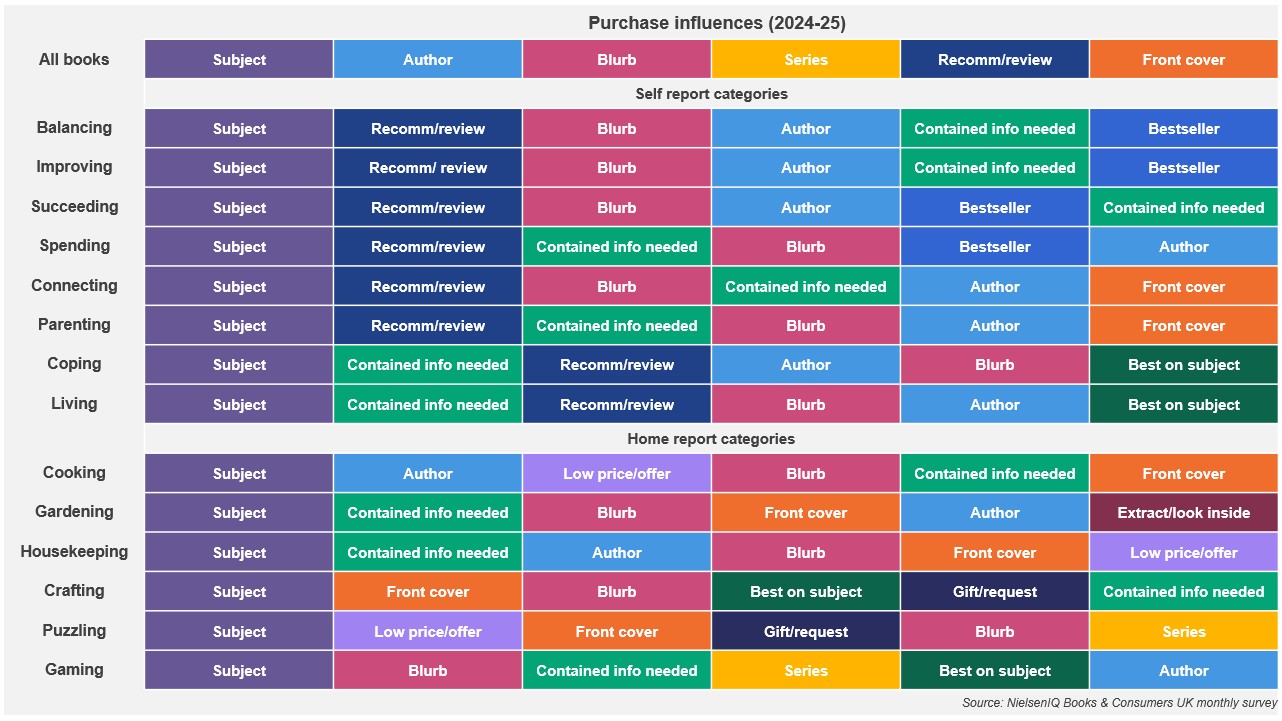
Containing the information needed is understandably prominent for information-based books, in this case especially for Coping (books on problems and illnesses) and Living (fitness, diet and health books), as well as Gardening and Housekeeping (cleaning and DIY books). Information only drops out for puzzle books, with these purchases instead stemming more from things like low prices, the front cover and gifting. A suitable gift/recipient request also factors into arts & crafts purchases, but Crafting especially benefits from front covers, second only to subject. Front covers generally have more of an impact on driving purchases in our Home categories, tying into the more visual nature of these books. However, the front cover does make the top influences for Connecting (marriage and relationships books) and Parenting.
Going from viewing the cover to viewing the book itself, Gardening is the only subgenre in question to have reading an extract/looking inside as a top influence, blending that visual and information-based approach. It sits behind the author, which fluctuates its position across these genres but ranks highest for Cooking, highlighting how reliant the cookbook market can be on name recognition and known personalities. Author is relatively more impactful for Housekeeping as well, which includes authors like Nancy Birtwhistle and Mrs Hinch, and makes the top influences for all the Self subgenres but still ranks behind the recommendations/reviews that are so key to this segment of the non-fiction market.
That’s a lot of information from just one survey question! But it gives a snapshot of how much can be gleaned about what buyers are looking for, and how strongly, from a simple comparison across subgenres. In the full reports, we delve into demographics, reading & leisure activities, media usage, buying circumstances, discovery and influences, providing extensive insight into the non-fiction consumer landscape. For more information and to purchase The UK Non-Fiction Consumer in 2025: The Self and The UK Non-Fiction Consumer in 2025: The Home, please contact infobookresearch@nielseniq.com. You can also view previews for other available NIQ BookData reports here.
.