
Universal stories, international voices: translated fiction in the UK
In a previous post, we looked at 2025’s international bestsellers, many of which originated in English and then went on to global success. That literary pipeline goes both ways, and popular books translated into English can give us further insight into the stories that transcend borders and languages. Increasingly transcend, in fact, as translated fiction is having a string of good years in the UK, with physical book sales experiencing double-digit percent growth in 2025, to £40m spent on 3.7m books. The bestsellers for 2026 so far are tracking ahead of those at the mid-year mark in 2025, making another positive year likely.
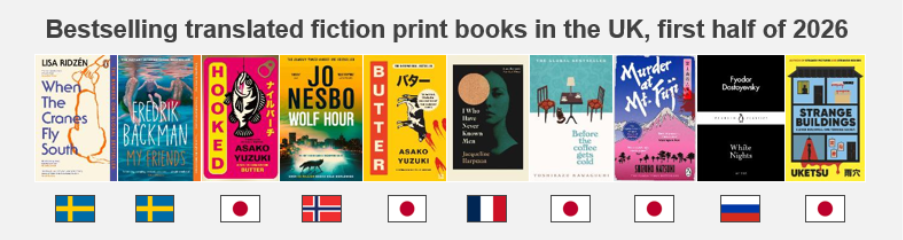
Among those bestsellers, shown above, we have a mix of newer names to the English-language market as well as those with whom readers in the UK have long familiarised themselves. Five different languages are featured in the top ten books this year, and while Japanese titles account for half, the top two are of Swedish origin, led by Lisa Ridzén’s debut title When the Cranes Fly South, with Norwegian, French and Russian also represented. Half of the authors in the top ten also had books in the 2025 top ten (Asako Yuzuki, Fyodor Dostoyevsky, Toshikazu Kawaguchi, Uketsu and Jacqueline Harpman), although now Yuzuki has two books in the mix and Uketsu’s top title is a newer release.
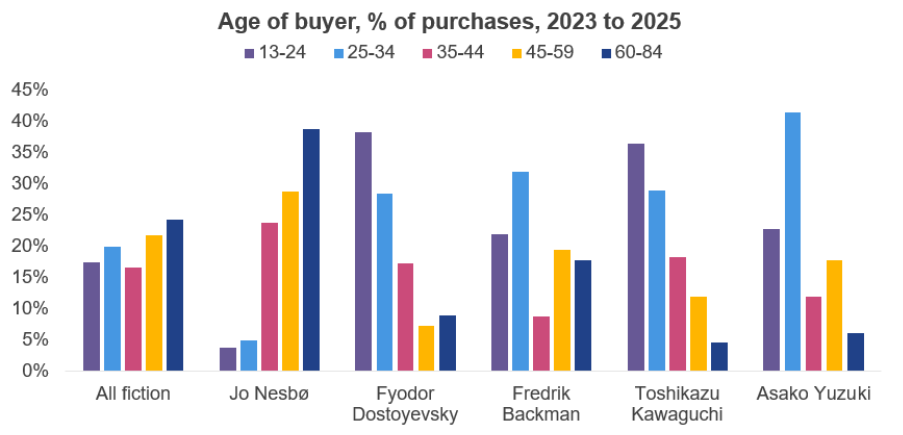
So who is behind this sustained interest in international fiction? According to our Books & Consumers monthly survey, readers of all ages, depending on which author you look at. The below graph shows the age of buyers for five of the authors represented in the top titles, and Jo Nesbø caters to an older audience, with nearly two in five of his books bought by those aged 60+ in the last few years. On the other end, around the same share of Dostoyevsky and Kawaguchi purchases since 2023 have come from buyers under 25, while Fredrik Backman and especially Yuzuki have been most popular among 25-34s.
For those authors with younger buyer profiles, social media & video sites are playing a prominent role in driving purchases, with leading discovery methods shown below. The author who never experienced social media has the highest share attributed to it across these names, with only author familiarity and friend & family recommendations leading to more Dostoyevsky purchases in recent years. Kawaguchi and Backman books have also gotten a boost from social & video sites, although each has other distinct factors as well. Of these five authors, Backman is the most likely to be discovered via bookseller websites/emails as well as adaptations, while Kawaguchi’s books appear to be popular reading group picks, along with strongly benefitting from word of mouth and in-shop discovery.
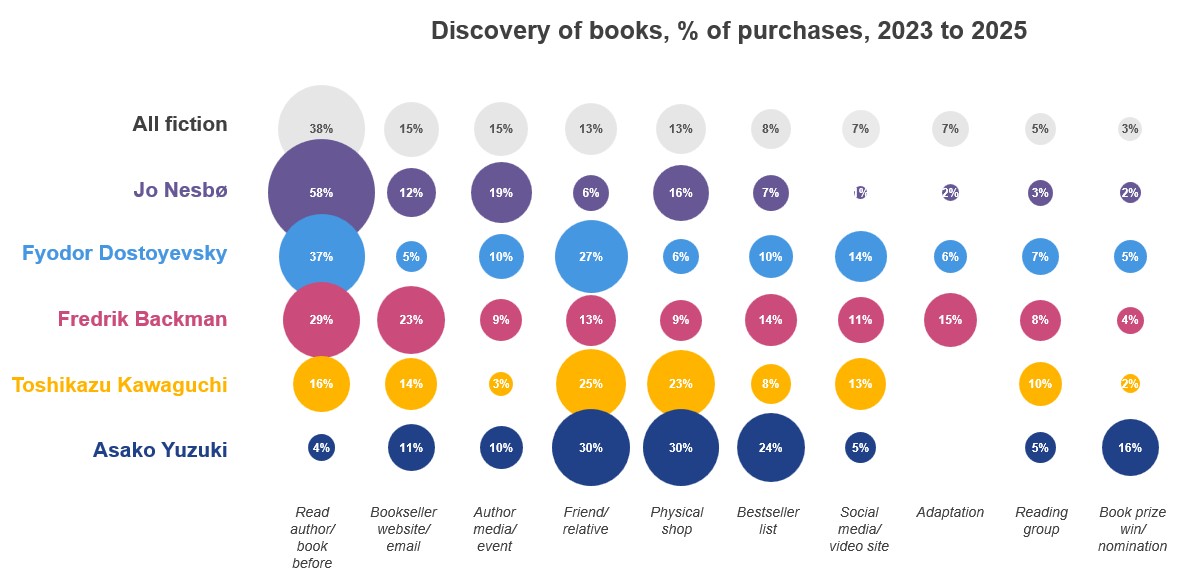
As the author most recently brought to the UK market among these five, it’s interesting to see where Yuzuki overlaps with the others but also where she doesn’t. For instance, there doesn’t look to be much social media impact behind purchases of Butter, despite the size of the under 35 buyer group. Instead, we can point to direct recommendations from friends & family along with physical shops (encompassing e.g. bookseller recommendations, browsing and shop windows) as the source of the novel’s runaway success, which then flowed to further discovery via bestseller lists and book prizes (presumably Waterstones Book of the Year, connecting to that shop discovery).
With Butter being her English-language debut, having read the author/book before had minimal impact on Yuzuki purchases to the end of 2025, although with the second book out in 2026, and already among the translated bestsellers shown at the start, that factor can only grow. On the opposite end, more than half of Nesbø purchases in these years were down to previous readership, with a nearly 40% gap before the next discovery method…which also happens to be connected to the author, highlighting his established position within the UK crime & thriller market.
Given the variety of genres and authors encompassed within overall translated fiction, it makes sense that the readers, and the path to them, would also be varied. But at the same time, books published nearly two hundred years apart can appeal to the same age group and be discovered on the same app, while others can become bestsellers thanks to good old-fashioned conversation, high street shopping and author recognition. Regardless of how they grab initial attention, these books connect readers around the world, showing a shared penchant for books on family, friends, longing, obsession, dystopias and murder, no matter the original language.
Based on data from the BookScan UK Total Consumer Market (TCM) to 27 June 2026 and the Books & Consumers UK survey to December 2025. For more information and to purchase any data or reports, please email infobookresearch@nielseniq.com.
.