
How do we encourage children to read more?
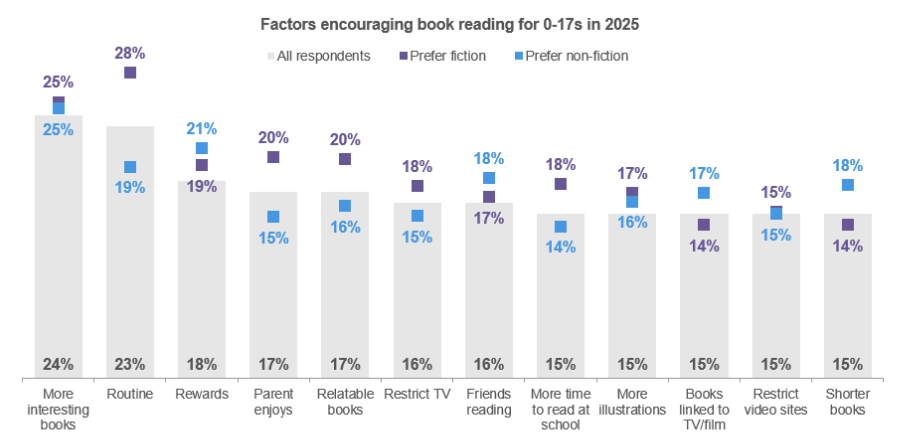
As a National Year of Reading in the UK, 2026 is of course all about people of all ages reading more, ideally from as young as possible to foster a lifelong love of books and create lasting habits. Fittingly, our annual Understanding the UK Children’s Book Consumer study is designed to deliver insights into how to boost reading among 0-17s and to understand how books fit into their lives alongside other leisure activities. We even have a question that covers what would encourage more reading for 0-17s, and the 2025 results showed that more interesting books and routine remain the top factors, followed by rewards, parental enjoyment and relatable characters/circumstances. Over the past couple of years, more interesting books has increased in potential, along with rewards, friends reading more, books linked to TV/films/video games and more books by celebrities/people liked.
That will vary by age, interests, level of enthusiasm for reading and many other factors, and one interesting split to look at is preference for fiction vs non-fiction. For those 0-17s that slightly/much prefer fiction books, routine pulls ahead of more interesting books and is especially more pronounced compared to those that prefer non-fiction. The fiction crowd is also more likely to be encouraged by parents showing enjoyment and relatable characters/circumstances, both at 20%, ahead of rewards, restricting TV and more time to read at school. On the other hand, those preferring non-fiction put rewards ahead of routine, with friends reading more, shorter books and books linked to TV/film also relatively more impactful. The graph below shows the top factors overall and how they vary by fiction and non-fiction preference (those with no preference not pictured).
Switching to age splits, more interesting books or routine led for most groups in 2025, shown below, apart from 0-2s, whose parents say that their own enjoyment can help to encourage their child. For growing factors, rewards rank highest among 8-10s, while friends reading more moves up the list with age, peaking among 14-17s. More books linked to TV/film could sway 5-7s more than other groups, with 8-10s looking for more books related to video games.
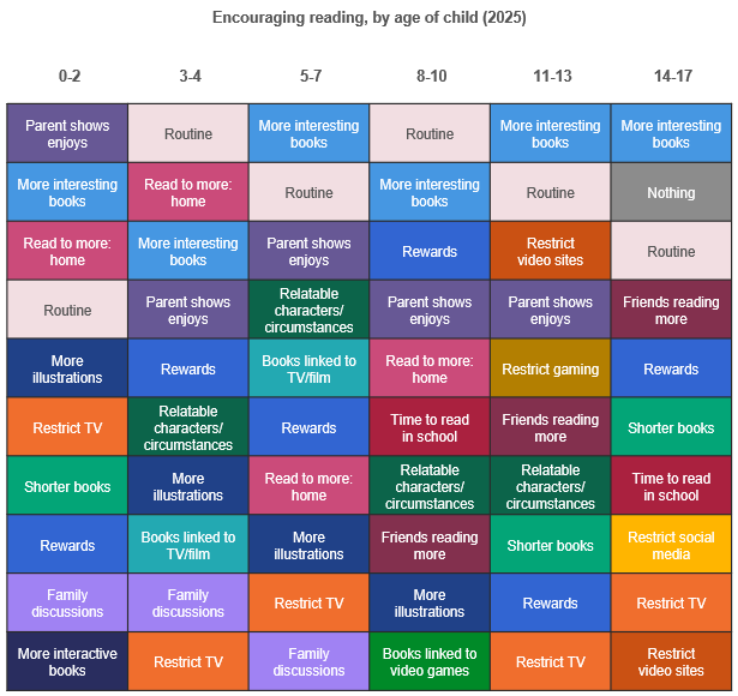
With parental enjoyment so prominent for younger ages and then friends reading more coming into the picture as children get older, it really shows the potential impact that sharing and talking about books can have, regardless of age and regardless of type of book. (We covered this from the adult reading perspective in a previous blog post.) Now is certainly the time to embrace the sharing and talking, as the National Year of Reading gives everyone an opportunity to shout (more) about books, hopefully generating plenty of enthusiasm for reading in 2026 and beyond.
The Understanding the UK Children’s Book Consumer study has been running annually since 2012, examining in depth and over time the book reading and buying habits of UK children in the context of their wider leisure activities. The 2025 report is available now, and you can view a preview here. Please contact infobookresearch@nielseniq.com for more information.
.