
Graeme Loudon, NIQ Global On-Premise Insights Leader, discusses how bartender engagement and advocacy are key to unlocking success in a global On-Premise that continues to face economic pressures and mounting challenges.
Turning bartender trust into long-term commercial value
With penetration now standing at 82%, down one percentage point (pp) year on year, and weekly visitation fallen to 59% (also down 1pp year on year), both suppliers and On-Premise businesses are operating in an increasingly competitive and challenging environment. These pressures are compounded by ongoing financial strain on consumers, creating a more volatile and uncertain market in which every drinking-out occasion and every single purchase has to work harder to justify its value.
Yet, the picture is not uniformly negative. Our recently released Global Bartender Report – the largest study of hospitality professionals globally – shows that premium and independent bars are actually outperforming the market, particularly when they are able to deliver a strong combination of quality and value on higher-spend occasions. This is because consumers still crave premium drinks, but they are becoming increasingly selective about where and when they choose to have them. They need to feel that their purchase is of a level of quality that is worth paying for. This means that rather than simply driving volume, businesses need to focus on capturing the moments that really matter and delivering experiences that give people a compelling reason to spend.
High-quality cocktails, for instance, clearly meet these expectations. Drinkers generally perceive them as being worth their price tag, which helps explain why they are such a popular category across the global On Premise. But the strong appeal of mixed drinks would be nothing without the crucial role played by bartenders. Bar professionals shape the entire experience around it (the added value that consumers are increasingly willing to trade up for) while also having a direct influence over what they order. In this sense, bartenders are the gatekeepers of experience, spend, and brand choice.
So, for brands looking to navigate a pressured On-Premise, bartender engagement is key. But this needs to move beyond a traditional supplier relationship and become more genuine and meaningful. That means investing in bartender advocacy, understanding what they need to deliver better experiences, and providing the products, knowledge and support that help build quality cues into every serve. In a market where consumers are asking themselves whether an experience is truly worth it, brands that enable bartenders to answer that question convincingly can create a powerful route to growth.
The Human Element of the Premium Experience
For consumers to justify spending more on an occasion, the experience they get needs to offer something they cannot easily replicate at home or access in another venue. When asked why guests are willing to pay more to drink in their bar, 77% of bartenders cited the experience as a central driver, while 81% described delivering new or elevated experiences as essential or very important to their overall venue concept. But these experiences aren’t just about what’s in the glass. They encompass atmosphere, service, safety, and social connection. Our research, for instance, shows that excellent customer service is now the third most important factor consumers associate with a premium eating and drinking experience, while two in three guests say they are looking for personal service rather than simply functional service.
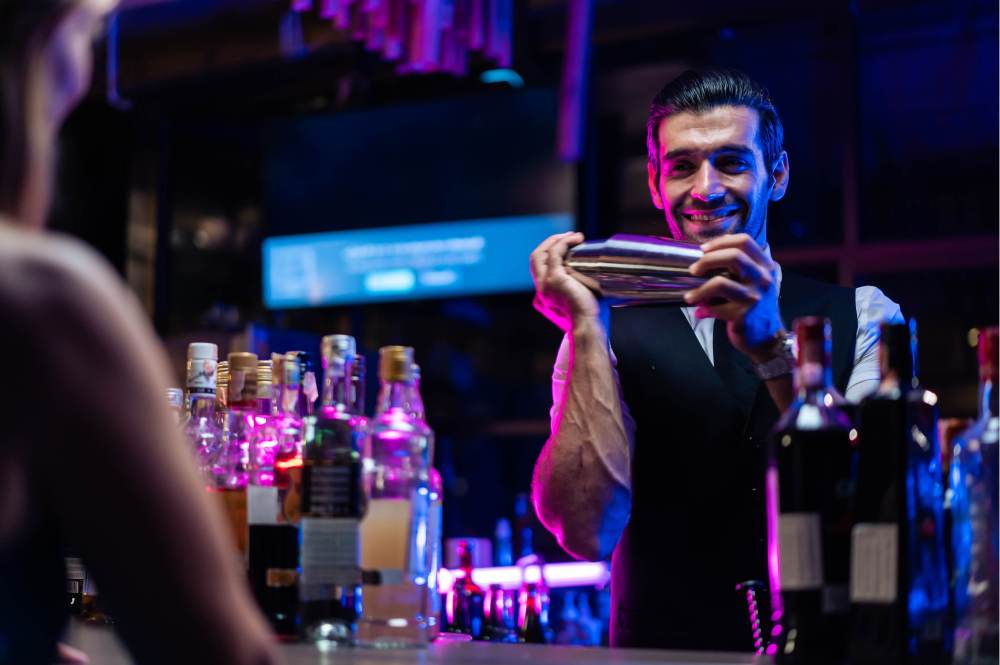
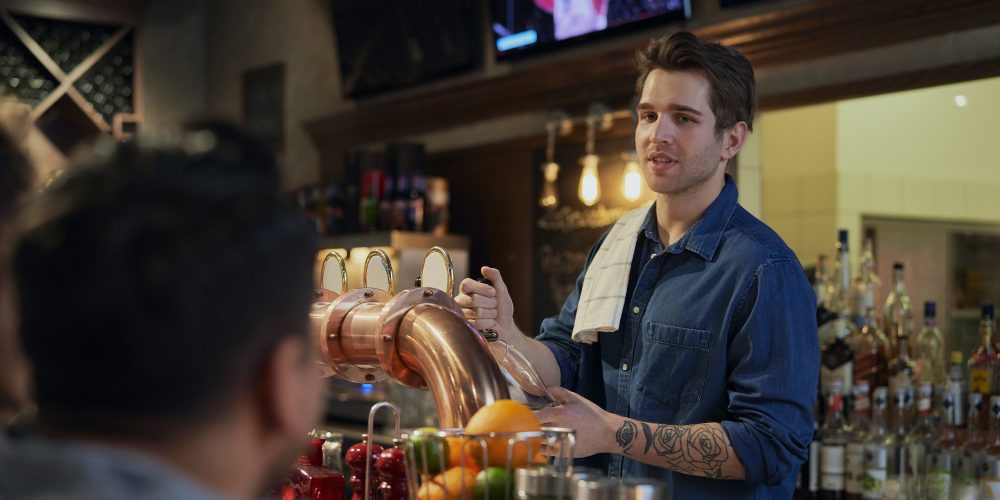
Bartenders are in a uniquely influential position in creating this, as they manage both the preparation of the drink and every aspect of the interaction with the guest. They can create genuine connections through recommendation and storytelling, then enhance these further with theatrics or spectacle.
Big or independent?
Recommendations of a specific spirit brand account for 24% of bartender recommendations, compared with 36% for cocktails, so spirits clearly present a big opportunity for brands looking to capitalise on bartender advocacy. Winning this influence, however, is not simply about being visible or following the latest trend, but about aligning with what drinks professionals look for in the products they feel they should prioritise. Bartenders are placing greater value on liquids with an authentic identity, strong craft credentials and credibility, which they can then build on to develop better serves and experiences for guests. Almost half, for instance, value a brand’s perception of authenticity, while more than one in three value brands that are local or demonstrate a strong regional identity.
At first glance, this data might suggest that bar staff are naturally predisposed towards smaller, independent producers. But as long as they can demonstrate some of the qualities bartenders value, there are opportunities for global producers too. In fact, our study shows that the ideal backbar composition is remarkably balanced, with an almost equal mix of large, recognisable and trusted labels alongside independent, craft and smaller producers. In fact, looking at category-specific nuances further confirms that the opportunity is open to both large and small brands.
When it comes to whisky, recommendations tend to favour conglomerate-owned brands, while independent labels feature much more prominently in agave-based spirits. This is likely because leading single malt Scotch brands, for example, generally benefit from significant credibility around quality and provenance, even when owned by large companies. The biggest tequila brands, on the other hand, do not necessarily receive the same level of trust due to questions around transparency, sustainability and cultural authenticity that surround the category, meaning that independent producers can become more compelling alternatives.
So all brands must ensure they reinforce their credentials and demonstrate why they deserve to remain in a bartender’s consideration set, regardless of their size.
The phases of brand advocacy
In practical terms, to earn a recommendation, businesses need to understand the different phases of the brand advocacy model for bartenders and ensure they tick all the boxes throughout that pathway. Say a guest requests a peaty whisky. This initial preference is filtered through several stages: first, which whiskies are most salient to the bartender; second, which of those they know well enough to identify as fitting the brief (have a peaty profile); and finally, which of this selection they actually have an affinity for. That is ultimately what determines the brand they will suggest.
Businesses need to invest throughout this process, ensuring they establish advocacy that is both authentic and long-lasting. Our research points to three key pillars for achieving this: support, relationships and education. The first is about demonstrating that a brand genuinely cares about the bar and the people working in it. The second is built through trust and personal connection, giving bartenders a reason to feel invested in a brand beyond the product itself. Meanwhile, education gives bartenders the knowledge and confidence to use, talk about and recommend a brand.
Advocacy cannot simply be bought through distribution, visibility or portfolio breadth. It has to be earned through sustained engagement that makes bartenders feel supported, connected and confident. The strongest brands will therefore be those that treat bartender relationships not as a route to short-term activation, but as a long-term investment in influence.
From sentiment to partnership
Activations are among the most visible and effective ways brands can engage with bartenders and their venues. But activations should be approached not as isolated marketing exercises, but as opportunities for partnership that unlock mutual wins, as almost four in five operators (79%) say the quality of in-outlet activation is an important aspect of their drinks suppliers’ offering. When properly executed, they offer an opportunity to turn positive sentiment into stronger relationships, greater guest engagement, and commercial performance.
Proper execution means responding to the needs of the venue, supporting staff and adding something meaningful to the guest experience. This is what strengthens the relationship between brand and bartender while reinforcing the positive sentiment that underpins advocacy. Poorly executed activations, by contrast, risk damaging the very relationships businesses have worked to build.
As always, though, the devil is in the nuance. An activation that works for one venue may be completely inappropriate for another, so businesses cannot simply replicate the same event across multiple outlets. The strongest activations are built with venues, not simply delivered to them, understanding the realities of each establishment, and adapting accordingly. That’s the very definition of a partnership, after all. An idea that feels disconnected from the unique feel and character of a bar can seriously undermine one of the venue’s most important assets, while an initiative that integrates naturally into the space can enhance the atmosphere while giving consumers an additional reason to engage.
According to our study, for over half of bartenders, enhancing the guest experience is the strongest motivation for collaborating with brands on in-venue activations. Add an opportunity for staff to learn or develop new skills, alongside elements that give people a reason to participate (like product sampling and tasting sessions for guests), and the activation becomes an experience that gives bartenders an opportunity to demonstrate their expertise and create memorable interactions with drinkers.
The best partnership is not the one that simply generates the most obvious brand visibility, but one that genuinely makes the venue better, gives staff something valuable, and guests a more engaging experience. When businesses understand this distinction, bartender engagement and advocacy become the most efficient marketing tool for building long-term commercial growth in the On-Premise.
Build stronger bartender relationships
NIQ’s Global Bartender Report, powered by BarSights, is the largest study of hospitality professionals globally, surveying 1,732 hospitality professionals around the world. Respondents were hand-selected to ensure a high-quality and insightful view of the On-Premise sector in 2026, providing comprehensive insights into a crucial audience for suppliers and brands.
Our expert team can also deliver bespoke analyses, pinpointing tailored opportunities for individual brands and operators.
To explore how NIQ’s research can enhance your strategies or to learn more about NIQ’s consumer insights for brands, operators, and suppliers, get in touch with out experts.