Supply Chain Analytics
From forecast to shelf – diagnose, predict, and collaboratively activate to maximize availability and sales.
Turn supply chain complexity into reliable on‑shelf performance
Retailers don’t win by reacting to supply chain issues after they hit the shelf. They win by anticipating risk, prioritizing what matters most, and acting early – at scale, in collaboration with their suppliers.
NIQ Activate Supply Chain Analytics connects demand signals, inventory, supplier performance, and on‑shelf execution in one collaborative platform – so retailers and suppliers can protect availability, reduce lost sales, and improve operational performance across every node of the supply chain.
Built as part of the NIQ Activate platform, it provides a shared, secure environment where retailers and suppliers work from the same data, align on priorities, and collectively resolve availability risks before they impact shoppers and sales.
End‑to‑end supply chain insight, built to drive joint action.
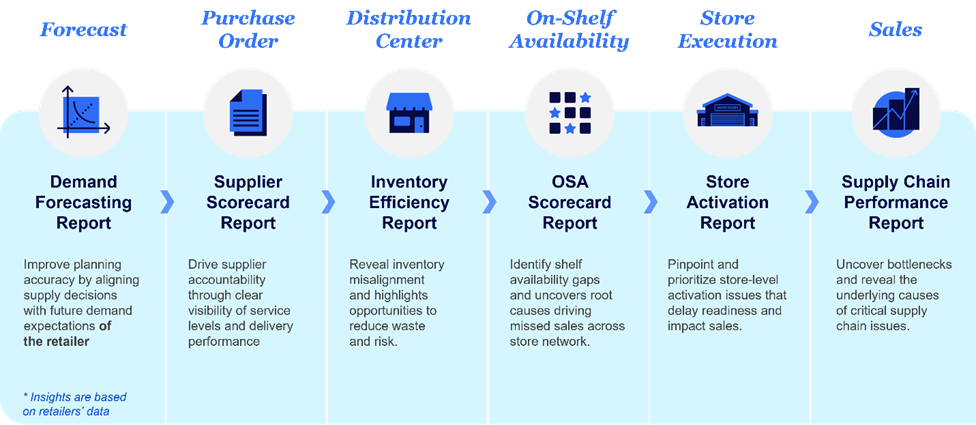
NIQ Activate Supply Chain Analytics is a purpose‑built, collaborative SaaS solution that gives retailers and suppliers end‑to‑end visibility from demand signals and purchase orders to Distribution Centers operations, store inventory, and on‑shelf availability – all tied directly to sales impact.
By combining real‑time analytics, predictive intelligence, and prescriptive alerts, the platform helps teams diagnose root causes, quantify missed revenue, and trigger the right actions – fast.
Built for collaboration, it enables retailers to operationalize supply chain analytics with their suppliers, align on commercial and operational priorities, improve service levels, and continuously optimize availability and inventory through a single shared source of truth within the Activate ecosystem.
Drive measurable sales growth
Deliver +2% sales lift by aligning inventory, suppliers, and stores around actionable, revenue‑focused insights.
Increase on‑shelf availability at scale
Improve total store availability by +3.3 points through prioritized, end‑to‑end execution across supply chain stages.
Protect revenue and prevent losses
Reduce missed sales opportunities by 50% weekly by predicting and correcting out‑of‑stocks before shelves break.

Education
NielsenIQ Activate unveiled at C360 to navigate the evolving retail media landscape
21 June 2022, 5 mins read

Analysis
More than monetization: Retail media is about deriving value from consumer insights
20 September 2022 , 5 mins read

Multimedia
NIQ + The CPG Guys Podcast Episode 2: The Retail Media Revolution
11 July 2023 , 2 mins read

Education
NielsenIQ Activate unveiled at C360 to navigate the evolving retail media landscape
21 June 2022 , 5 mins read
Frequently Asked Questions
- How does a supply chain management strategy improve visibility and execution across the network?
An effective supply chain management strategy connects store, DC, supplier, and item‑level data into a single operational view. By leveraging AI‑driven supply chain management analytics, organizations can detect risks early, understand root causes, and prioritize actions that protect on‑shelf availability. Instead of reacting to disruptions, teams use predictive signals and real‑time dashboards to continuously optimize replenishment, fulfillment, and store execution. This approach enables faster decisions, better collaboration, and measurable business impact.
- How do supply chain management analytics support faster and smarter decisions?
AI‑powered supply chain management analytics move organizations from descriptive reporting to predictive and prescriptive decision‑making. Advanced algorithms analyze daily POS, inventory, and fulfillment signals to identify abnormal patterns, forecast demand, and quantify missed sales. These insights allow teams to focus on the highest‑impact issues first and activate corrective actions at scale. Analytics powered by AI turn complex data into clear priorities and measurable outcomes.
- What role does a supply chain management tool play in improving execution?
A modern supply chain management tool acts as a centralized platform where data, insights, and actions come together. AI‑enabled tools aggregate first‑party and market data to surface risks, recommend actions, and monitor performance across inventory, suppliers, and stores. By replacing spreadsheets and disconnected systems, teams gain consistent metrics, faster collaboration, and scalable execution across the supply chain.
- How does AI improve demand forecasting inside supply chain management?
AI enhances demand forecasting by continuously learning from historical sales, promotional activity, and daily store‑level signals. Machine learning models anticipate shifts in consumer behavior and detect upcoming demand spikes or declines. This allows supply chain teams to align production, replenishment, and inventory placement more accurately, reducing lost sales and improving service levels.
- How can supply chain management strategy improve supplier collaboration?
A strong supply chain management strategy introduces transparency and shared accountability between retailers and suppliers. AI‑driven analytics track service levels such as OTIF, fill rate, and delivery compliance, connecting supplier performance directly to on‑shelf availability and sales impact. This shared insight enables data‑driven conversations, focused corrective actions, and stronger long‑term partnerships.
- How do supply chain management tools optimize inventory performance?
AI‑enabled supply chain management tools continuously monitor inventory levels across stores and DCs, identifying overstock and low‑stock risks. By comparing actual sales velocity to forecasted demand, these tools highlight where inventory is misaligned and recommend redistribution, replenishment, or markdown actions. This improves inventory efficiency while protecting availability and margins.
- How does supply chain analytics help prevent on‑shelf availability issues?
Supply chain analytics use AI to detect abnormal sales patterns that signal true out‑of‑shelf situations before shoppers encounter them. By quantifying missed sales and identifying root causes across DCs, stores, and execution processes, teams can act earlier and prioritize fixes with the highest financial impact. This proactive approach shifts availability management from reaction to prevention.
- What value do supply chain management services add beyond technology?
Supply chain management services combine AI‑powered platforms with domain expertise to accelerate adoption and impact. Expert teams help configure analytics, validate insights, and guide organizations through change management. This ensures that insights translate into action, sustained performance improvements, and measurable ROI.
- How do analytics support long‑term supply chain management strategy?
Advanced supply chain management analytics connect daily operational signals with long‑term strategic planning. By understanding where disruptions occur and how they impact revenue and customer experience, leaders can refine sourcing, network design, and replenishment strategies. AI ensures strategy is continuously informed by reality, not assumptions.
- How does an AI‑driven supply chain management tool scale across the organization?
AI‑driven supply chain management tools are built to scale through automation, role‑based dashboards, and shared metrics. SaaS platforms enable rapid deployment, consistent governance, and collaboration between retailers and suppliers. This allows organizations to expand insight usage without increasing operational complexity, ensuring sustained value creation.