Getting America ready for summer 2026
The U.S. lodging sector has long been a vital outlet for the drinks industry, but its importance will only intensify in the months ahead, as summer travel, America’s 250th anniversary celebrations, and a packed slate of sporting events fuel demand. Drawing on insights from our most recent US Hotels Beverage Study 2025, the report explores key trends and consumer behaviours in the sector, highlighting the dynamics drinks manufacturers should understand to make the most of the peak travel season.
On the 4th of July this year, the United States will commemorate 250 years since the signing of the Declaration of Independence, an important milestone not only in the nation’s history, but in the broader course of the modern world. To celebrate the 250th anniversary, major festivities are expected across the country, from dedicated exhibitions to large-scale parades. Alongside this, the FIFA World Cup, kicking off slightly earlier and overlapping with these celebrations, is set to further amplify activity. Combined with the natural vigour of the summer season, these events are likely to represent a considerable opportunity for the drinks industry. NIQ’s upcoming Hotel Beverage Study 2026 – developed in partnership with the American Hotel & Lodging Association (AHLA), set to launch soon – offers actionable insights to maximize trends. The lodging sector has always played a central role in On Premise drinks consumption, but such a packed calendar of high-profile events will significantly amplify its importance, as more people will be encouraged to travel and spend time out.
American consumers engage with a wide range of accommodation types, from standard hotel chains to spas and resorts, though some are more popular than others. Our research shows that standard and select-service chains are the most commonly visited, particularly among older demographics. Younger consumers, however, seem to be more drawn to independent rentals and homestays, a segment that has grown by 5 percentage points (pp) year-on-year. Other channels seeing notable increases include premium hotels (+9pp) and boutique properties (+5pp). For drinks brands looking to maximise On Premise sales, these growing channels (and the distinct demographics they attract) deserve close attention.
Most hotel visits are for leisure purposes, with just under 80% linked to vacations, or for specific celebrations involving an overnight stay (just under 50%). But there are other reasons Americans visit hotels, including dining in their restaurants and bars, using amenities such as casinos and spas, or accessing facilities like sports courts. While these clearly defined motivations will remain relevant in the future, our report shows that the boundaries between them are increasingly becoming blurred. For instance, 61% of business travellers have combined a work trip with an extended vacation in the past 12 months, effectively turning business travel into “bleisure” (a dynamic we explore in detail in the report). For brands and hotels alike, it is therefore essential not only to consider traditional travel behaviours, but also to account for this evolving landscape if they want to develop offers that truly maximise beverage sales.
Leading categories
Major alcoholic beverage categories such as beer, wine, and cocktails offer the greatest opportunities for the industry in the lodging sector over the next 12 months, with 37%, 34%, and 30% of consumers respectively expecting to drink these during hotel stays. Hotels serve a broader range of functions compared to bars, pubs, and restaurants. This makes it essential for businesses to closely analyse channel-specific data and adapt their strategies accordingly to maximise sales.
One notable insight is that while beer leads overall, wine becomes the top category among premium and luxury hotel visitors, with over 40% engaging with it. Cocktails also rank highly in this channel, still behind beer, but showing a stronger preference compared to standard hotel visits. Yet, it is not all about alcoholic beverages: lodging represents a strong channel for non-alcoholic drinks as well. Hot coffee is the most popular non-alcoholic choice, with 43% of consumers purchasing it, followed by soft drinks (35%) and bottled water (32%). Businesses should not underestimate these beverages: not only are both coffee and bottled water high-margin categories, but they also perform better in hotels than in other hospitality channels (11pp and 10pp higher respectively). Non-alcoholic alternatives to cocktails, beer, and spirits should not be overlooked either. They still account for a smaller share overall (between 5% and 7%), but our report indicates they are set to grow significantly in the future.
To help further refine drinks category strategies, we can also cross-reference beverage choices with visit type. Wine, for example, is more commonly associated with visits not involving an overnight stay, such as one-day business trips, work events and occasions where a hotel’s restaurant or bar is the primary focus of the visit. Beer, meanwhile, tends to perform more strongly during casual visits, including leisure activities, amenities, and vacations. Interestingly, it is also highly popular on overnight business trips, suggesting it might play a role in longer, more time-intensive work travel. With three in four of these trips involving conferences or events, beer is also associated with business trips that include a social element.
Reasons to go
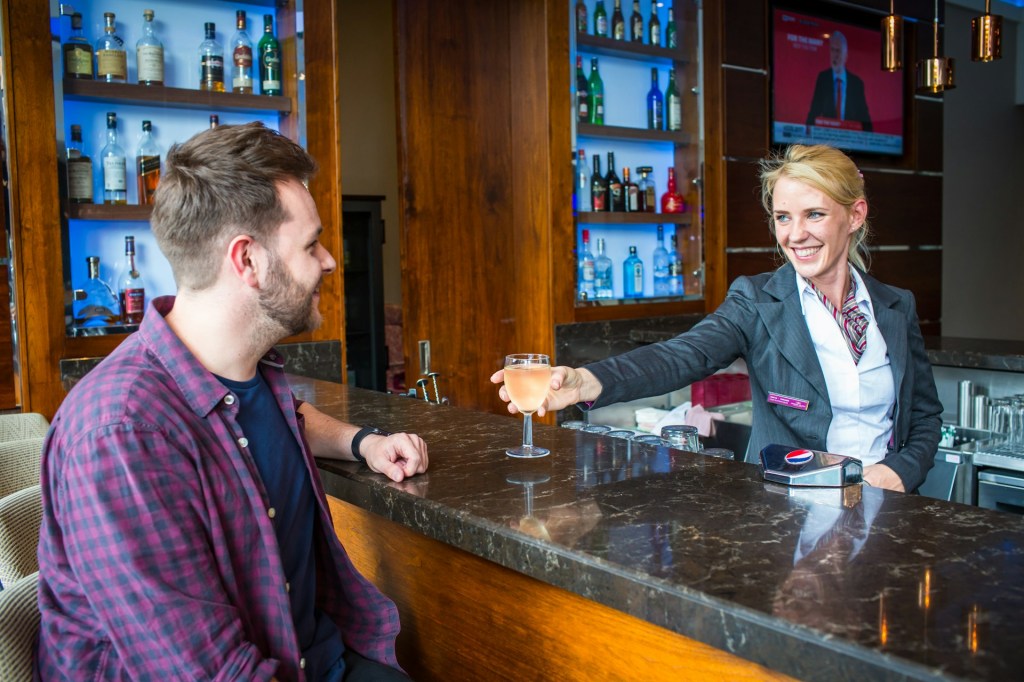
Looking at the social context of hotel visits adds further nuance to the data, helping to better unpack drinking behaviour in the lodging market. Business travellers are more likely to be alone, while people on a vacation most commonly go to hotels with a partner or spouse. Stays with friends tend to overlap with partner-led visits, but when we look more closely, they are noticeably more common in the context of hotel bar or restaurant visits without an overnight stay. These differences are not surprising. People visit hotels for a range of reasons, and the social context often determines the specific purpose of the trip.
Once consumers arrive on the premises, a range of factors come into play in their purchasing decisions. Happy hour menus and promotions are by far the most influential drivers, they are consistently a highly effective way to encourage trial and build longer-term brand loyalty. This is supported by our drinking occasion data, where happy hour is the most common choice for nearly half of all hotel guests. When cross-referencing multiple data points, however, a more nuanced picture of the factors influencing purchasing decisions begins to emerge. The availability of premium brands or drinks with a strong sense of place, for instance (whether through local producers or regionally rooted styles and recipes) can be decisive in luxury settings, for instance, although these factors tend to carry less weight for the average guest. Visibility – especially on drinks lists – is always essential, yet to fully capitalise on this, advertising must be strategically positioned. Placement near the bar or lounge is particularly effective, with nearly two-thirds of guests recalling drinks promotions in these areas. Meanwhile, the front desk performs less well, likely because guests there might be focused on other priorities, like checking in or seeking information, rather than planning their next sip.
There are also clear patterns in when and where guests prefer to drink within a hotel. Celebratory moments are especially important in outdoor bars and restaurants. In these settings, hotels should ensure premium offerings are front and centre to maximise engagement. By contrast, in pool areas, it is the desire to unwind and relax that shapes decisions. Here, the focus should shift toward drinks and brands that align with a more laid-back, easy-going experience.
As for timing, the evening plays a central role in alcohol consumption in hotels, much as it does in other drinks-led venues. But since guests typically stay at accommodation for longer than just a few hours, other parts of the day present significant opportunities too. Mid-afternoon, for example, is a key drinking moment for nearly 40% of consumers, particularly in pool areas and outdoor bars and restaurants. As the evening progresses, beverage consumption shifts indoors, concentrating later at night in bars, lounges, and rooftop spaces. Successfully following guests along this journey, and adapting the offer to each space and moment, is essential to maximise sales in the events-packed summer of 2026. To further reinforce the opportunity for the US lodging sector this summer, our report shows a continued shift in travel patterns, with an expected rise in domestic trips at the expense of international travel. Drinks brands and hotel operators really must be ready for this. As the Hotels Beverage Study highlights, the key to seizing the opportunity lies in ensuring that every decision – where, what, how, and when to offer a brand or category – is informed by granular, data-led insights into the market.
Turn Hotel insight into influence
NIQ’s Hotels Beverage Study 2026 offers a detailed overview of, and insights into the hotel landscape, helping American hotel operators and drinks businesses better understand the hospitality sector, track evolving trends, and build more effective strategies.
The next annual installment of the report will be available from the end of May 2026. Our expert team can also deliver bespoke analyses, pinpointing tailored opportunities for individual brands and hotel groups. To explore how our research can enhance your strategies, download more information