
A new kind of caution: intentional, not panicked
Australia is entering a new phase of FMCG demand — one defined by deliberate trade-offs. Cost-of-living pressures still shape weekly decisions about what stays in the basket, pushing consumers to become more selective, changing the way they decide what stays in the basket and what gets cut.
That context matters because the macro signals remain “noisy”, with expectations for inflation to be pressuring again due to potential fuel shortages. In that context, the lived experience for many consumers is still a weekly balancing act — and FMCG is where those trade-offs could first show up. In uncertainty, shoppers don’t abandon categories completely — they re prioritise within them.
The shelf is becoming a trade‑off zone
Under pressure, shoppers protect what feels essential and reconsider what feels discretionary. Expectations of reduced spend are strongest in out-of-home dining, food delivery/takeaway, and other “extras,” while grocery remains comparatively protected.
Importantly, this isn’t only about households that are financially worse off. The largest consumer group is now “cautious” — households who say they aren’t worse off financially but are still tightening their behaviour. That shift is critical: it means the “middle” is adopting value behaviours (deal-seeking, switching, delaying) even when their income hasn’t necessarily changed.
This elevates the importance of clear range roles — ‘daily essential’, ‘flexible value’, and ‘earned treat’. When more of the market behaves like value shoppers, growth depends on winning specific decision moments with a clear value equation.
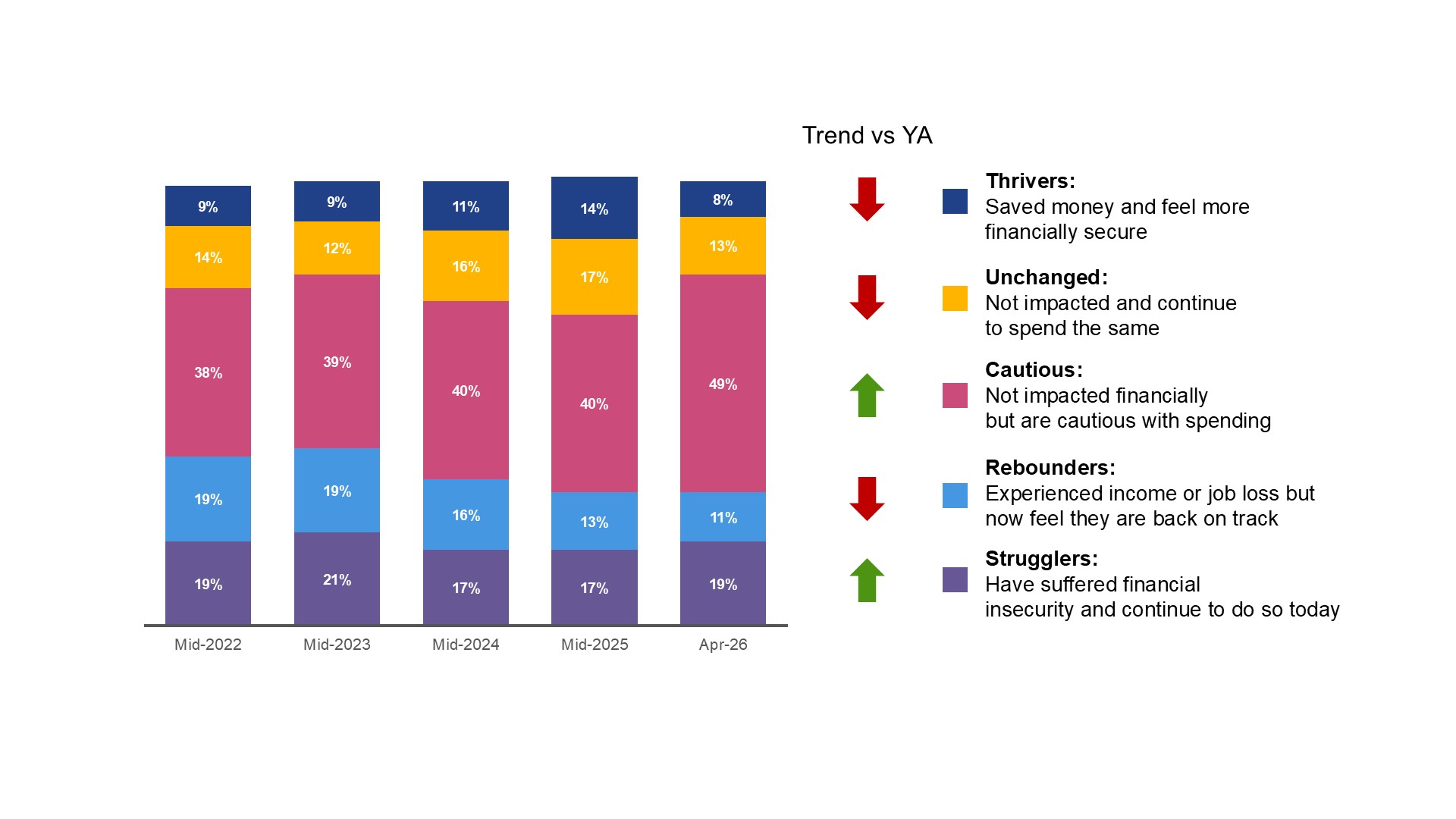
Survey question: Which of the following best describes how current events of the last few years have impacted your overall household financial situation?)
Intentional shopping is fragmenting the market
Shoppers are making more trips per year (rising to ~171.8 trips) while units per trip decline (to ~10.9) — a classic “frequency up, basket down” pattern. More trips create more “moments of truth,” spread across more retailers as consumers cross-shop further. In the latest data, 77% of shoppers are buying from 4+ retailers, diluting loyalty as consumers increasingly shop outside the major retailers – including online, which overperforms among large shopping missions and already has 38.6% Share of Trade in occasions when shoppers spend $120+.
Brands are no longer competing once or twice a week in one store — they’re competing many times, across many missions, across many touchpoints. Consistency (availability, price cues, pack options, shelf and search visibility) becomes a structural advantage.
Health & wellness is redefining “value” – and GLP-1 accelerates it
While uncertainty changes behaviour in the short term, the structural long-term trend underpinning intentional consumption is health and wellness. Consumers are more informed, more critical of claims, and more motivated by long‑term outcomes.
Weight management is now mainstream, as 67% of consumers say that maintaining a healthy body weight is more important than it was 5 years ago, and the motivations skew heavily toward health reasons (e.g., to support healthy ageing, to avoid diabetes/cardiovascular disease).
Health is becoming a “gate,” but it’s not the only gate. Shoppers want products that support wellbeing without sacrificing enjoyment, which is why taste, variety, and “easy fit” solutions still matter.
GLP‑1 accelerates the shift to intentional eating
GLP‑1 medications are a visible catalyst in this story. NIQ tracking shows awareness is high (78%), consideration is rising (55%), and ~17% of Australian households already have someone on GLP‑1 treatment. However, adoption is uneven as cost is a barrier: typical private-pay weight-loss treatment costs of ~$4k–$5k per year.
From a shopper lens, GLP-1 is less about “dieting” and more about routine change: GLP-1 users are more likely to eat fewer main meals per day and to replace meals with snacks at times, reflecting a shift in daily structure rather than just portion size.
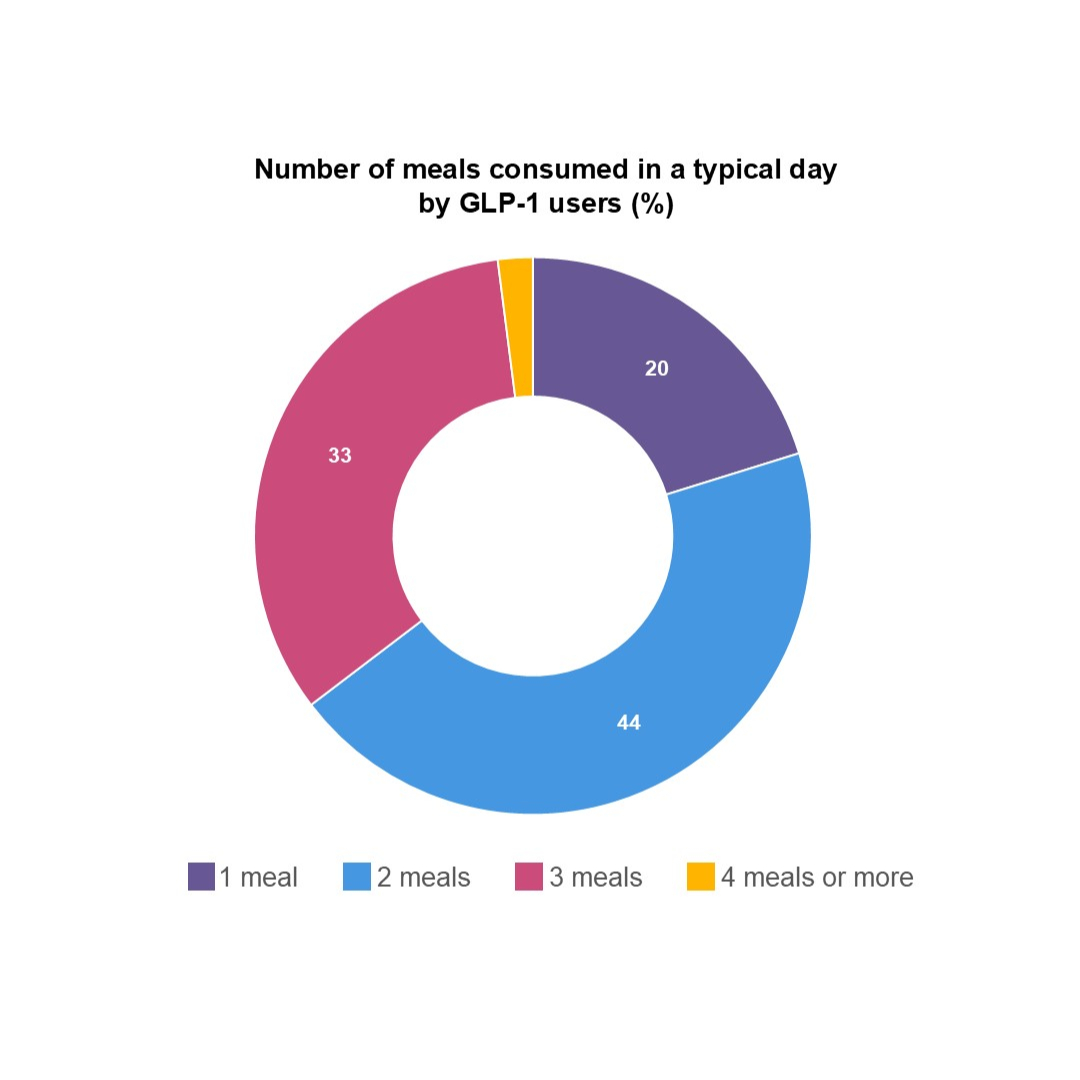
- 45% of GLP-1 users agree that sometimes they replace the main meal with snacks, vs 38% among non-users
- 64% of GLP‑1 users eat up to 2 meals per day vs 53% of non‑users)
Fewer eating occasions raise the bar for each occasion. The products that win must deliver higher satiety and higher perceived payoff — because there may be fewer chances to be chosen.
What changes in the basket: stage-based effects
GLP-1 impacts aren’t black and white; they change over time. NIQ data suggests that newer GLP-1 users over-index in nutritious categories (e.g., yogurt, fresh fruit, dried fruit/nuts), consistent with a shift toward nutrition-led, portion-friendly choices early in the journey.
Indulgence is often slower to unwind. NIQ category gaps indicate that discretionary treats (such as chocolate, ice cream, impulse snacks) can take longer to decline — implying substitution and selective premiumisation rather than immediate elimination. The behaviour is clear when some GLP-1 users claim that “when I want a cookie, I get the very best one”.
Alcohol also illustrates this well. GLP‑1 consumers may still go out, but they moderate via occasion control and substitution (drinking only for special occasions, low/no alcohol, alternating with non‑alcoholic options). The value for money when choosing a quality drink is also redefined, as GLP-1 users place greater value on being the perfect serve and on how it looks for posting on social media. In other words, less appetite does not automatically mean “less living” — it means more intentional choice.
Beyond food, the “halo” effect extends to wellbeing routines. GLP‑1 users are more likely to increase spending on health care and health/wellness needs, and consumption patterns suggest rising investment in self-care rituals.
GLP‑1 doesn’t replace the health trend — it accelerates it, and it changes what “everyday normal” looks like in baskets, occasions, and adjacent categories.
A practical playbook for FMCG leaders
The best response is to match actions to the time horizon and to design for intentional consumption.
Ripple (short-term volatility) – Protect trust.
Maintain availability on core SKUs, avoid knee‑jerk price moves, and use targeted promotions rather than blanket discounting.
Reprice (mid-term pressure) – Redesign value.
Strengthen revenue growth management via sharper pack‑price architecture and clearer value communication that matches how shoppers are trading off today.
Rewire (long-term structural change) – design for fewer, higher-standard occasions.
Invest in satiety-led innovation (protein/fibre), portion architecture (smaller packs, multi serve flexibility), and credible health positioning that doesn’t compromise taste.
The throughline is simple: shoppers are not leaving the market — they are raising the bar. Brands that make choices easier, deliver credible utility, and preserve enjoyment will be the ones that win in the era of intentional appetite.

Want to stay on top of emerging consumer needs?
Translate these shifts into sharper category strategy, innovation, pricing and activation decisions that unlock your next growth opportunity.