Australia’s smartphone market is undergoing a significant shift. New smartphone sales volumes declined 12% in the first half of 2026 compared with the same period last year, according to the NIQ Market Intelligence Sales Tracking Panel.
At the same time, device prices continue to rise while consumers are holding onto their smartphones for longer, extending replacement cycles across the market. With fewer than half of Australians planning to upgrade within the next 12 months, based on a recent NIQ consumer study, traditional handset growth models are coming under increasing pressure.
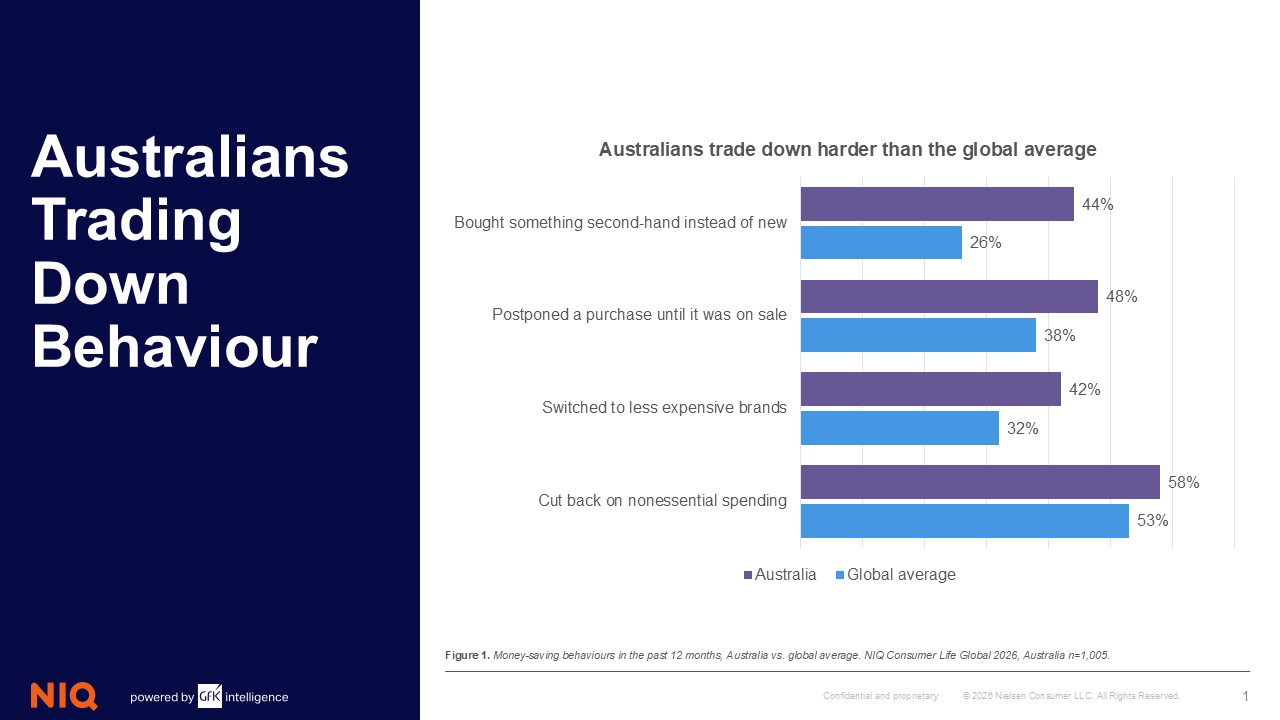
That pressure is landing on a consumer who is already trading down: 47% of Australians name inflation and high prices as one of their top three concerns — the single biggest worry in the market and well above the 34% global average — and 42% have switched from name brands to less expensive brands in the past year, based on NIQ Consumer Life Global 2026 study.
Yet hidden within this challenge is a significant opportunity: refurbished smartphones.
Consumer demand already exists. According to the same NIQ consumer study, more than one-third of Australians aged 18 and above who are considering a future smartphone upgrade say they would likely purchase a refurbished device. Interest is highest among consumers aged 18 to 44 and those planning to upgrade in the near term, highlighting growing consumer acceptance of refurbished smartphones as an affordable pathway to premium technology.
While affordability drives interest in refurbished smartphones, trust remains the biggest barrier to adoption.
Australians remain concerned about battery health, hidden defects, warranty protection, and refurbishment quality. Research shows that consideration increases significantly when refurbished devices are backed by a trusted mobile network operator that offers certified quality checks and warranty support.

72% – Quality & Performance
41% worry about battery life, followed by 38% fear hidden issues emerging later, and 33% are unsure how well the device was refurbished.
49% – Warranty/Risk
Transparent warranty and returns protection can significantly reduce perceived risk and build consumer confidence.
39% – Value
Trust, rather than price, remains the key adoption barrier. Consumers are more likely to respond to quality assurance and warranty protection than aggressive price reductions.
31% – Trust/Security
Stronger trust signals around seller credibility, refurbishment standards, and certified data wiping can help alleviate consumer security concerns.
Consumer Trends Are Creating the Right Conditions
Australian consumer attitudes are increasingly aligned with refurbished smartphones.
Inflation and high prices remain Australians’ biggest concern (47%), driving more value conscious behaviours. Nearly 44% of Australians bought something second-hand instead of new in the past year — far above the 26% global average — while 48% postponed a purchase until the product was on sale and 42% switched from name brands to less expensive brands. Australians are also more likely than consumers globally to have cut back on nonessential spending (58% vs. 53%).

Trust remains a key enabler of refurbished smartphone adoption
NIQ Consumer Life research shows that value for money is the #2 most-held life attitude in Australia among 44 measured attitudes: 53% of Australians agree, “for me, the most important thing about a brand is that it offers good value for the money.” Price is the #5 attitude nationally (45% agree it is the most important factor in their purchasing decisions), versus #13 globally. Trust is the qualifier on that value equation rather than a rival to it — 31% of Australians say they only buy from a trusted brand, and 52% will simply choose an alternative if a product or service disappoints them, the #4 attitude in the market. This presents a clear opportunity for operators and certified refurbishers to build confidence through transparent grading, certified quality checks, and warranty-backed support.
The long view: a decade of value and trust rising together
This is not a post-inflation blip. Over twelve years of Consumer Life tracking in Australia, the two attitudes have risen together: demanding good value for money has climbed from 44% to 53%, and insisting on a trusted brand has climbed further, from 20% to 31%. Australians have not traded trust away in pursuit of a cheaper device — they have raised the bar on both at once. A refurbished handset sold without certified grading and warranty fails the second test even when it wins the first.

The UK Provides a Glimpse Into Australia’s Future
If Australia wants to understand where the refurbished market could be heading, the UK offers a compelling blueprint.
Refurbished smartphones have been part of the UK market for more than a decade. Today, refurbished devices account for nearly 1 in 10 smartphone sales volume in the UK. Refurbished smartphone sales are growing 14% year on year, significantly outperforming the new smartphone market, which declined 7% over the same period.
The UK demonstrates that refurbished devices do not cannibalise new smartphone demand. In fact, they benefit from it. New flagship launches generate trade ins, increase the supply of premium refurbished devices, and create affordable upgrade opportunities for consumers who aspire to own premium brands but cannot justify the latest flagship price.
A White Space Opportunity for Operators and Resellers
The real opportunity extends beyond selling refurbished phones.
Mobile Network Operators that can manage the entire device lifecycle, from financing and trade in to refurbishment, resale, protection, and upgrades, can unlock new revenue streams while improving customer retention. International markets are increasingly moving in this direction, treating devices as recurring assets rather than one-time transactions.
Existing brand trust, customer relationships, retail footprints, and financing capabilities provide operators with a competitive advantage that many independent sellers cannot replicate. For specialist refurbishers, the opportunity lies in building trust through transparent grading, battery guarantees, certified testing, and robust warranty programmes.

The Bottom Line
Australia’s refurbished smartphone market remains underdeveloped compared with more mature markets such as the UK. However, many of the conditions that fuelled growth overseas is already emerging locally: rising flagship prices, longer replacement cycles, growing acceptance of second hand purchases, and an increasing focus on value.
The winners will be those who help shape the market, not wait for it to mature.
Operators, retailers, and refurbishers that invest early in trusted refurbishment programs and device lifecycle strategies will be best positioned to capture future growth.
Understand the consumers behind the trends
Explore insights from the NIQ Consumer Life Study to uncover how shifting attitudes toward value, trust, and spending are reshaping market opportunities.
Author:
Leo Tan, T&D Account Director – Customer Success, Pacific, NIQ