

Growth remains challenging for New Zealand FMCG manufacturers and retailers. While the market delivered $28.8 billion in sales and 2.9% value growth, consumers remain cautious, with 56% reporting that they feel financially worse off. At the same time, 44% of supermarket value sales are now sold on promotion, highlighting how carefully many New Zealanders are managing household budgets.
Against this backdrop, manufacturers are increasingly looking beyond traditional category competition to identify new sources of demand. At NIQ’s recent Pathways to Growth 2030 event, three major forces emerged as likely to shape FMCG growth over the coming decade: a more multicultural New Zealand, the rise of intentional eating, and the growing role of artificial intelligence in shopping decisions.
A More Multicultural New Zealand
New Zealand’s population is becoming increasingly diverse. Today, New Zealand Europeans account for around 67% of the population, but that figure is projected to fall to approximately 52% by 2048. Over the same period, the Asian population is expected to increase from 19% to 33% of the population, creating new opportunities across food, beverage and grocery categories. (source: https://www.stats.govt.nz/news/asian-ethnic-population-projected-to-increase/ )
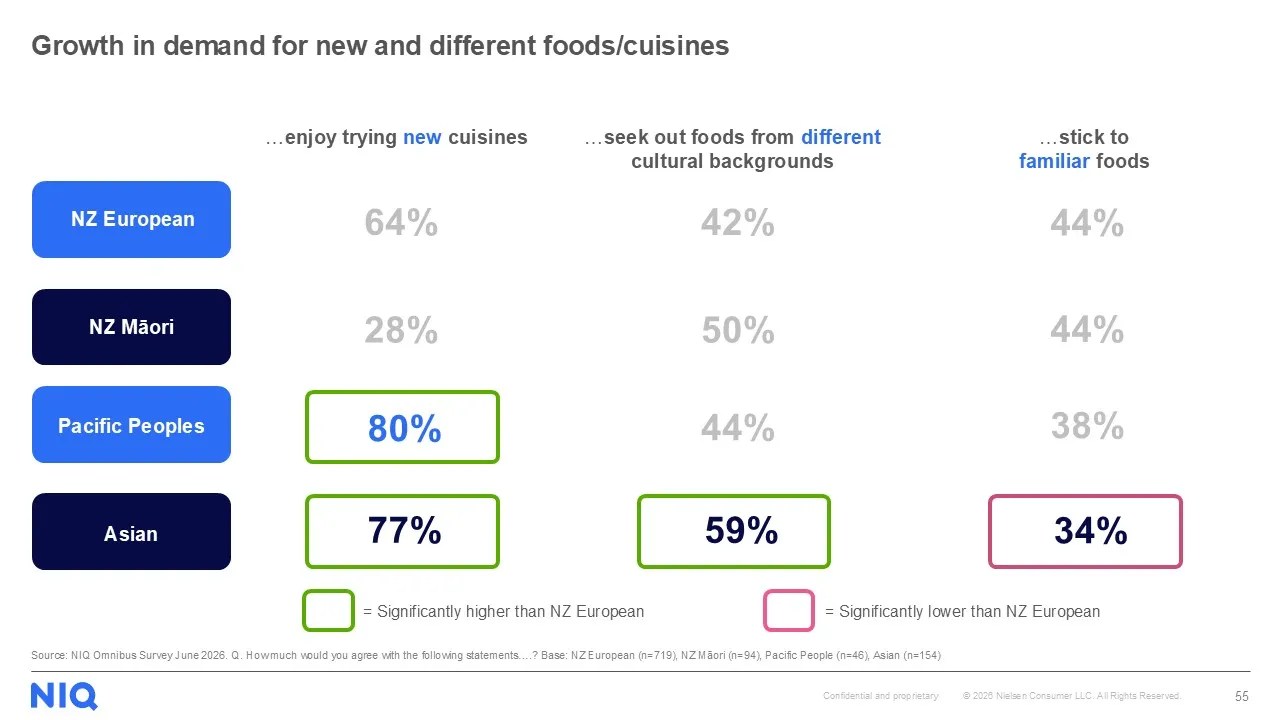
Consumer behaviour is already reflecting this shift. NIQ research found that 77% of Asian consumers and 80% of Pacific consumers agree they enjoy trying new cuisines, compared with 64% of New Zealand Europeans. Asian consumers are also significantly more likely to seek out foods from different cultural backgrounds.
This growing appetite for discovery is helping drive demand for Korean flavours, Southeast Asian street food, fermented foods, matcha and sweet-and-spicy flavour combinations. Social media is accelerating these trends, with 71% of Pacific consumers and 55% of Asian consumers citing social media as a source of food discovery.
The Rise of Intentional Eating
A second force reshaping demand is intentional eating.
Consumers have never had more visibility into their own health. Fitness trackers, sleep monitoring and health apps are helping people better understand their wellbeing and make more deliberate decisions about food and beverages. This is particularly evident in weight management.
NIQ research found that 49% of New Zealand consumers say managing body weight influences how they eat, with 58% describing it as a personal lifestyle choice rather than a response to a medical condition.
GLP-1 medications are accelerating this trend. While household penetration remains relatively low today, awareness has already reached 77% of New Zealand consumers, and 67% of Kiwis are either overweight or obese, highlighting the size of the addressable market.
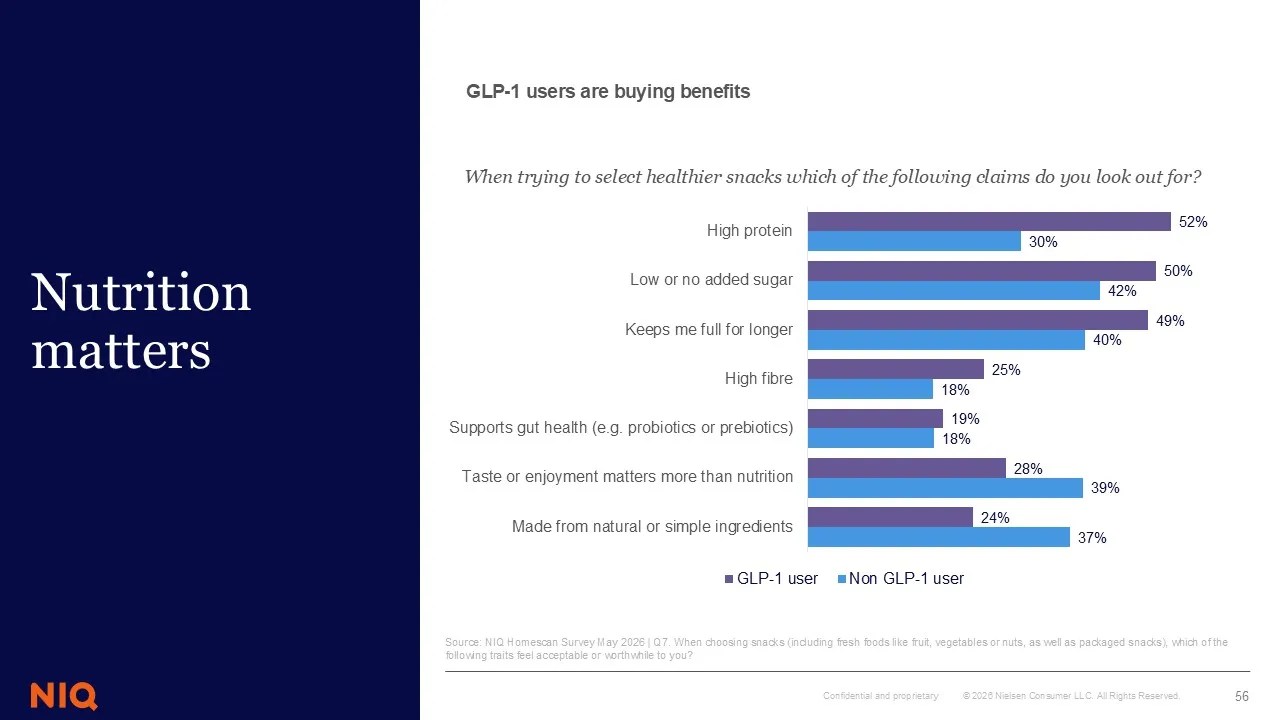
Among GLP-1 users, eating habits are becoming more deliberate. 60% say they snack less often, compared with 40% of non-users, while spending on discretionary categories such as snack foods, biscuits and frozen desserts is declining. At the same time, consumers are placing greater value on functional benefits. 52% of GLP-1 users actively seek high-protein products, compared with 39% of non-users, while demand for satiety, fibre and gut-health benefits is also significantly higher.
Enjoyment, however, remains important. 83% of GLP-1 users still experience cravings, and 73% say they enjoy trying new meals and snacks, creating opportunities for premium indulgence alongside better-for-you offerings.
AI Is Influencing Product Discovery
The third force is artificial intelligence.
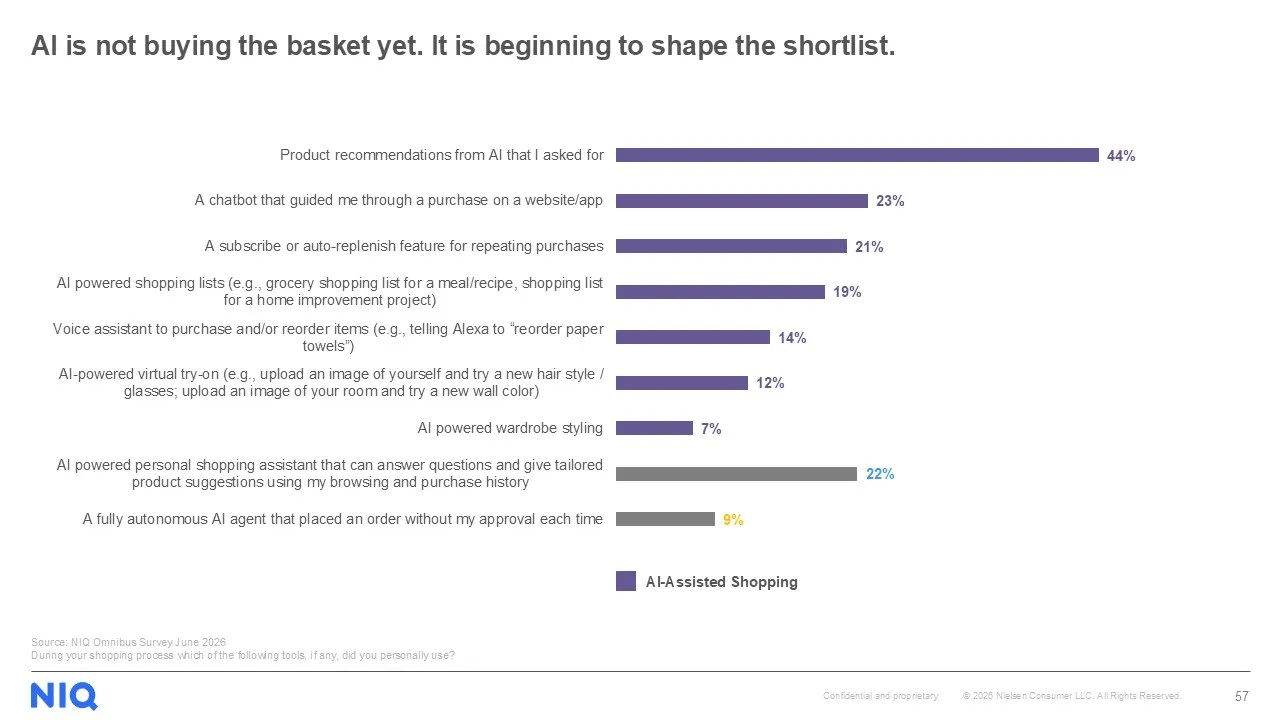
Although adoption remains relatively early in New Zealand, 22% of consumers report using AI tools during the shopping process, with usage rising to 36% among Millennials and 33% among Gen Z shoppers. Product recommendations are currently the most common use case, with 44% of AI users seeking AI-generated product suggestions.
As AI increasingly shapes consideration and shortlist creation, brands need to ensure they can be discovered, understood and recommended. Product content, ratings, reviews and clearly communicated benefits are becoming more important in influencing purchase decisions.
Looking Ahead
While these trends may appear distinct, they point to a common challenge: understanding where consumer demand is shifting.
Whether driven by demographic change, health goals or AI-assisted discovery, the strongest growth opportunities are emerging around evolving consumer needs, new occasions and more deliberate purchase decisions.
Manufacturers that successfully identify and respond to these shifts will be best positioned to create the next pathways to growth.
Author:
Simona Betiu, Executive Director, Strategic Analytics & Insights, NIQ ANZ
Why NIQ Growth Pathways
Decode market realities
Start with clear, precise understanding of market dynamics, establish direction, and frame the right questions early to strategically align every step.
Diagnose the consumer landscape
Combine diverse consumer perspectives with NIQ data assets for a connected view on how people think, feel and act in and around your category.
Discover uncharted growth
Build a strategic growth masterplan with a clear, actionable blueprint that leverages the mental advantage you already have and maps your pathway into expansive blue-ocean territories within and beyond your category.

Creating Your Pathway to Growth
Pioneer growth by untapping category potential in unfamiliar places