
Discovery is Already Influencing How Consumers Shop
AI adoption in shopping is no longer theoretical. Consumers are already using these tools to inform decisions, with 42% of US shoppers reporting use in the past month and 68% saying they have considered it.1
This growing usage signals the early stages of AI product discovery, where consumers are relying on these tools to find, compare, and narrow down options.
What matters is how these tools are being used. Most of today’s activity sits in the research phase. Shoppers are asking AI to find products, compare options, summarize reviews, and narrow down choices.
That behavior is important because it sits upstream of conversion. It is where consideration is formed and where brands are made the shortlist or filtered out.
The motivations behind usage reinforce this. Consumers are turning to AI to save money, save time, and make better decisions.
(NIQ AI Monthly Tracker)
Trust is Shaping How Far Adoption Goes
While usage is growing, it is still governed by clear boundaries. Consumers are selective about when and how they engage with AI tools, and trust plays a central role.
Security, transparency, and ease of use are the strongest drivers of increased adoption. These factors directly influence whether shoppers feel comfortable relying on AI in a purchase context.
Data is part of that equation. Consumers are most willing to share information that improves relevance, such as purchase history, loyalty accounts, and browsing behavior. These inputs allow AI to deliver more accurate recommendations and reduce friction in the journey.
At the same time, hesitation remains around more sensitive data, including payment details and health information. That creates a clear line. Consumers will participate when the value exchange is obvious, but they expect control and clarity.
For brands, this means AI performance is tied to data quality, as well as trust and transparency.
AI Product Discovery is Shifting From Keywords to Intent
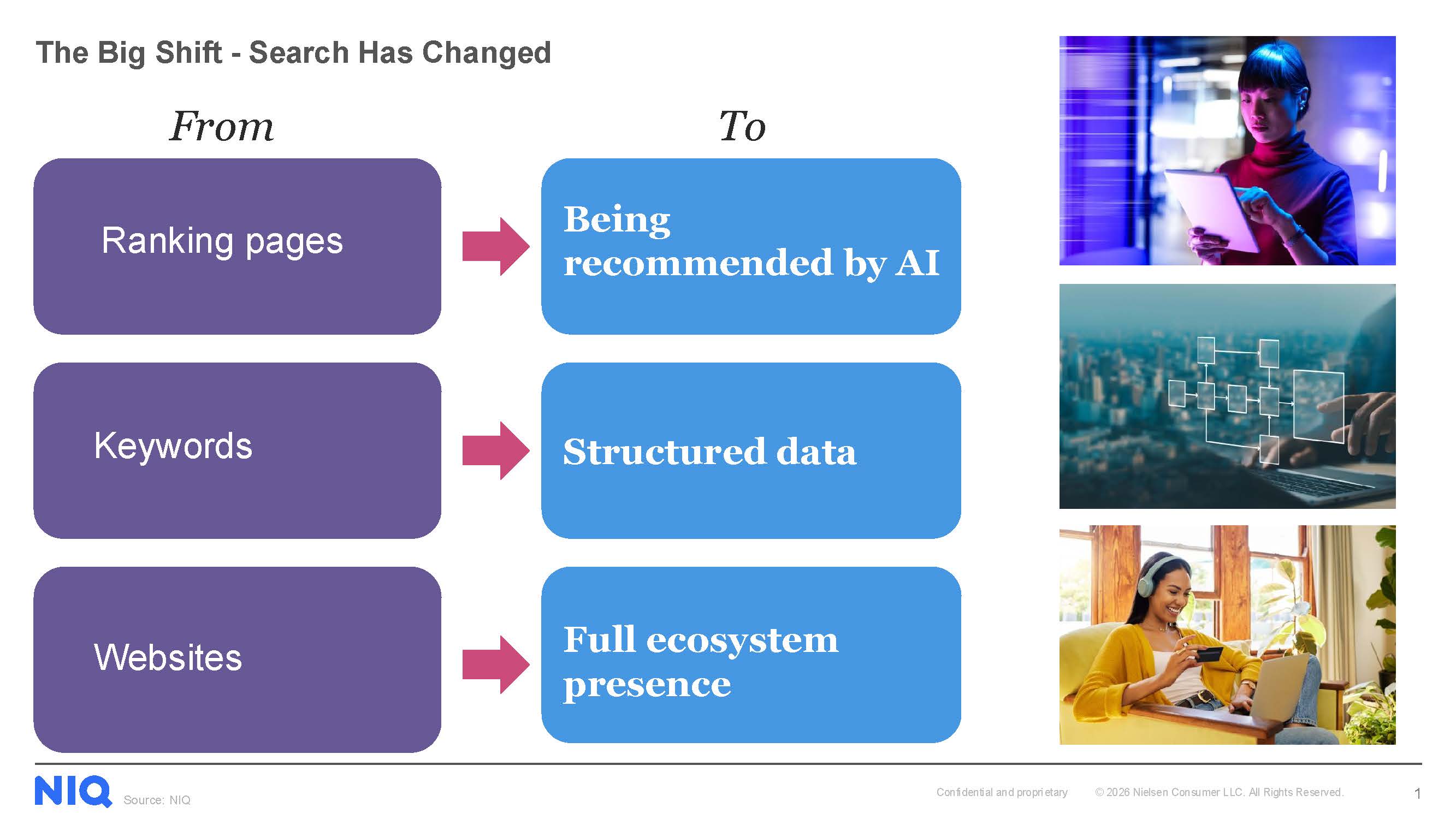
The way consumers find products is changing. Traditional search is still grounded in keywords and filters, but AI introduces a more contextual, conversational layer powered by natural language.
Shoppers are increasingly expressing the outcome they want, not just the product they’re looking for. Queries now reflect need states – what they’re trying to solve, achieve, or optimize, rather than simple product descriptors. This shift in AI product discovery reflects a broader move toward intent-driven behavior.
AI translates that intent into a curated set of recommendations, often narrowing the field significantly. Instead of navigating broad result sets, consumers are presented with highly relevant options aligned to their specific context. This compression is reshaping the competitive landscape. Fewer products are visible at the point of discovery, and those that are surfaced carry a disproportionate weight. Visibility depends on selection, not presence.
AI is Evaluating Products Across a Wider Ecosystem
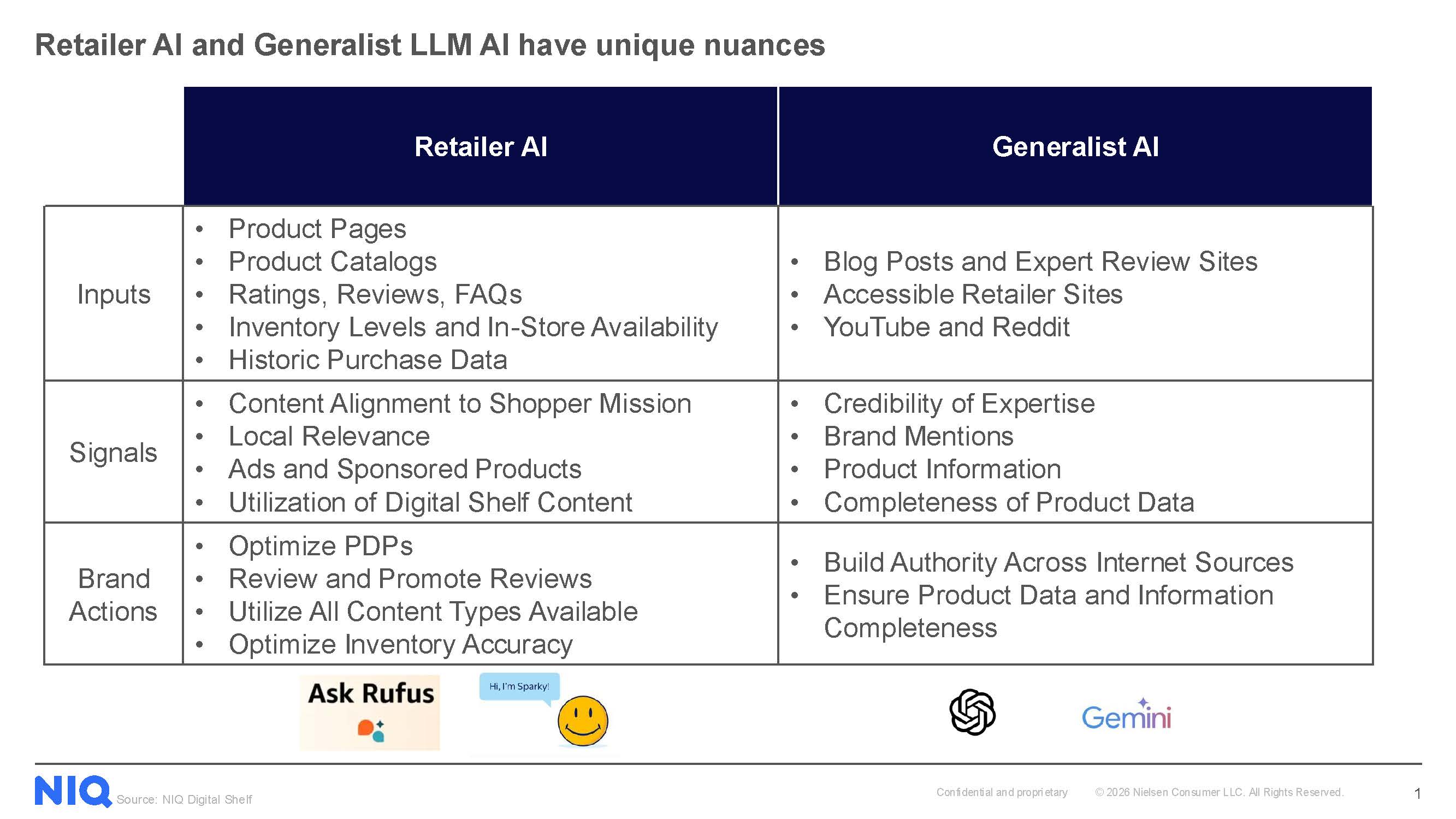
The inputs that shape AI recommendations extend well beyond a single retailer or platform. AI systems pull from a mix of sources, combining structured retail data with external signals. As AI product discovery becomes more distributed across sources, structured and comparable data becomes critical.
Retailer-based AI tools rely on product catalogs, reviews, availability, and purchase history. Generalist models draw from broader inputs, including expert content, social platforms, and community-driven information.
Across both, the same principle applies. AI depends on structured, comparable attributes that allow products to be evaluated side by side.
This is where the role of reviews becomes more pronounced. Beyond ratings, AI systems are analyzing the substance of feedback to validate claims and identify patterns. That type of content helps establish credibility and influences whether a product is recommended.
Want to Go Deeper Into the Data Behind This Shift?
Access the webinar presentation for a closer look at how agentic commerce is reshaping discovery, evaluation, and the path to purchase—and what it means for brands and retailers today.
Product Content Now Has a Dual Audience
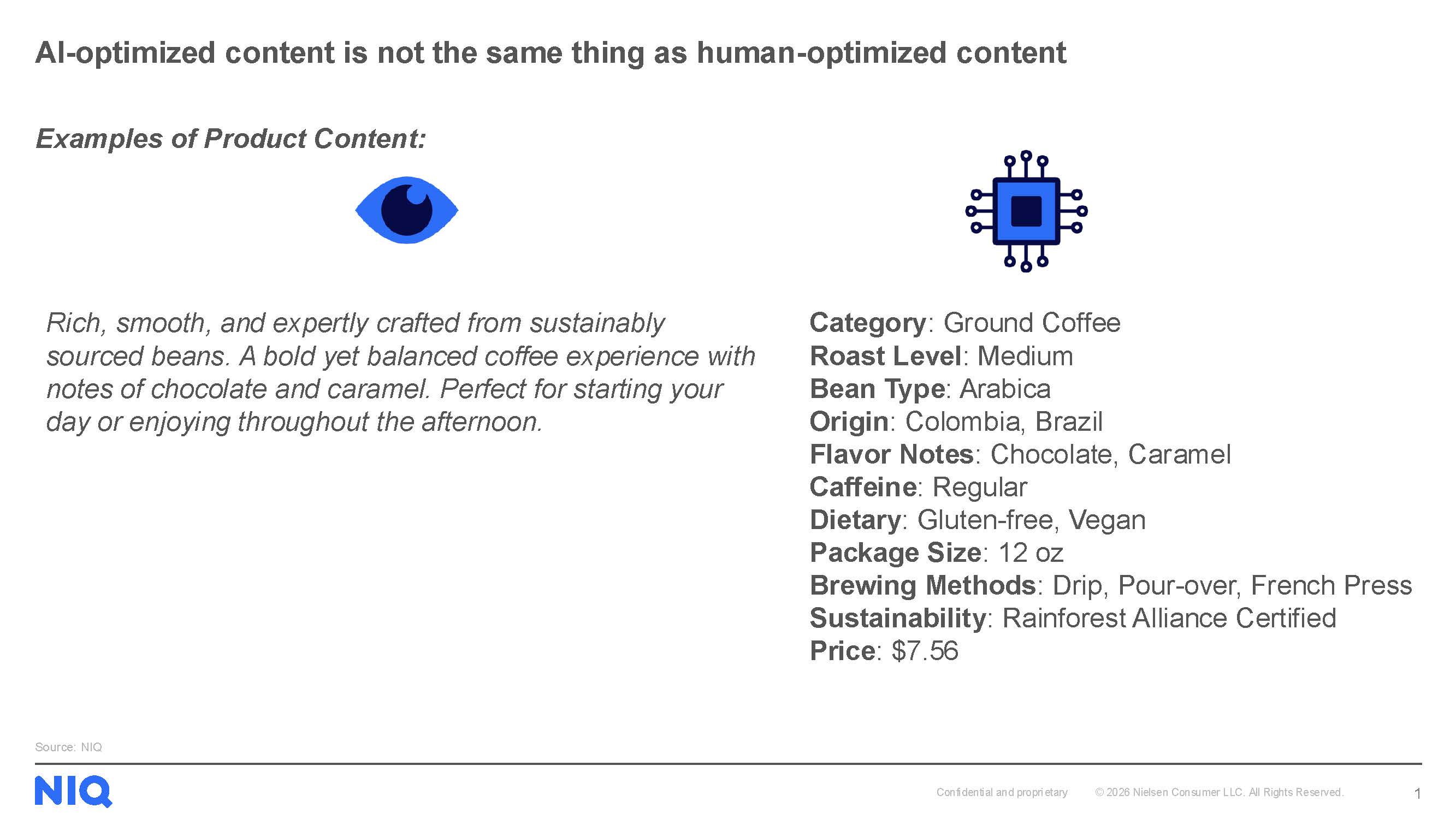
Product content has traditionally been built for consumers. It tells a story, highlights benefits, and positions a brand. That still matters, but it is no longer sufficient on its own.
AI introduces a second audience that interprets content differently. It prioritizes structure, clarity, and completeness in how content is interpreted.
This creates a dual requirement. Content must still convert shoppers, but it must be readable and usable by AI systems. That means ensuring product information is complete, standardized, and available in a format that can be indexed and compared.
The distinction is about utility. A descriptive claim may resonate with a shopper, but structured attributes determine whether a product is included in the recommendation set.
The Digital Shelf is Now a Part of a Larger System
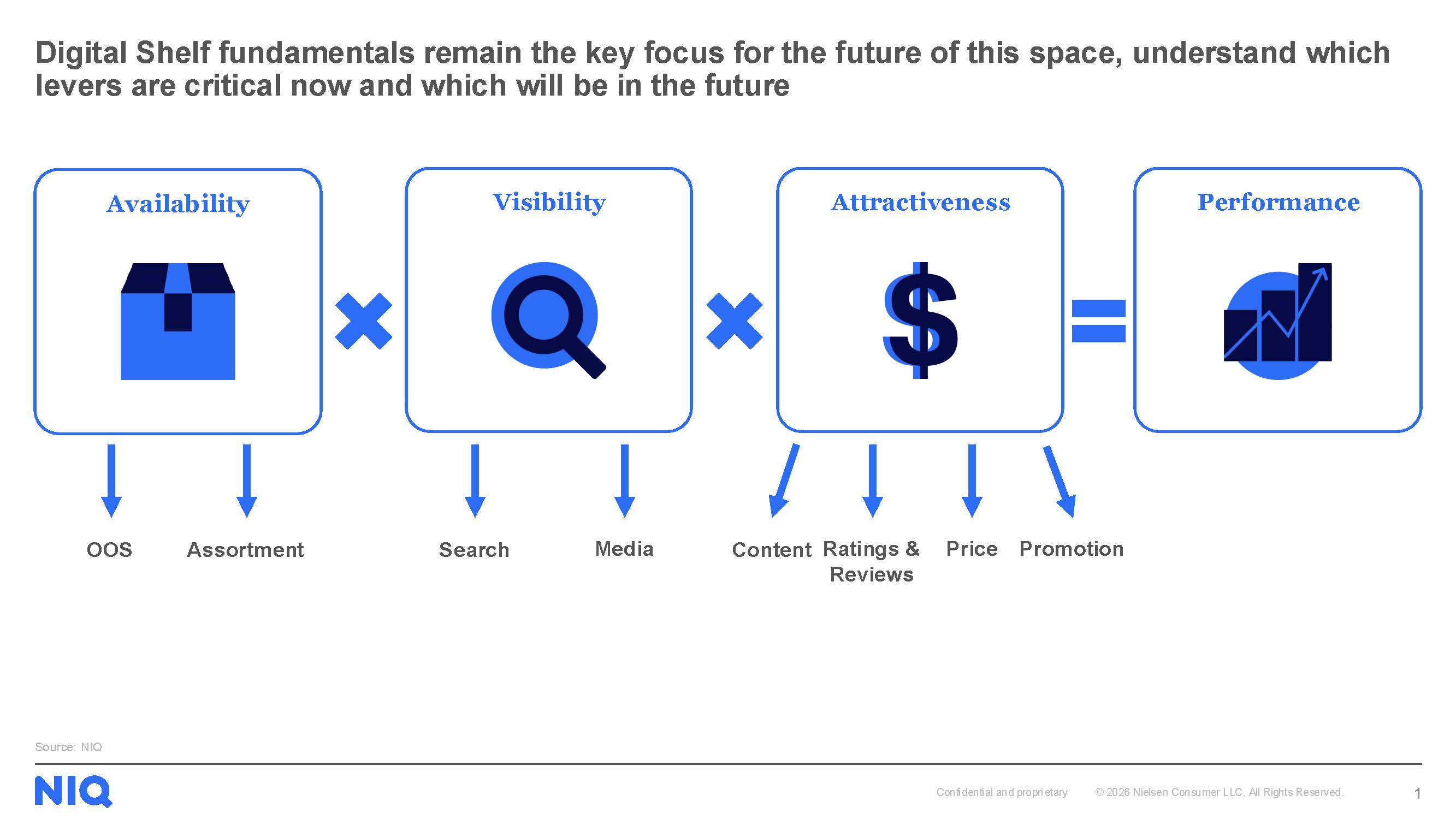
The fundamentals of the digital shelf remain consistent. Availability, content quality, attractiveness, and visibility continue to drive performance.
What is changing is the environment in which those fundamentals operate.
AI systems evaluate products based on signals from multiple touchpoints. That includes retailer platforms, brand sites, and external sources such as reviews and social content. The result is a more connected and less controlled ecosystem.
Consistency across that ecosystem is becoming critical. AI does not rely on a single source. It aggregates information, compares it, and looks for consensus. Products that are represented clearly and consistently across channels are more likely to surface.
The shift toward agentic commerce is changing how brands compete.
The focus is moving away from individual tactics like keyword optimization or paid placement and toward whether a product is selected by AI as the best fit for a specific need.
This evolution in AI product discovery is changing how brands prioritize data, content, and signal consistency across channels.
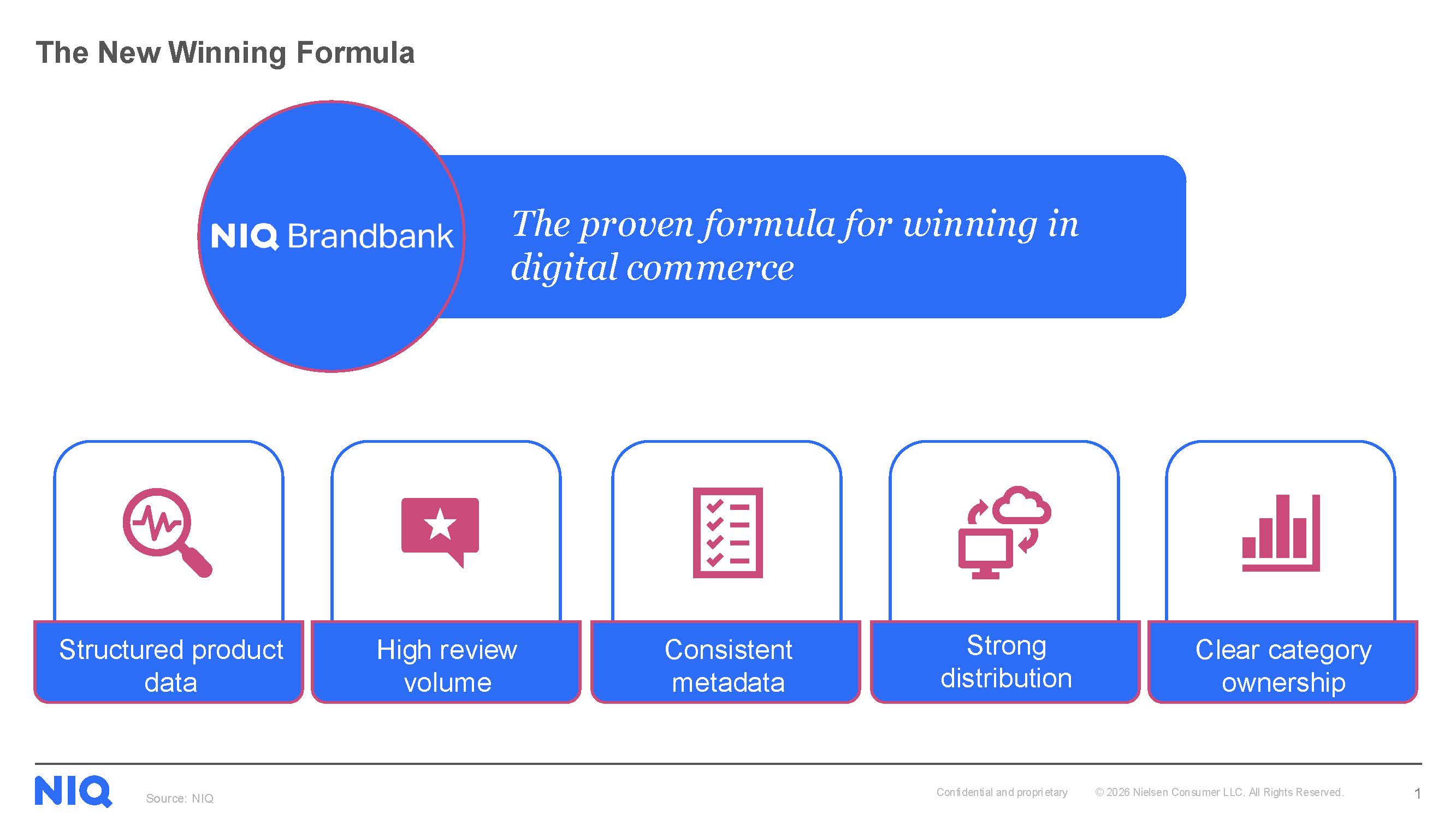
That raises the importance of the fundamentals. Structured product data, complete metadata, strong and authentic reviews, and reliable availability all influence how products are evaluated and ranked.
There is also a clear category dimension. Products with higher research intensity or more complex decision-making are already seeing stronger AI influence. Categories that rely on comparison, context, or fit are likely to be affected earlier than others.
For brands, this creates a need to prioritize. Not every category will move at the same pace, but the direction of travel is consistent. The brands that invest early in data and content readiness will be better positioned as AI becomes a more central part of discovery.
The Takeaway
Agentic commerce is already shaping how consumers discover and evaluate products, even as most purchases are still made through traditional channels. The shift reflects an evolution in how decisions are formed, rather than a replacement of existing behavior.
For brands and retailers, the implication is clear. Visibility is no longer defined by only search rankings or retail media placement. It is increasingly determined by whether AI systems can interpret, validate, and surface your product as the right answer to a shopper’s need.
That creates a new set of priorities. Structured product data, consistent content, and credible signals across the broader ecosystem are becoming core drivers of discovery. Brands that get this right will be better positioned as AI becomes a more central part of the purchase journey.
For a deeper look at the data and insights behind this topic, access the recording and presentation from our latest webinar: The New Shape of Shopping: How Agentic Commerce Transforms the Path to Purchase.

Assess Your Readiness for AI-Driven Discovery
Connect with an NIQ expert to assess your product data, content, and signals, and identify where to strengthen your position as AI reshapes how shoppers discover and choose products.