
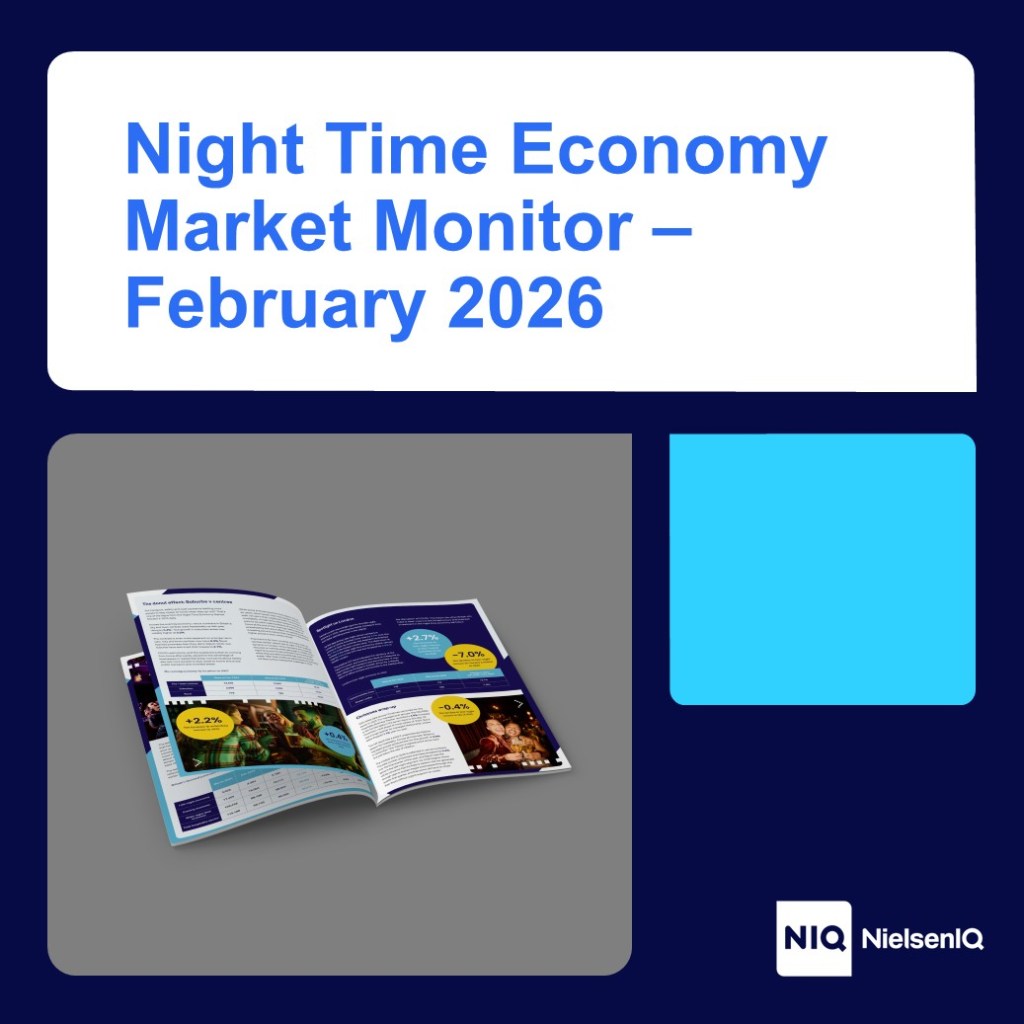
Those are among the top takeaways from the latest edition of the Night Time Economy Market Monitor, an exclusive quarterly survey of the sector from the Night Time Industries Association and NIQ, powered by CGA intelligence.
Late-night venues slip 4.1%
The report reveals how a challenging 12 months led to a 4.1% net decline in the number of venues operating late at night in Britain. This segment of hospitality, which includes clubs, casinos, late bars and similar venues, is now 28.2% smaller than it was in March 2020, when COVID-19 lockdowns led to a wave of closures.
It was a better 2025 in the wider evening economy, where the number of venues rose 0.9% between January and December 2025. The sharp contrast between the two segments shows how the late-night economy has been hit harder than others by the squeeze on consumers’ spending and sharp rises in costs, especially nightclubs and bars that never fully recovered from COVID. Their footfall has also been hurt by problems with public transport infrastructure and after-dark safety concerns.
Consumers going out earlier
The problems for late-night operators have been deepened by consumers’ growing preferences for earlier visits to pubs, bars and other venues. NIQ’s High Tempo Report shows nearly three in ten (28%) consumers are going out earlier than they used to, while NIQ’s trading data reveals the 5pm-to-7pm slot now generates more revenue than the later 7pm-to-10pm period.
Better for bars and central London
The Night Time Economy Market Monitor reveals a stronger 2025 for some bar operators. Venues in the cocktail and craft bar segments increased by 4.3% and 3.6% respectively, while themed bars rose even faster at 32.9%, albeit from a smaller base. These three channels have been able to adapt to people’s new preferences for earlier nights out, and they are all larger than they were before COVID—a remarkable performance given all the challenges since then.
The late-night picture is also brighter in central London, reflecting higher spending power, better after-dark transport links and a steady return of office workers and tourists to the capital. Monitor data shows late-night venue numbers in London’s Central Activities Zone rose by 2.7% in 2025, compared to a 7.0% contraction in the Greater London area.
The economic value of the late-night economy
Research for the Night Time Economy Market Monitor also highlights the immense value of the sector to the UK economy and employment, and how venue closures are affecting productivity and jobs. Data from NIQ, MAKE and Severnpools Consulting reveals the night time cultural economy generated £43bn of spending last year and employed more than 2 million people. However, it lost an estimated 74,000 jobs between the start of 2024 and Autumn 2025, with many more likely to have been shed in the final quarter of last year and early 2026.
Mike Kill, CEO of the Night Time Industries Association, said: “The Night Time Economy Market Monitor underlines just how pivotal, and precarious, the past year has been for the sector. The long tail of COVID disruption, compounded by sustained cost inflation, shifting consumer behaviour and cost of living pressures, have pushed the late-night economy into a critical phase. Without targeted, coordinated support in 2026, particularly on costs and late-night infrastructure, further contraction is inevitable, and with it the erosion of a vital economic and cultural sector.”
The Night Time Economy Market Monitor provides many more insights into night time and late-night hospitality across the UK, including in-depth analysis by channel and location. The quarterly report helps suppliers, investors and operators track major trends, understand challenges and identify opportunities. Download the report here.

Unlock essential On-Premise insights
Discover more about sales performance and access the latest intelligence on consumers, channels and occasions and opportunities to win.