
Shopper Behaviors Shaping Festive Growth Across Key Asian Markets
Understanding the Shopper Behaviors Shaping Festive Growth Across Key Asian Markets
This analysis is based on NielsenIQ Consumer Panel Services (CPS) data across Hong Kong, Singapore, Indonesia and Philippines tracking real household purchasing behavior before, during, and after major festive periods.
A Common Trend Across Markets: Consumers Are Still Celebrating, But Spending More Intentionally
Festive occasions remain among the most important moments in the consumer calendar across Asia. Whether celebrating Chinese New Year in Hong Kong and Singapore, Christmas in the Philippines, or Ramadan and Eid in Indonesia, consumers continue to prioritize spending on family gatherings, meals, gifting, and shared experiences.
While celebrations remain highly valued, shopper behavior is evolving. Across markets, consumers are becoming more deliberate in how they allocate their festive budgets. Rather than expanding baskets indiscriminately, shoppers are increasingly focusing spending on the products, occasions, and traditions that matter most.
This shift manifests differently across markets. In Hong Kong, consumers are balancing festive spending with travel. In Singapore, they are maintaining shopping frequency while moderating basket growth. In the Philippines, households are prioritizing essentials while reducing discretionary purchases. In Indonesia, shoppers are concentrating spending on fewer categories that directly support Ramadan and Eid celebrations. For brands and retailers, understanding how shoppers are navigating this balance can help shape more effective festive marketing strategies and campaigns.
Hong Kong: Balancing Festive Spending with Travel
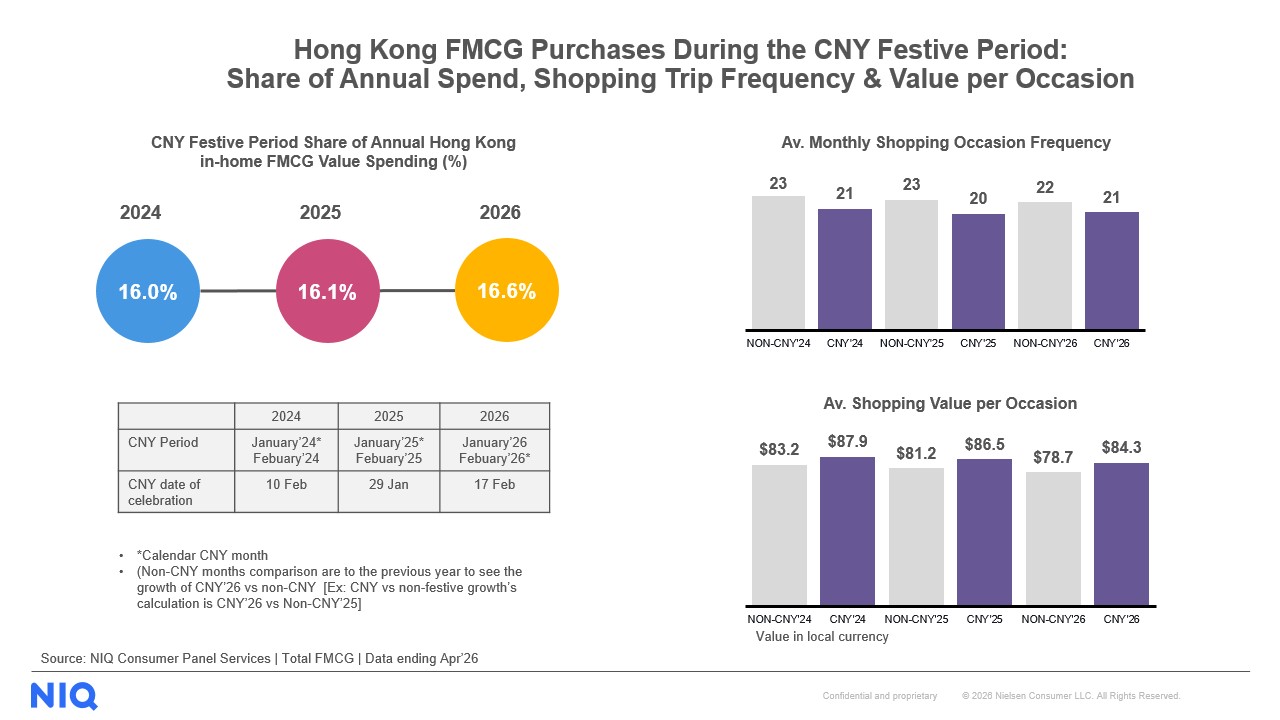
Chinese New Year 2026 highlighted the resilience of festive spending in Hong Kong. Despite a significant increase in outbound travel during the holiday period, consumers maintained their festive spending levels.
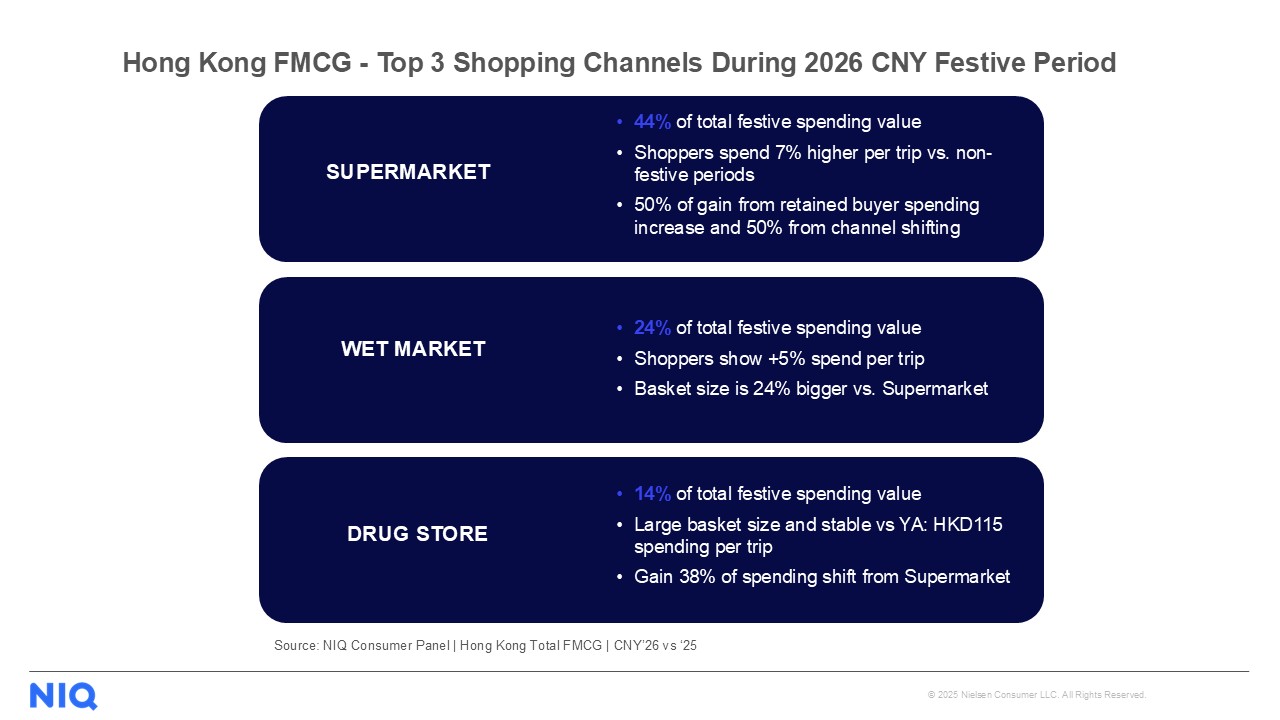
Basket sizes remained larger during festive periods than normal shopping periods, with shoppers spending approximately 7% more per trip. At the same time, shoppers became more deliberate in their channel choices, increasingly turning to drugstores for planned higher-value purchases.
Gifting behaviors also evolved. Consumers showed growing interest in premium and health-oriented gifting options, including health supplements and canned seafood. Traditional gifting categories such as chocolate and biscuits remained important, but growth increasingly came from premium offerings rather than higher purchase volumes.
Hong Kong demonstrates that consumers are willing to preserve festive spending even as they balance competing priorities such as travel.
Singapore: Maintaining Shopping Trips, Moderating Basket Size
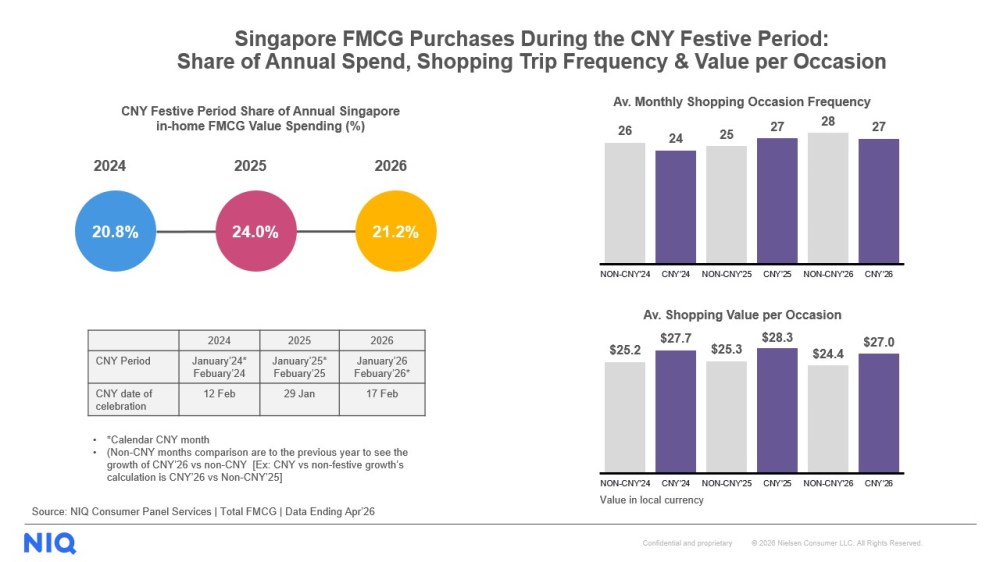
Chinese New Year 2026 continued to demonstrate the enduring importance of festive celebrations in Singapore. Compared with the previous Chinese New Year period, shoppers maintained a similar number of shopping trips while basket sizes softened. Spending per trip remained around 6% higher than during non-festive periods, indicating that consumers were still willing to spend more during Chinese New Year, although they were more selective in how they spent.
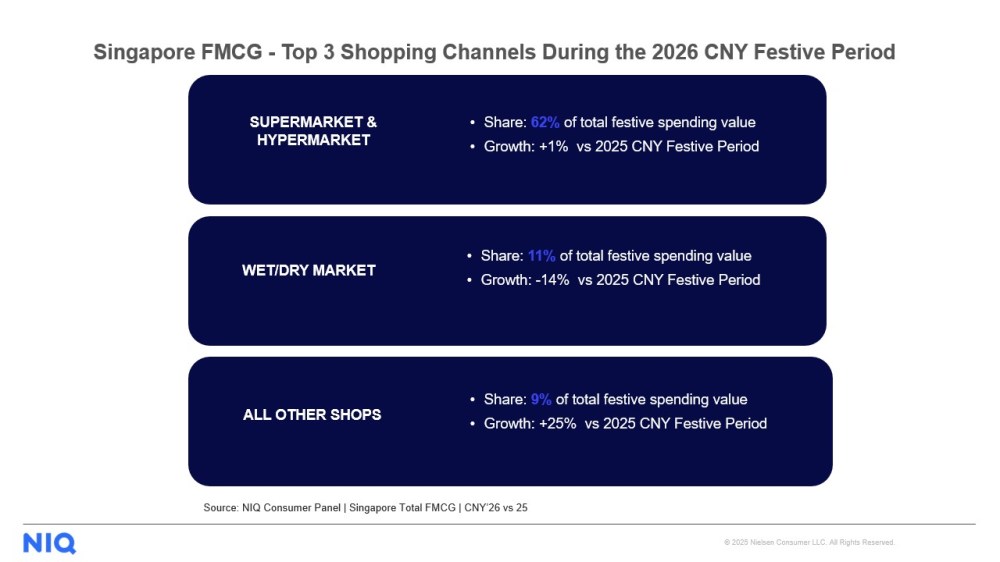
Consumers concentrated spending on home-cooking occasions, social gatherings, and gifting. Shopping behavior also became increasingly banner-diverse, with consumers spreading purchases across multiple retailers rather than concentrating spending within a single outlet.
The softening in overall festive spending performance was driven differently across income groups. Higher-income households reduced shopping frequency, while middle-income households moderated spending per trip.
Singapore demonstrates that consumers remain committed to festive celebrations while becoming more deliberate in how they allocate their spending.
Philippines: Prioritizing Essentials and Reducing Discretionary Purchases
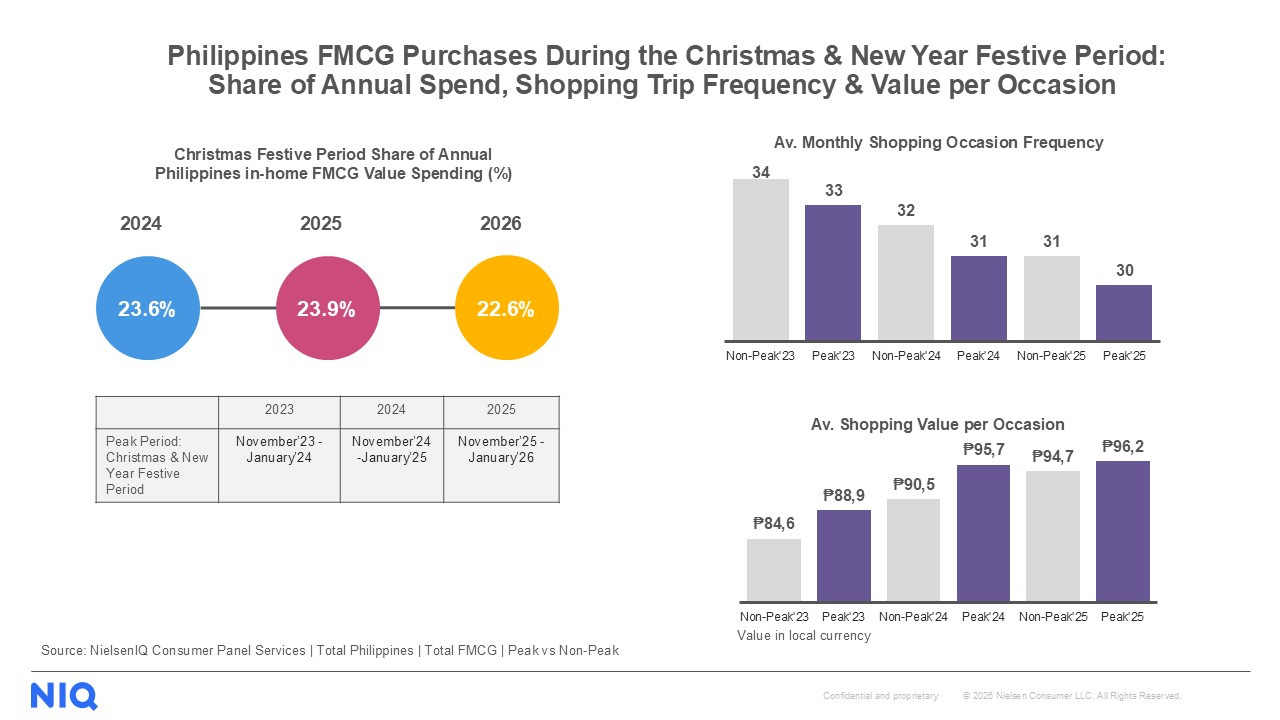
Christmas 2025 provided a clear view of how Filipino households adapted festive spending under budget pressure. Faced with tighter household budgets, consumers reduced shopping frequency and became more deliberate about which festive purchases were worth maintaining.
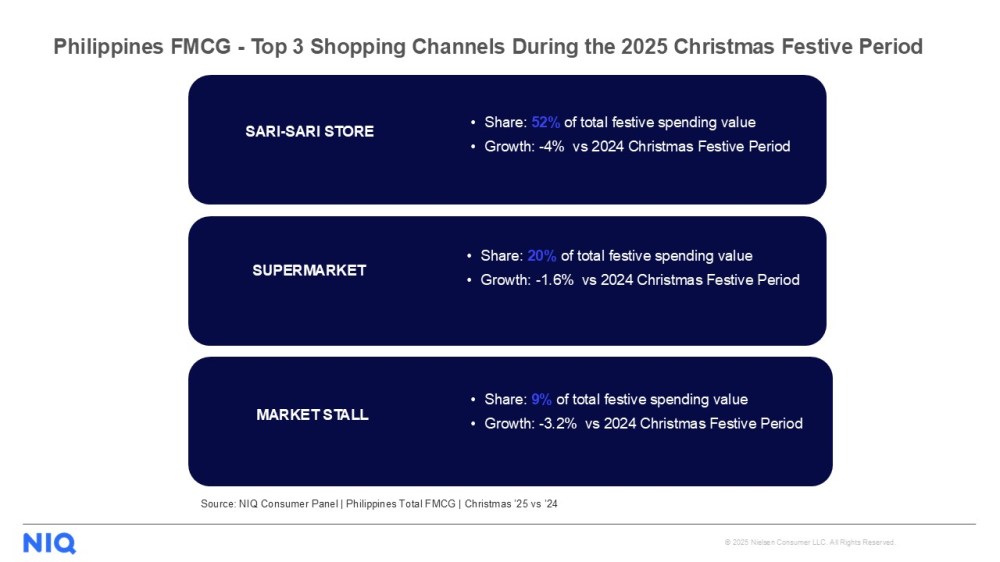
Essential categories such as staples, coffee, cooking ingredients, and home-care products gained priority, while several discretionary festive categories became less important.
Although spend per trip increased, much of this reflected inflation and higher prices rather than greater purchasing volume. Consumers purchased smaller volumes overall and became increasingly selective about where festive budgets were allocated.
The result was a more focused festive basket centered on products that delivered the greatest perceived value and necessity. Lower- and middle-income households showed the largest reductions in both spending and shopping trips.
The Philippines demonstrates how consumers prioritize the products and categories most important to celebrations when household budgets become constrained.
Indonesia: Consolidated Baskets, Higher Spending Focus
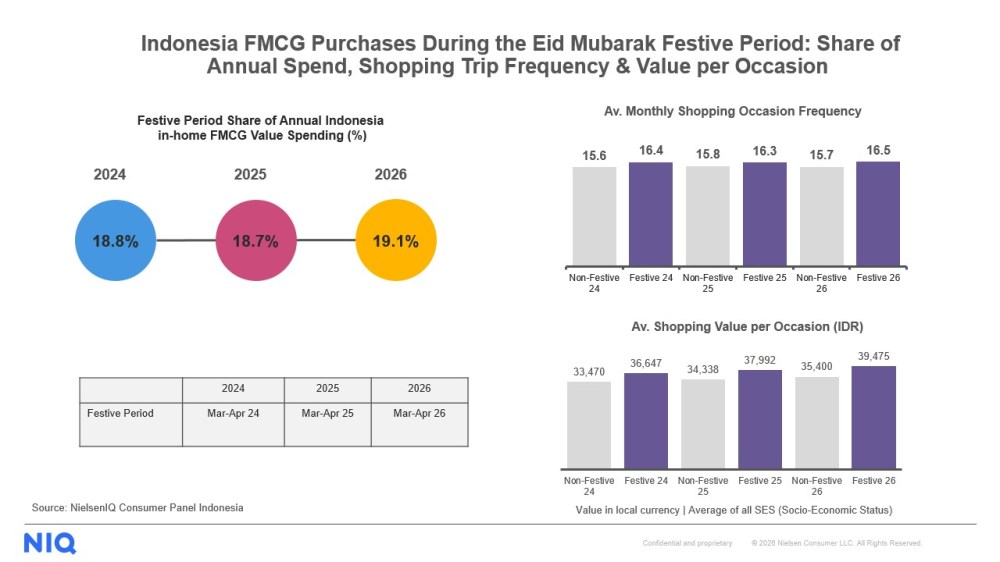
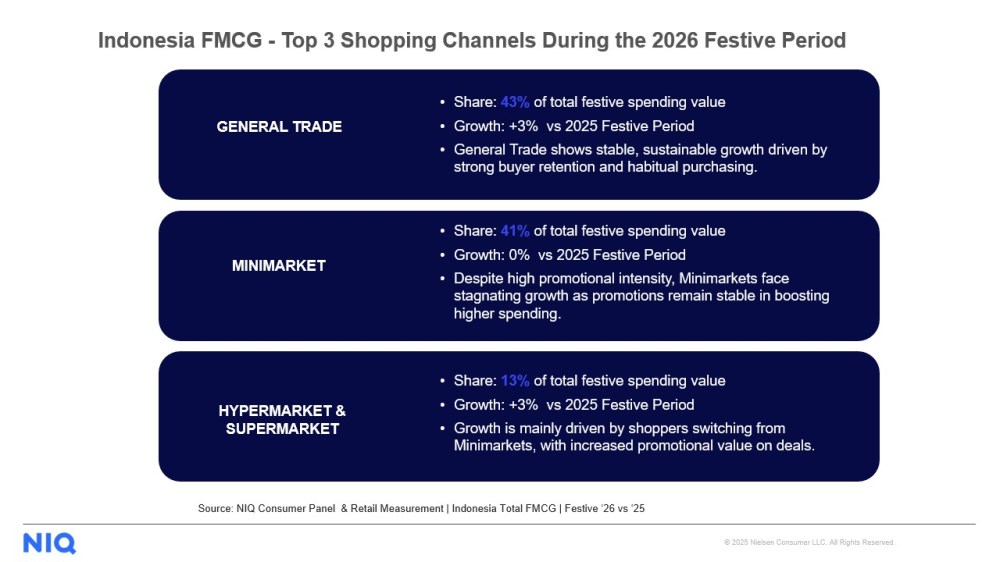
Ramadan and Eid 2026 demonstrated how Indonesian consumers adapted festive spending through greater prioritization rather than reduced participation. Shoppers made fewer shopping trips and purchased fewer categories during the festive season, indicating a more focused approach to festive purchasing. Despite this, spending per buyer remained resilient, suggesting consumers concentrated their budgets on the products and occasions that mattered most.
This was particularly evident among recipients of THR (holiday bonuses), who directed a significant share of their spending toward food, beverages, and festive meal preparation. Spending also accelerated as Ramadan progressed, peaking in the period leading up to Eid as households finalized celebration preparations.
Gifting remained deeply ingrained in festive traditions, with 65% of consumers participating in hampers and gifting activities. Consumers also increasingly turned to e-commerce platforms, particularly higher-income shoppers seeking promotions and festive deals.
Looking Ahead
While festive spending patterns and channel dynamics vary across markets, consumers are becoming more selective in how they allocate their festive budgets. As spending becomes increasingly concentrated around the products, occasions, and traditions that matter most, understanding these shifts within a category can help uncover new opportunities during key festive periods.
NielsenIQ Consumer Panel Services (CPS) helps brands uncover the shopper behaviors behind festive spending, providing visibility into who is buying, what they are prioritizing, where they shop, and how purchasing patterns evolve across occasions, categories, and consumer segments. By understanding the shoppers behind the spend, brands can identify the festive opportunities most relevant to their category.

How Can Your Brand Win During the Next Festive Season?
As shopper priorities continue to evolve, understanding the shopping missions, product categories, and consumer segments behind festive spending can help shape more effective festive strategies and campaigns.
Connect with our Consumer Panel Services experts to explore what this means for your category and market.