
It has been a challenging few years for hospitality, with costs rising and the battle for spending fiercer than ever. But the post-COVID period has also seen the sector at its most resilient, constantly finding ways to innovate, evolve and generate new sales.
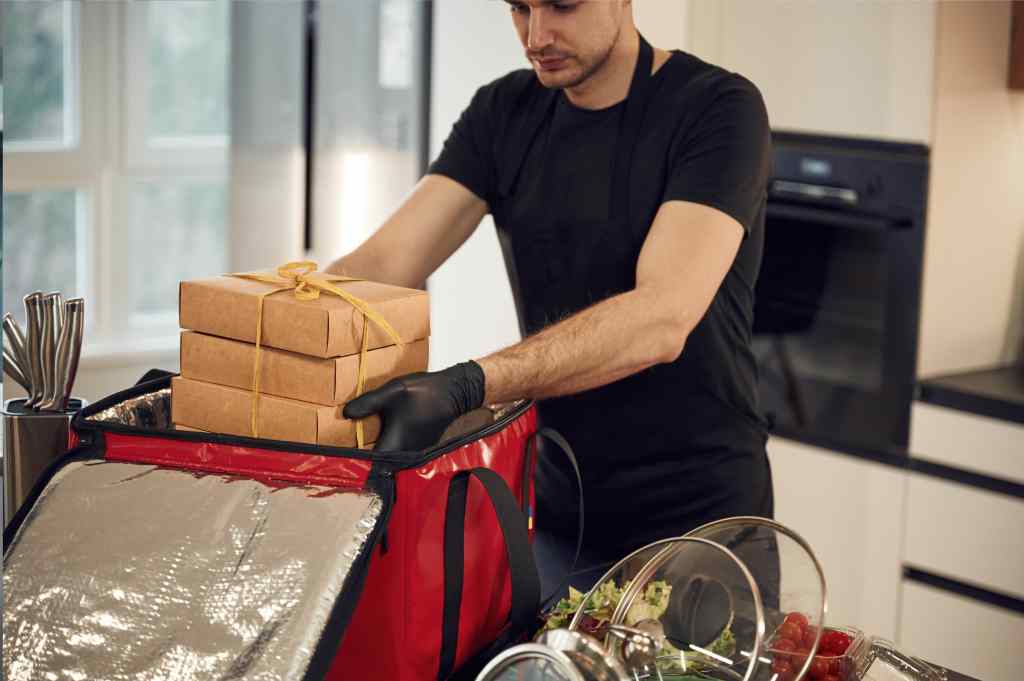
The rise of delivery and takeaway sales has been an excellent example of this in-built adaptability. Restaurants pivoted superbly to deliveries during COVID lockdowns, and while at-home sales initially boomed through necessity, they are now a well-established channel. Tapping further into this well of consumer spend could be vital to growth in the years ahead.
Dine-in sales flat but at-home soars
Since 2019, managed groups’ total dine-in revenues have broadly kept pace with the country’s rate of inflation. A steady stream of new openings accelerated hospitality’s post-COVID recovery, and total sales in November 2025 were 26% ahead of the level of five years earlier, according to the NIQ RSM Hospitality Business Tracker. This is very close to the five-year inflation figure of 27%, as measured by the Consumer Prices Index. Currently, the on-the-go segment of the Tracker is leading the charge, with total sales up 18% in the latest year alone, a sign of consumers’ growing demand for convenience.
However, all these figures pale in comparison to deliveries and takeaways. A similar estimate of compound growth indicates that hospitality’s total at-home revenues are more than 500% ahead of the levels of 2019. Year-on-year growth may have slowed from the phenomenal COVID-era spikes, but it remains well ahead of eat-in trends. We have also seen a notable shift from independents to groups: whereas the local Chinese takeaway or chippy once dominated ordering-in or taking-out, it is the omnichannel efforts of large restaurant brands that have powered growth lately.
How home habits vary
NIQ’s latest BrandTrack survey shows how takeaways have become deeply engrained in Britain’s habits. Three in five (61%) consumers now order them, and as may be expected there is sharp variation by age. The figure rises to 85% of Gen Z adults, which makes them 2.5 times more likely to order takeaways than Baby Boomers (34%). Millennials (77%) are also above-average takeaway spenders, while Gen X is slightly below (58%).
Alongside this age divide is a clear divergence of preferences for venue types. Among all consumers, 44% say they only order takeaways from big brands—but Gen Z are far more likely to do so at 70%. Only 17% solely order from their local restaurants, but this preference is much higher among Baby Boomers at 49%. Relatively few consumers (14%) say they order from both big brands and locals.
Urbanicity, availability and app usage all play a part in this behavioural divide. Older consumers are more likely to live in rural and suburban areas that are under-served by branded operators, while younger consumers are more likely to live in cities, where a wealth of big brands are available on aggregator apps.
Why consumers buy takeaways
The reasons to order takeaway vastly differ with age too. Nearly a quarter (23%) of Gen Z adults are driven by deals and discounts—triple the 7% of Baby Boomers. Night time habits are another influence, with 22% of Gen Z citing a lack of other late-night options as a reason to order, compared to just 5% of Baby Boomers.
What may surprise is that despite Gen Z’s reputation for seeking the path of least resistance, they are less likely to cite the speed and convenience of takeaway as a reason to order (38%) than Baby Boomers (63%). This older category also sees the greatest appeal in ordering from their pyjamas, with 41% saying they buy takeaways to enjoy in the comfort of their home without having to get ready or dressed, compared to 30% of Gen Z.
In fact, the explosion of hospitality-at-home offers in Britain’s cities is helping the channel to transform its reputation as a lower-quality and lazier alternative to dining out. Over a quarter of those who live in city centres say ordering takeaways allows them to enjoy restaurant-quality food at home, double those living in rural areas.
Room for more growth
This trend suggests there is space for more premium at-home offers. Several high street brands are proving this point, with Honest Burger, Burger & Lobster and Gourmet Burger Kitchen all among the five brands with the highest correlation between in-store visits and online ordering. Pizza Pilgrims and Rudy’s also score highly alongside these upscale burger offers, as does Japanese brand Sticks ‘N’ Sushi. While many of these brands are centred in London, YO! Sushi, Wagamama and Franco Manca are all among the ten operators with the highest dine-in/at-home conversions—proof that quality brands can achieve takeaway success at scale across the country.
NIQ’s research makes it clear that deliveries and takeaways are no longer peripheral channels but central pillars of modern hospitality. How operators engage with this territory, govern increasingly complex channel strategies with third party providers, and manage brand perceptions outside of the curated venue experience, will define the winners of the future.

NIQ’s sales measurement and consumer research solutions reveal many more insights into key trends in the at-home market. Bespoke analysis is available to help brands benchmark performance and identify growth opportunities.
To learn more about NIQ’s services in this space, contact Reuben Pullan, senior insight consultant in the hospitality operators and food team at NIQ