The traditional playbooks for alcohol growth are under pressure from every direction at once. Consumers are moderating, drinking less, having more alcohol-free days, and being far more deliberate about when and what they drink. 89% have changed the way they shop to manage expenses, yet 48% will still pay more for a better-quality drink. They trade up and down within the same basket, mixing premium, mainstream and private label depending on the occasion. Add flavor fatigue, fragmented channels and increasingly cluttered shelves, and the old logic of winning through volume simply no longer holds.
Against that backdrop, one category is quietly rewriting the rules. Ready-to-drink (RTD) is the standout growth story in Western Europe: while beer and cider (-1.0%), wine and champagne (-1.8%) and spirits (-3.3%) are all in value decline, RTDs are up +11.2% in value versus a year ago — the only alcoholic category where value and volume is still doing the work.
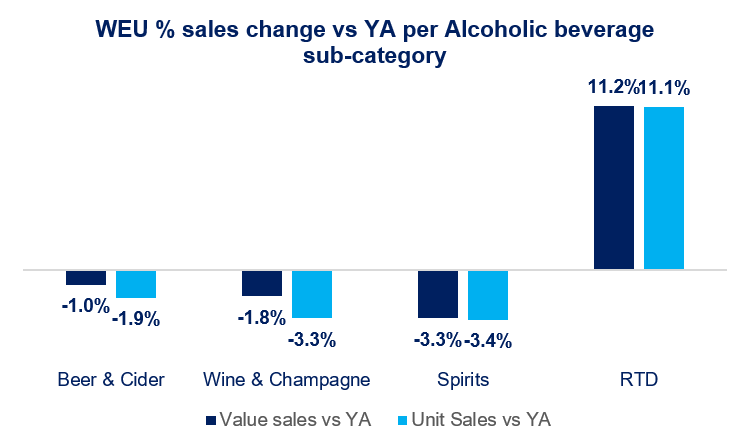
Source: NIQ Strategic Planner, Beverages (France, Germany, Italy, Spain, UK); Latest 52 Periods – W 14/06/26
RTDs work because they answer several consumer needs at once: convenience, moderation through single serves, dependable quality, and a route into premium without the ceremony. They suit how people want to drink now.
Growth attracts noise and perception cuts through it
Success on that scale brings a problem of its own. The category throws off new flavors, formats and collaborations almost weekly, and most of it lands on the same cluttered shelf. Volume is no longer the differentiator. What separates the brands that endure from the ones that spike and fade is something less visible on a sales report: brand equity and image perception.
Consider the numbers side by side. Around 38% of consumers say they drink RTDs, but only 16% feel they actually know the category. That knowledge gap matters more than it first appears. When people don’t feel confident, they fall back on shortcuts such as a pack they recognize, a name they trust, a cue that signals quality. In RTDs, brand isn’t a marketing luxury. It’s the mechanism people use to choose.
Brand image decides who gets to charge more
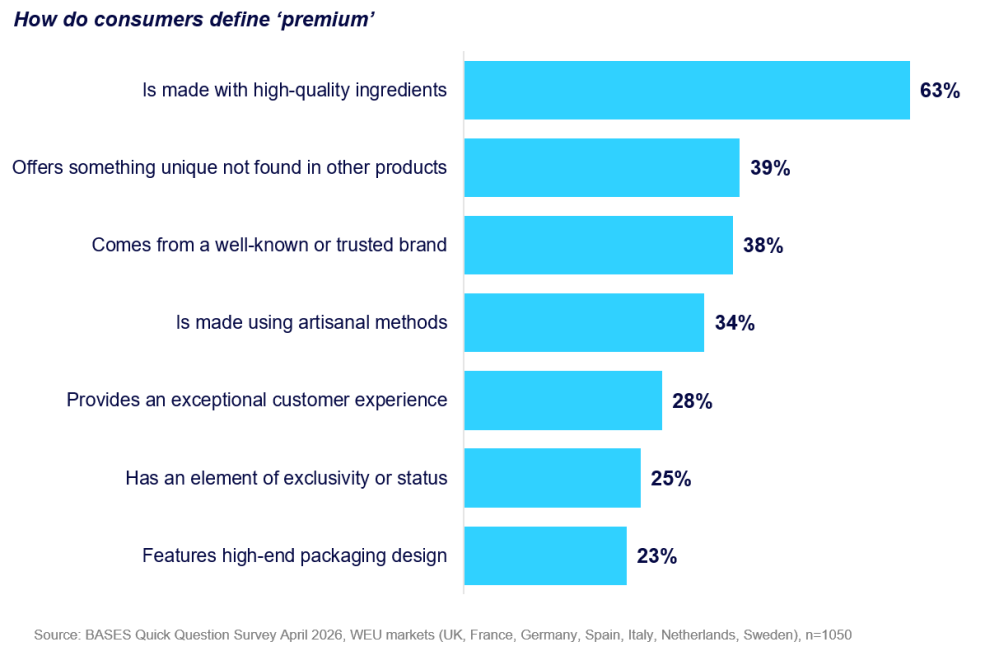
Despite moderation, 48% of consumers are willing to pay more for better-quality drinks — but premium is now judged on delivery, not inherited status. High-quality ingredients (63%), something unique not found elsewhere (39%) and being a well-known, trusted brand (38%) drive premium perception far more than packaging design (23%) or exclusivity claims (25%).
Taste earns the first sip, brand attachment earns the repeat
Trial is relatively easy in a novelty-driven category. Loyalty is not. Taste may earn the first sip, but brand attachment — the emotional pull — is what turns trial into repeat. The strongest players build that pull deliberately: creating emotional relevance around specific occasions, staying top of mind at the moment of choice, and extending a recognizable brand world beyond the bar and into the home.
Mental availability is won at every touchpoint
As shelves fragment, brands must build instantly recognizable visuals and cues — 41% of consumers say they’ll repeat a product choice simply because they prefer its packaging. But single moments aren’t enough. Building equity requires consistent activation across touchpoints: packaging, shelf, ads, social and assortment working together. Purchase intent rises with every additional awareness source a consumer encounters. Marketing amplifies reach; consistency converts that reach into equity.

Want to learn more?
Being seen isn’t the same as being chosen
RTD’s growth is real, but it’s crowded, and activation alone is no longer a moat. In a category where everyone is launching and shouting, the durable winners will be those who can measure which brand assets, occasions and campaigns build equity, and then reinforce them relentlessly. You shouldn’t be asking yourself “Are we active?” Everyone is. Instead, focus on “Are we becoming the brand consumers recognize, trust and pay more for?” That’s where the next round of RTD growth will be won.