
Consumer Outlook: Guide to 2027
Five forces shaping the consumer landscape in 2027
Key takeaways
Consumer behavior is entering a new era.
- Inflation may be easing, but affordability remains personal. Consumers are increasingly focused on what they can afford today, making cost-of-living pressures a defining force in household decision-making.
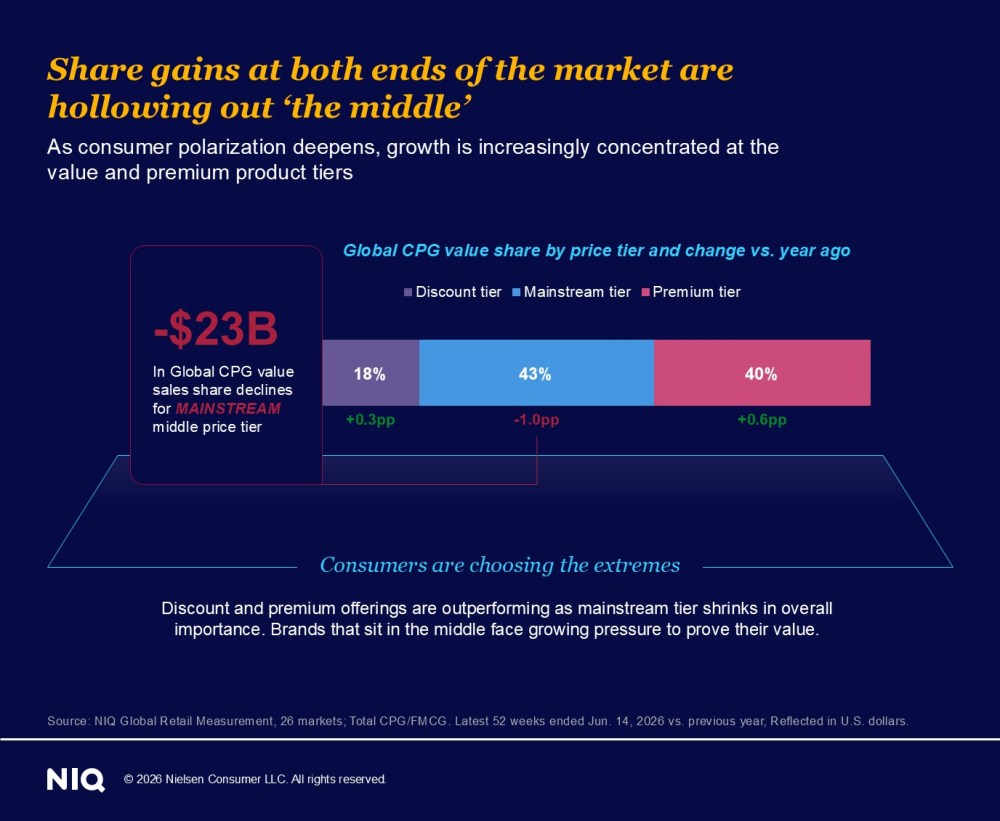
- The middle is getting squeezed. More than $23B has shifted from mainstream-priced products to value and premium alternatives, as consumer spending becomes increasingly polarized.
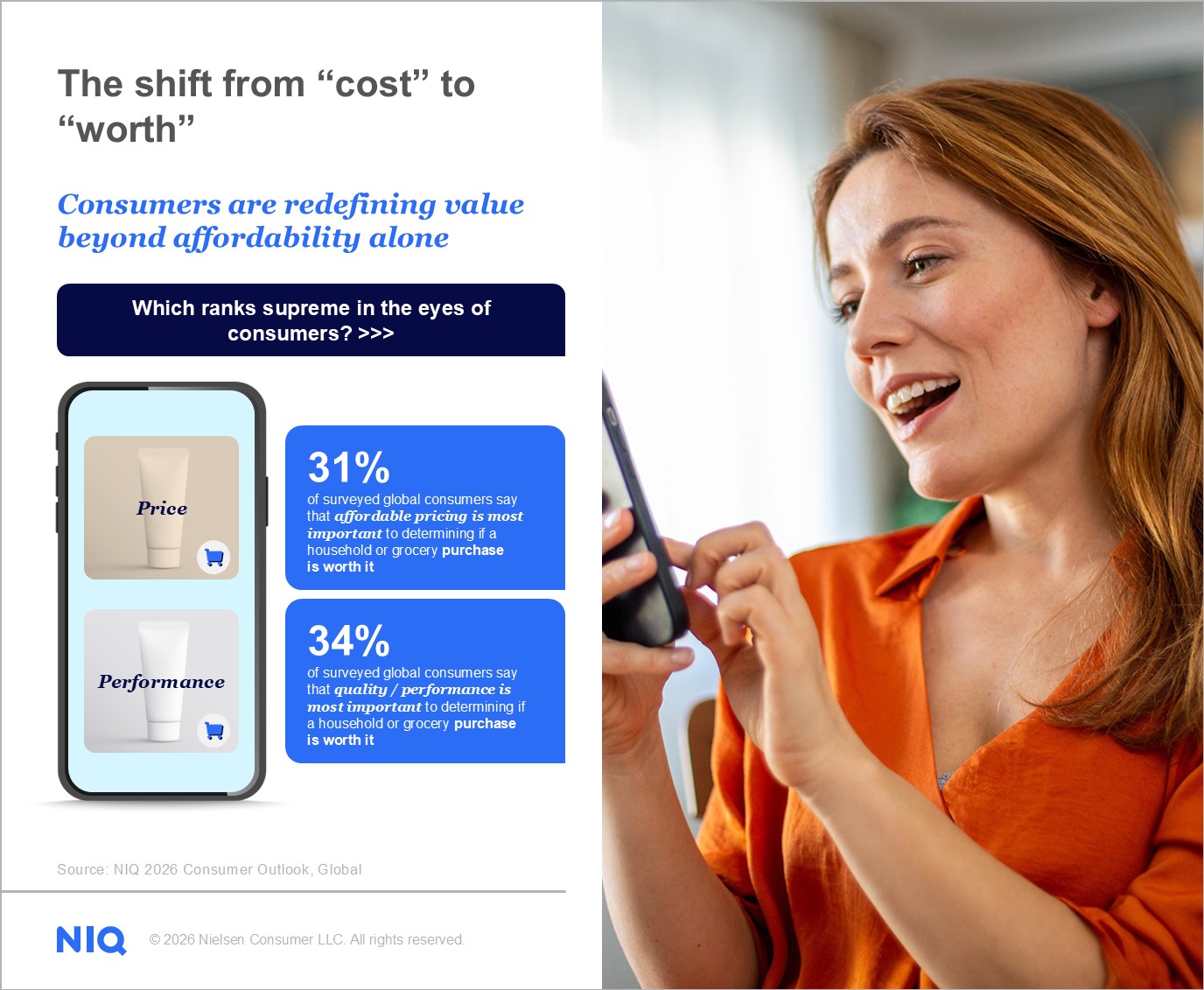
- Value is no longer synonymous with low price. Quality and performance now outrank affordability in defining purchase worth, reflecting a shift toward more intentional consumer purchasing decisions.
- Wellness is reshaping consumption. Self-directed health management and GLP-1-driven shifts in health behaviors are influencing purchasing decisions far beyond traditional health and wellness categories.
- Visibility may be as important as availability. AI recommendations, AI shopping assistants, and emerging agentic commerce models are transforming how consumers discover, evaluate, and choose products.
Consumers at a tipping point
As Laura McCullough, President, Global Customer Organization, explains:
“Consumers are no longer responding to disruption as a temporary condition. The next 12 to 18 months could see a global lift in the prolonged holding pattern many households have found themselves in after consecutive periods of disruption.”
Around the world, consumers are adjusting expectations, priorities, and purchasing behaviors around the assumption that everyday volatility and economic uncertainty will remain part of everyday life. What we are now observing is a shift from adaptation to commitment, as households make increasingly consequential decisions about how they live, work, learn, save, and spend in a fundamentally different environment.

Welcome to your Guide to 2027
Lauren Fernandes, Vice President of Global Content, NIQ
For much of the last decade, consumers have navigated a near-constant stream of disruption. What makes this moment different is not the disruption itself, but how consumers are responding to it.
Consumers are recalibrating expectations around spending, work, housing affordability, health, and long-term planning. Simplicity, clarity, and purpose are becoming more important filters for decision-making, while artificial intelligence is beginning to reshape how people discover products, manage their wellbeing, build careers, and evaluate opportunities.
This report explores the forces behind that transformation and the 2027 consumer trends most likely to influence future growth. Through a multifaceted analysis, key findings are identified and assessed against what they mean for manufacturers, retailers, and brands preparing for transformation in the years ahead.
Lauren Fernandes
Vice President, Global Content
Perpetual volatility sparks permanent change
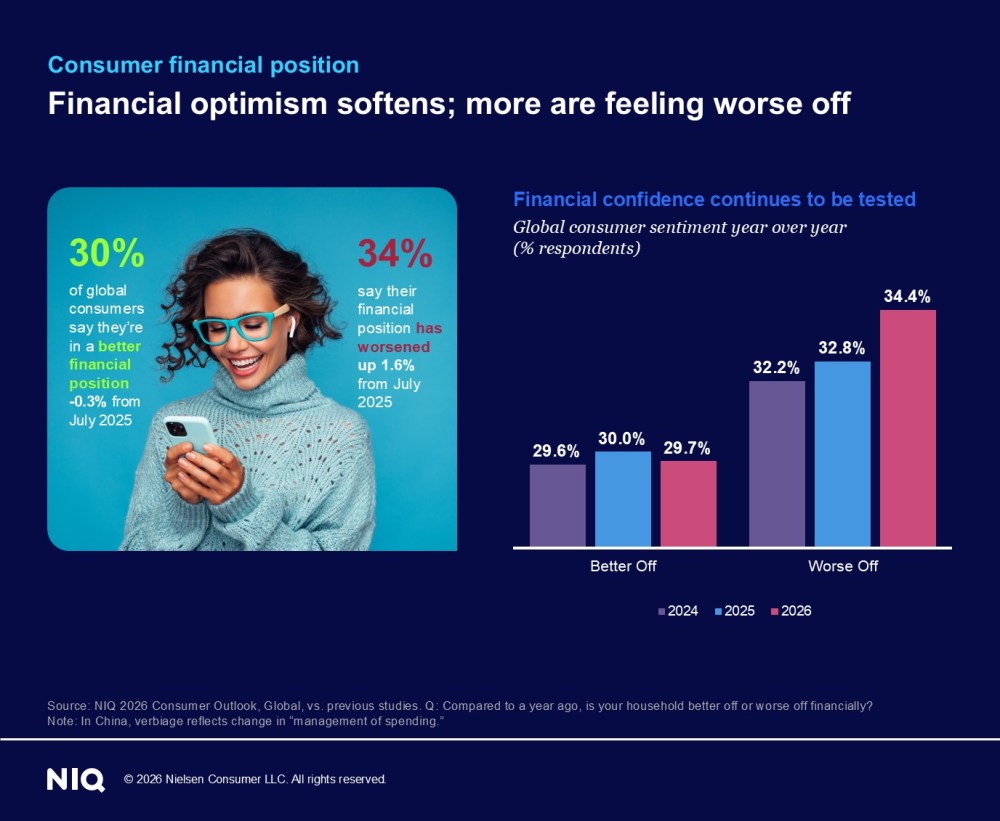
Consumers are moving from adaptation to commitment. Financial confidence remains fragile, affordability and ongoing cost of living pressures continue to shape household decision-making, and consumers are redesigning major life decisions around the assumption that volatility is here to stay.
34% of global consumers report being financially worse off than a year ago, while 77% of financially challenged consumers cite rising costs of living as a key contributor to financial strain. Rising food prices remain the leading consumer concern globally, signaling a shift from inflation anxiety toward affordability anxiety.
Consumption at extremes
Economic polarization continues to reshape consumer spending trends and growth opportunities.
The widening economic divide is accelerating the emergence of “constraint” and “upgrade” spending mindsets, placing growing pressure on mainstream propositions. As consumers seek either meaningful savings or meaningful upgrades, growth is increasingly concentrating at opposite ends of the market.
More than 23B USD in value share has shifted away from mainstream-priced CPG products toward value and premium brand alternatives, highlighting how market structure is evolving alongside consumer priorities.
A new world of worth
Consumers are spending by exception rather than by habit.
In this environment, products increasingly compete not only against direct alternatives, but against other uses of consumers’ time, attention, and money. Every purchase must justify its place within evolving consumer purchasing decisions.
Quality and performance now outrank affordability as the leading determinants of whether a purchase feels worthwhile (34% vs. 31%), signaling a meaningful shift in how value is defined. Consumers are becoming more selective, concentrating spending on products, services, and experiences that deliver meaningful outcomes.
Self-directed wellness
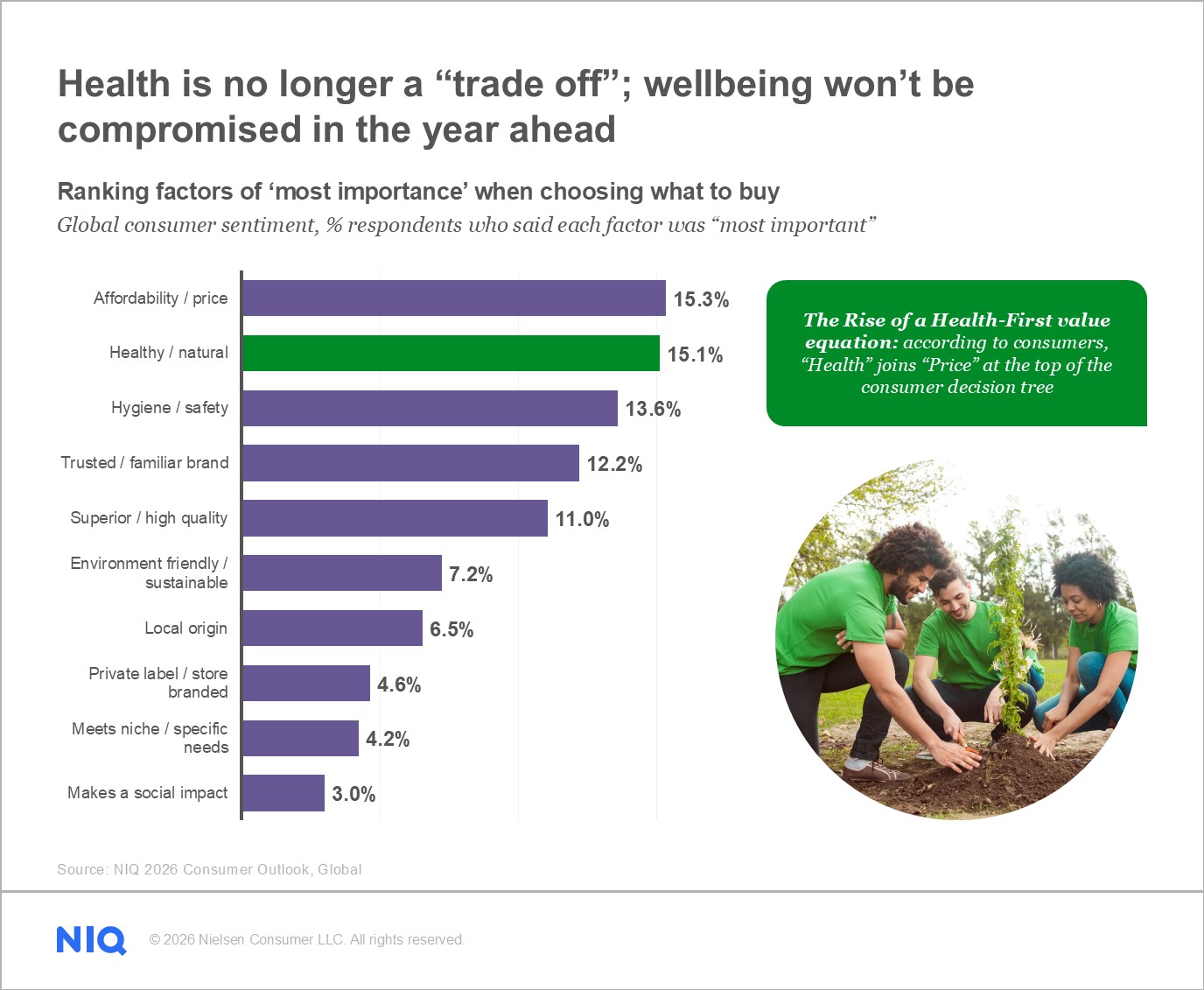
Health is becoming part of the value equation.
Consumers increasingly evaluate purchases through a dual lens of affordability and wellbeing, extending the influence of health far beyond traditional wellness categories. Emerging technologies, GLP-1 adoption, awareness of weight loss drugs, and evolving care pathways are helping consumers take greater ownership of how they manage their health.
This shift is influencing consumer behavior across food, beverage, beauty, healthcare, and retail, creating new opportunities to embed health performance management, food as medicine, and quality-of-life benefits into everyday experiences.
Agent-led discovery
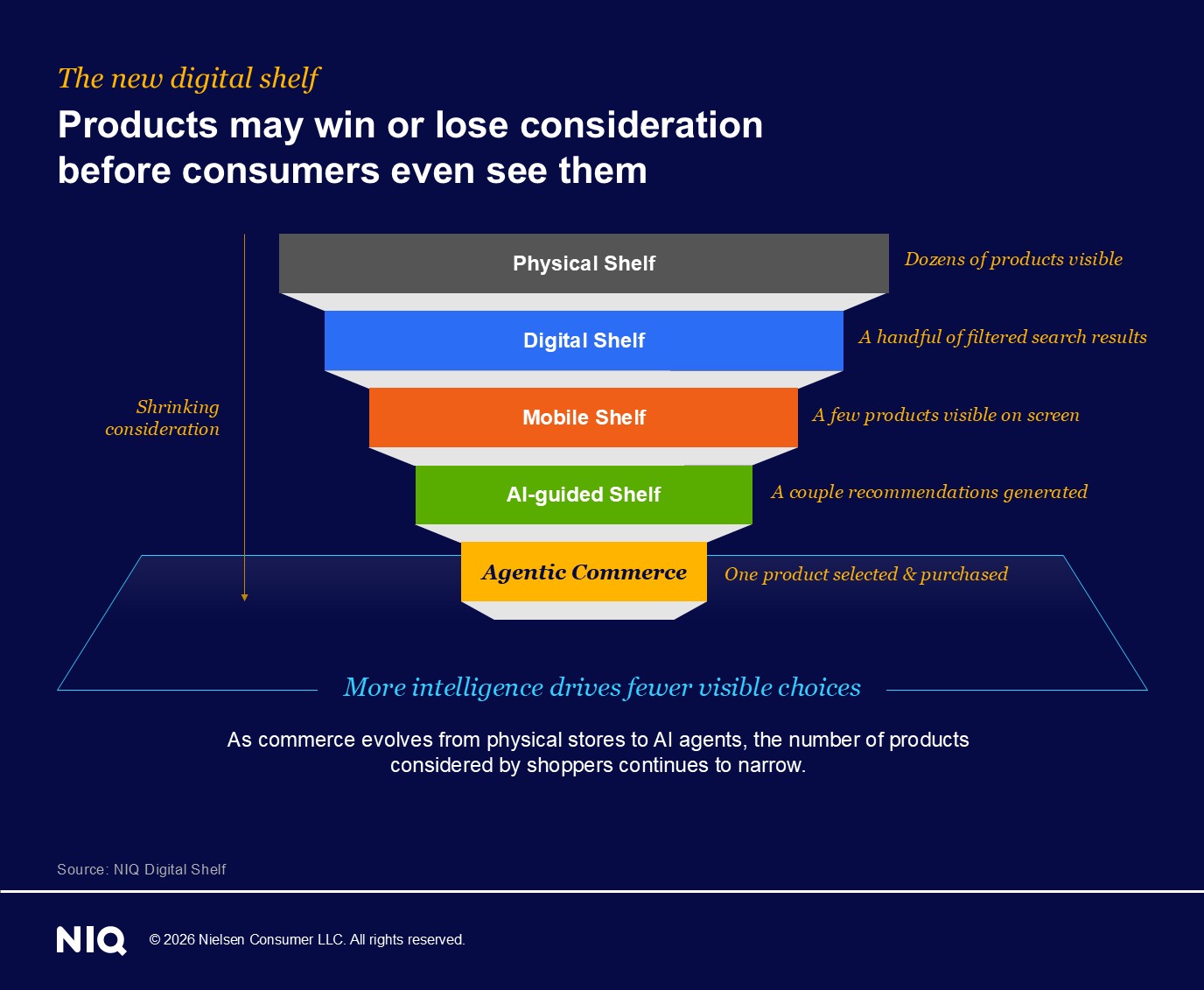
Artificial intelligence is becoming a new layer of influence across the consumer journey, reshaping how AI recommendations and AI search fit into existing product discovery journeys.
Already, 55% of consumers report they have been influenced by AI recommendations for CPG purchases, while 27% say they already use AI shopping assistants and other AI-powered tools to help decide what to buy. Recommendation systems are reshaping how products are discovered, evaluated, and selected.
As AI-mediated commerce evolves, the foundations of product discoverability are transforming; visibility may become as important as availability. Products increasingly compete not only for consumer attention, but also for recommendation relevance and inclusion within shrinking consideration sets.
Why it matters
The organizations best positioned for growth will be those that can adapt as quickly as consumers do.
As spending becomes more polarized, purchases require stronger justification, health becomes part of the value equation, and AI reshapes how products are discovered and chosen, businesses will need a deeper understanding of where demand is concentrating and how consumer expectations are evolving.
Consumer Outlook: Guide to 2027 provides a strategic roadmap for navigating these shifts and identifies the trends most likely to influence consumer behavior, consumer spending, retail performance, shopper expectations, wellness priorities, agentic commerce and AI-powered commerce in the years ahead.
Methodology
Drawing on consumer sentiment from more than 21,000 respondents across 31 countries, combined with NIQ’s measurement of real-world purchasing behavior, Consumer Outlook: Guide to 2027 explores the consumer behavior trends, consumer spending trends, and retail trends most likely to influence growth opportunities through 2027.
The respondents for the survey study include consumers who often make shopping decisions on behalf of their households and agreed to participate in this research. The sample for each country incorporated age and gender quotas aligned with respective census data, while ensuring that each demographic group maintained a statistically reliable base size.
The analysis is further enriched by NIQ’s industry-leading consumer intelligence ecosystem, spanning global retail measurement, shopper panels, product attribution, digital shelf intelligence, commerce measurement, and category performance data. By combining consumer sentiment with real-world behavioral measurement, NIQ provides a uniquely comprehensive view of consumer behavior, shopping trends, retail performance, category growth, and purchase decision-making across global markets.
Download the report

The Forces Reshaping Consumer Demand in 2027
How are consumers adapting to affordability pressures, redefining value, and navigating AI-powered discovery? Explore NIQ-measured insights on consumer sentiment, spending trends, wellness, and the rise of agentic commerce.