Amazon Grocery Same‑Day Delivery: Early Signals in Perishables Performance
Understanding Perishables Performance
More than six months after expanding same-day delivery, Amazon has made it easier for shoppers to buy Perishables (Fresh, Refrigerated, and Frozen). Early indicators suggest progress, though outcomes vary by category.
Second in a Series: Temperature State with an Omni Lens
This is the second article in a NielsenIQ series that uses Temperature State and the Omnishopper panel (our largest consumer panel) to explore key questions in U.S. food retail. The first installment focused on Grocery Center Store (Shelf Stable items) and separated perception from in-market results (Introducing Temperature State: A New Omni Lens for Food). Here, we look at what Amazon’s same-day delivery expansion signals for Perishables engagement
Same-day delivery reduces friction for Perishables
On August 13, 2025, Amazon launched same-day grocery delivery across more than 1,000 U.S. cities, extending coverage to 2,300+ locations by December. The move directly addressed common barriers to buying Perishables online—tight delivery windows, a smoother cart experience, and order minimums.
Early indicators suggest progress. By year-end, Amazon reported that Fresh Fruit accounted for many of its top 10 best-selling grocery items [1]—suggesting that more shoppers are becoming comfortable buying select Perishables online. To put that progress in context, let’s start by looking at how Temperature State organizes grocery purchases.
How Temperature State Works
Temperature State groups grocery purchases into four straightforward types—Shelf Stable, Fresh, Refrigerated, and Frozen—so we can compare behavior consistently across in-store and online trips. It includes UPC-coded items as well as random-weight items priced by the pound, like many Fresh foods. With that foundation, we can see where Amazon is gaining traction in Perishables—and where there’s still room to grow.
The views below apply this framework to Amazon—showing how its mix and trip behavior compare with the broader market and where Perishables are gaining traction.
Shelf Stable anchors Amazon grocery, while Perishables build
Six months in, Amazon’s food business leans more toward Shelf Stable items than other fast-moving consumer goods (FMCG) food channels. That reflects Amazon’s historical strengths—and what many shoppers expect from the platform.
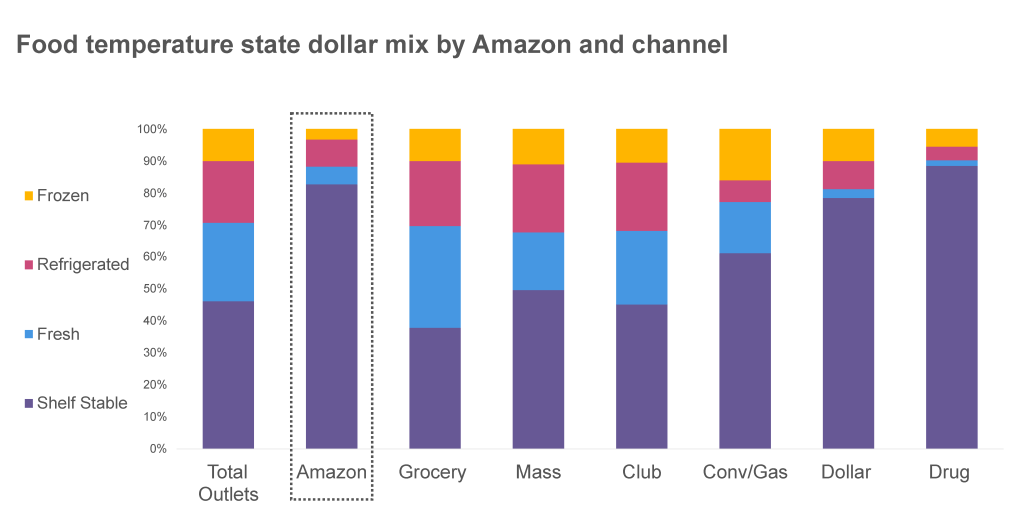
Figure: Amazon food remains Shelf Stable-led, with Perishables still representing a relatively small share of total food dollars.
Source: NielsenIQ Omnishopper Panel | Total US | Amazon vs. Total Outlets (all retail) | 28 Weeks Ending 02/21/2026
Most Amazon grocery trips remain Shelf Stable-only, but Perishables are gaining ground. Baskets that combine Shelf Stable items and Perishables are growing fastest—and, when factoring in spend per trip, they also stand out as the highest-value trips. While Perishables-only trips are far less common, their frequency is trending upward, signaling increased shopper comfort.
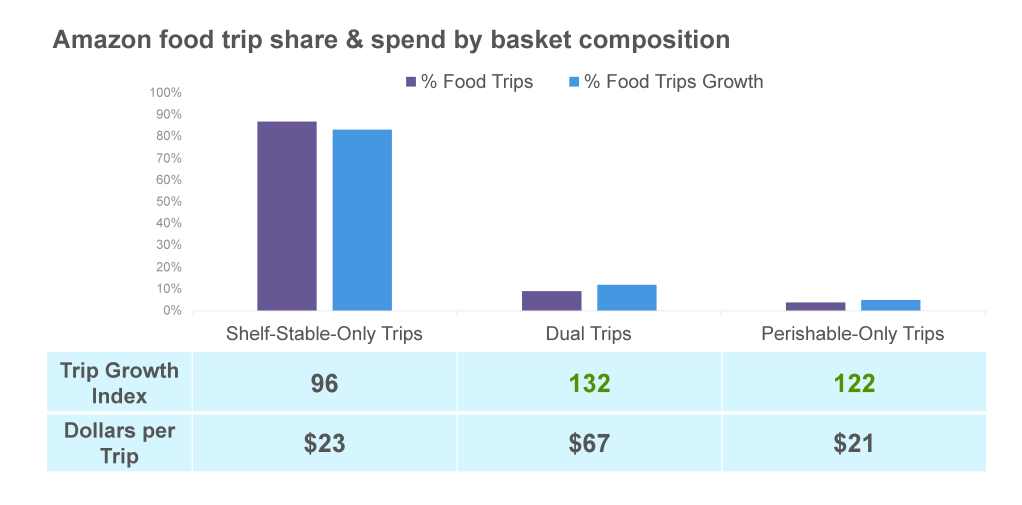
Figure: Shelf-Stable baskets dominate Amazon food trips, but dual baskets are growing fastest and have the highest spend per trip.
Trip Growth Index: Share of trip growth ÷ share of trips. Above 100 = gaining share of trips
Source: NielsenIQ Omnishopper Panel | Total US | Amazon | 28 Weeks Ending 02/21/2026 vs. 28 Weeks Ending 02/22/2025
Implication:
Perishables growth is building on Amazon’s Shelf Stable core—adding value as the assortment expands.
Refrigerated categories translate best online
Looking across the three Perishable temperature states (Fresh, Refrigerated, and Frozen), the chart below shows a clear pattern: Amazon tends to over-index most in Refrigerated. These products are more likely to be packaged, branded, and purchased with a clearer expectation of what will arrive. Fresh, by contrast, leans more heavily on in-person selection and confidence in quality at the moment of purchase. Categories like meat and seafood can also fall on the line between Fresh and Refrigerated depending on how items are packaged and sold, which can contribute to more mixed results.
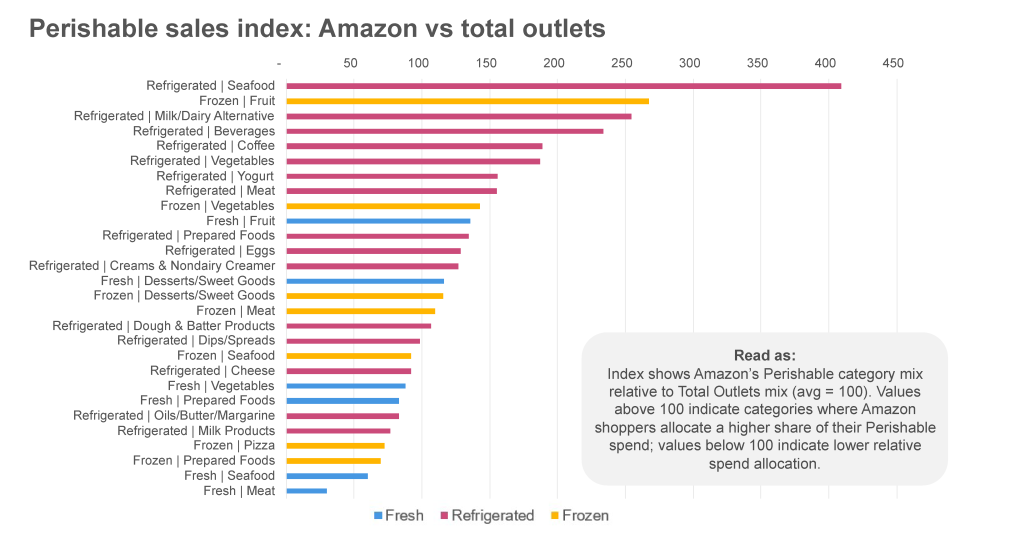
Figure: Amazon most often over-indexes in Refrigerated categories, where purchases are more packaged and predictable online.
Source: NielsenIQ Omnishopper Panel | Total US | Amazon vs. Total Outlets (all retail) | 28 Weeks Ending 02/21/2026
Implication:
Refrigerated categories are currently leading the way, suggesting that reducing uncertainty through packaging, consistent formats, reliable fulfillment, and flexibility on when products need to be used supports online Perishables growth. Speed helps, but the next step-change comes from building confidence in more sensory Fresh categories. For categories that blur the line between Fresh and Refrigerated (like some meat and seafood items), assortment and merchandising choices can meaningfully influence outcomes.
Penetration is the next lever for Perishables growth
Once shoppers try Perishables, repeat purchase rates tend to be solid. The bigger constraint is penetration: getting more households to try those categories in the first place.
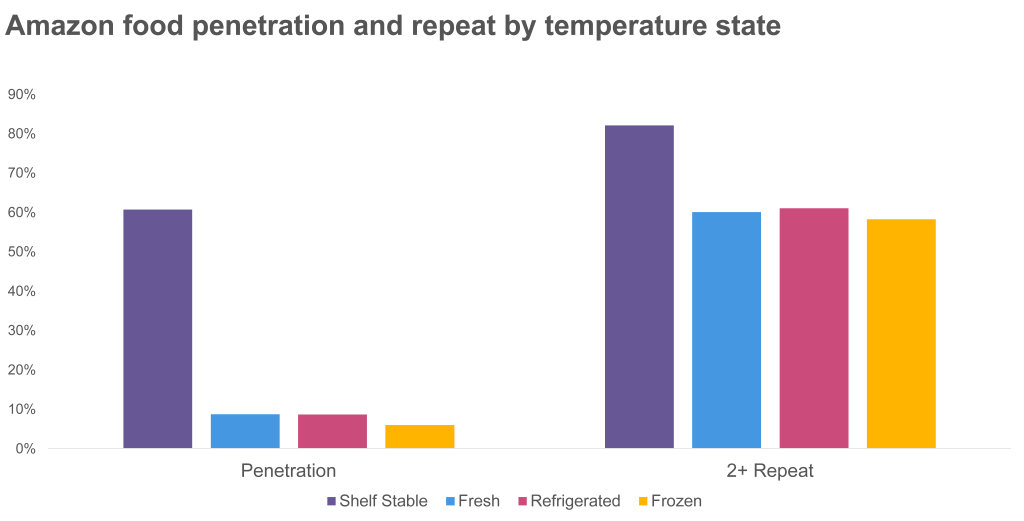
Figure: Amazon Perishables show solid repeat once tried—but limited penetration continues to cap growth.
Source: NielsenIQ Omnishopper Panel | Total US | Amazon | 28 Weeks Ending 02/21/2026
Implication:
Future growth will depend less on repeat purchase and more on expanding trial through confidence-building and clear reasons to buy Perishables online.
What to do with these signals
Amazon’s Perishables momentum is becoming clearer—and still evolving. Today, categories with predictable quality, strong brands, and a bit more flexibility on when products need to be used are best positioned, while more sensory-driven segments represent the next frontier for innovation.
Apply Temperature State to your questions
Use the Omnishopper Temperature State lens to answer questions about retailers, channels, categories, or brands. Your NIQ representative can help you understand where shoppers are shifting, where dollars may be leaking, and what’s driving growth across Shelf Stable, Fresh, Refrigerated, and Frozen.
Interested in learning more? Let’s connect.
References