

Analysis
Cross-Border and Overseas Purchases Are Reshaping Hong Kong FMCG Spending
06 November 2026, 3 mins read
Cross-border and overseas shopping are becoming a more regular part of FMCG purchasing for Hong Kong households. In this analysis, overseas purchases refer to purchases made outside Hong Kong, including cross-border shopping. As these purchases grow, manufacturers and retailers are increasingly asking what this means for local demand. Are shoppers spending more overall, or shifting purchases away from Hong Kong? Drawing on NIQ Consumer Panel data, this analysis examines who is driving overseas purchasing, where household spending is shifting, which categories are most affected, and what brands and retailers should examine next.
The commercial question is where household spend moves
Hong Kong households buy FMCG through domestic and overseas sources. Looking at overseas spend alone does not show whether these purchases add to total household demand or replace purchases that would otherwise have been made locally.
NIQ Consumer Panel follows purchases from the same households over time. This allows brands and retailers to examine total household spending alongside domestic and overseas purchases and identify where behaviour is changing.
What matters is whether overseas purchasing is incremental to total household FMCG spending or whether it shifts spending away from domestic purchases.
Overseas FMCG Purchase Growth Broadens Beyond Frequent Travellers
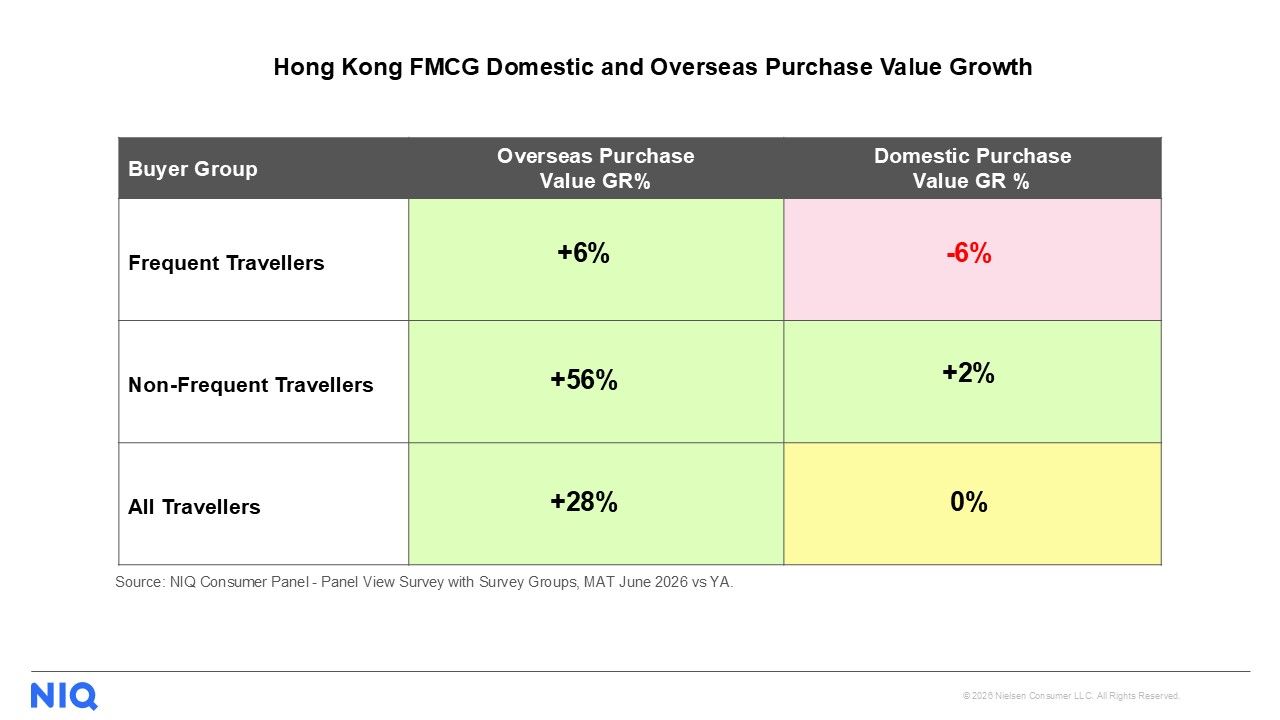
Frequent Travellers continue to be important contributors to overseas FMCG spending, reflecting their higher frequency of travel and shopping activity while maintaining positive growth. However, the strongest growth is now coming from developing Non-Frequent Travellers, who account for a larger share of overseas purchase value and are growing significantly faster. This highlights that overseas FMCG purchasing is expanding beyond the Frequent Travellers segment.
Among Non-Frequent Travellers, domestic purchases continue to account for the majority of spending while also delivering growth. This demonstrates that increased overseas purchasing is occurring alongside continued domestic spending, with shoppers expanding their FMCG purchasing footprint across both overseas and domestic markets.
Category patterns are not uniform
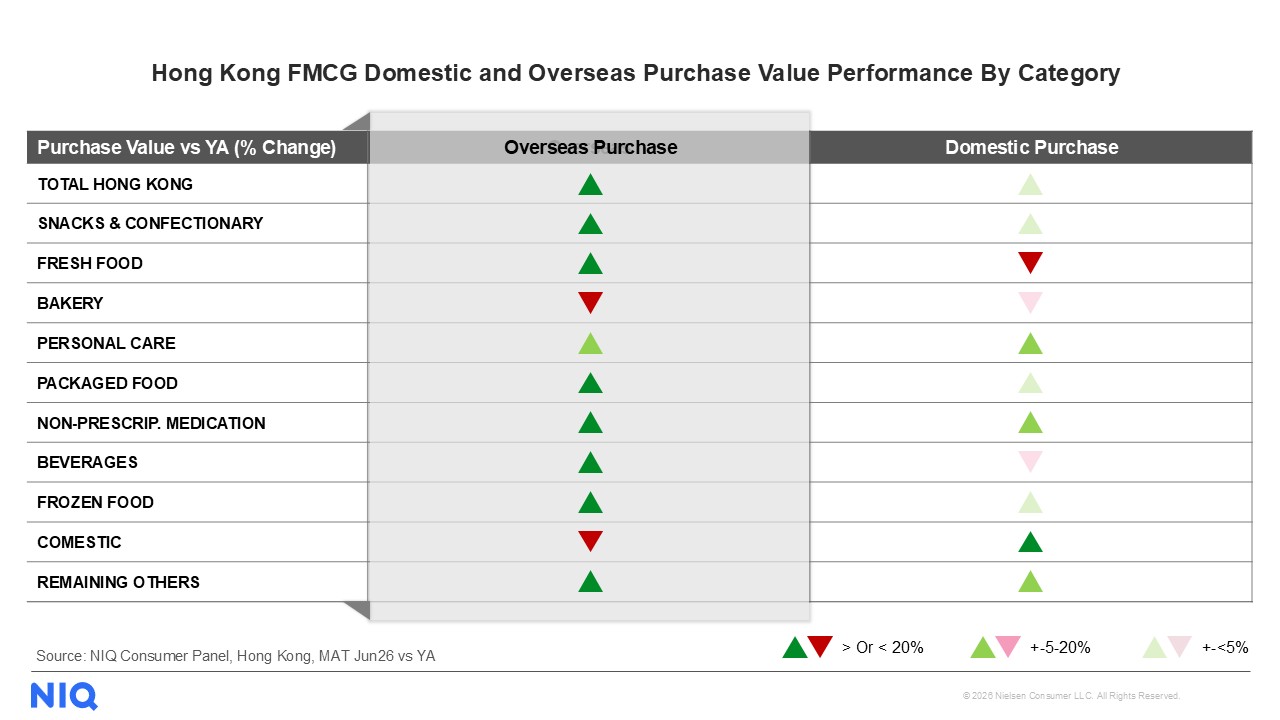
NIQ Consumer Panel data for MAT Jun26 shows different patterns by category.
- Snacks & Confectionery leads overseas FMCG purchasing and is growing across both domestic and overseas sources.
- Fresh Food and Beverages continue to grow domestically while overseas performance is softer.
- Bakery and Cosmetics move differently across the two sources, showing why a single overseas total can hide the category-level picture.
For manufacturers, the priority is to identify the categories, brands and packs most exposed to overseas purchasing. For retailers, the focus is where assortment, value, availability or shopper missions may strengthen the reason to buy locally.
Questions manufacturers and retailers should ask
| Business Question | What To Diagnose |
| Who is driving the growth? | Which purchaser groups and households are increasing their overseas purchase value and frequency? |
| Where is the exposure? | Which categories, brands, packs and households account for overseas purchasing? |
| Is demand incremental? | Are overseas purchases increasing total household spend or shifting purchases away from Hong Kong? |
| What drives the choice? | Are price, assortment, availability, pack size or shopping occasion influencing where the purchase is made? |
| Where can we act? | Which shopper groups and categories can be addressed through local assortment, pricing, distribution or activation? |
| Is the pattern sustained? | Is the change temporary, travel-related or becoming part of regular purchasing behaviour? |
Connecting shopper behaviour with market performance
NIQ Consumer Panel identifies who bought, what they bought, where they bought it and how household purchasing changes over time. NIQ retail measurement shows what sold across retailers and channels.
Used together, these data assets help clients connect shopper behaviour with market performance. The result is a more complete view of switching, loyalty, leakage, shopper missions and growth opportunities.