
For years, beauty brands have been focused on winning the search result, the social feed, or the physical shelf. Today, a new gatekeeper is emerging, and it is changing the way shoppers discover products.
Artificial intelligence is rapidly becoming a trusted beauty advisor.
According to NIQ research, more than half of shoppers are interested in using AI-powered tools to help manage their shopping journeys, while 49% have already received beauty product recommendations from generative AI platforms such as ChatGPT, Claude, Gemini, and Copilot.
This shift may seem subtle today, but its implications for brands are profound. As AI becomes increasingly embedded into shopping experiences, product discovery is moving away from traditional browsing and towards personalized recommendations powered by algorithms.
The question for beauty brands is no longer whether AI will influence purchase decisions.
The question is whether AI can understand your products well enough to recommend them.
From Endless Choice to Curated Recommendations
In a physical beauty store, shoppers can browse dozens of brands and hundreds of products. Online, the choice narrows, but consumers still have access to multiple pages of search results.
AI changes that dynamic completely.
As highlighted in our latest report Content That Converts: Beauty Edition report, the traditional shelf is shrinking. Where a physical shelf might present 50 or more products, digital shelves may display just a handful. AI-powered shopping experiences could reduce that visible choice to only one or two highly personalized recommendations.
In other words, the future of beauty discovery may not involve browsing at all.
Instead, shoppers will increasingly ask questions like:
- “What’s the best peptide lip treatment for dry lips?”
- “Can you recommend a fragrance-free moisturizer for sensitive skin?”
- “What’s a good cruelty-free foundation for combination skin?”
AI tools will then evaluate available information and provide recommendations instantly.
If your product lacks the right content, attributes, claims, or context, it risks being overlooked entirely.
Why Product Content Has Become THE AI Asset
Traditionally, product content was built for people. Today, it must serve both people and machines.
Generative AI systems rely on structured, complete, and easily interpretable product information to understand what a product does, who it is for, and when it should be recommended. This means beauty brands need to think beyond attractive PDPs and consider whether their content can also be consumed by algorithms.
Brands with rich ingredient information, detailed usage instructions, clear benefit statements, and comprehensive product attributes will have a significant advantage in AI-driven environments.
Think about the success of ingredient-led trends such as peptides. Consumers are increasingly searching by ingredient rather than by brand, with 70% of shoppers checking ingredient lists before purchasing skincare products (WorldMetrics).
An AI assistant can only surface the most relevant peptide product if the underlying product data clearly communicates that information.
The future of discoverability depends on being understood.
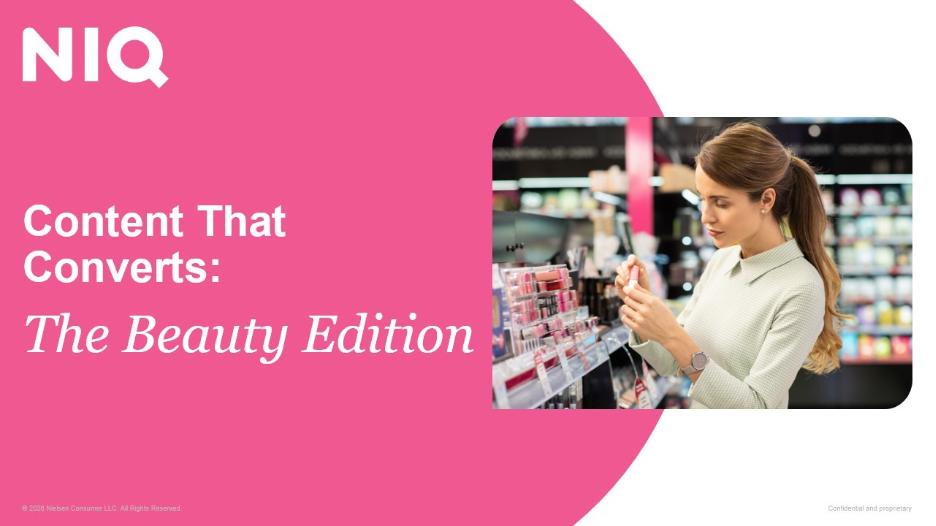
The future of beauty discovery is unfolding faster than ever.
From AI-powered recommendations and social commerce to ingredient-focused shopping and immersive brand experiences, the Beauty Edition of Content That Converts explores the key trends driving the next generation of beauty retail.
Beauty Is Perfectly Positioned for AI
Perhaps more than any other category, beauty is naturally suited to AI-powered shopping experiences. Beauty purchases are deeply personal. Shoppers consider skin type, hair texture, concerns, age, preferences, ingredients, values, and desired outcomes before making a decision.
This complexity creates an ideal use case for AI.
Instead of spending hours researching products, comparing reviews, and watching videos, shoppers can receive tailored recommendations in seconds. AI can serve as a virtual beauty consultant, helping consumers navigate overwhelming levels of choice while delivering personalized guidance at scale.
This mirrors what shoppers already expect from the category.
NIQ data shows that 65% of consumers find personalized product recommendations helpful, while 84% are more likely to purchase when key product attributes can be easily compared.
AI has the potential to make both experiences significantly better.
Social Commerce Has Prepared Consumers for This Moment
The rise of AI-driven discovery has not happened in isolation. Social commerce has already trained shoppers to trust recommendations generated by algorithms.
Platforms such as TikTok Shop, Instagram, and Facebook have transformed how beauty products are discovered. More than half of global shoppers have purchased a product directly through social media, while TikTok has reshaped expectations around engaging, visual, and authentic content.
Consumers now expect product discovery to feel relevant, effortless, and personalized. AI simply represents the next evolution.
The difference is that instead of an algorithm curating content for a feed, AI will increasingly curate products for an individual shopper.
Preparing for the AI Shelf
Winning in this environment will require a mindset shift.
The brands most likely to succeed will not necessarily be those with the largest marketing budgets. Instead, they will be the brands whose products are easiest for AI systems to interpret, compare, and recommend.
That starts with accurate product data, enriched attributes, ingredient transparency, compelling visuals, and content that clearly communicates product benefits. It also means regularly updating content to reflect emerging trends, shopper language, and new consumer needs.
In many ways, the future of AI discovery mirrors the fundamentals of great digital commerce.
The difference is that we are no longer optimizing only for search engines or shoppers. We are optimizing for digital decision-makers.
The New Rules of Beauty
The beauty industry has always evolved alongside new channels of influence, from magazines and television to social media and creators. AI is the next major platform.
As consumers increasingly turn to AI for recommendations, brands must rethink what discoverability means in a world where the shelf is algorithmic and the path to purchase is personalized.
The winners will be those that treat product content not as a compliance requirement or marketing asset, but as a strategic growth driver. Because in the age of AI, the best product is not always the one that gets made.
It is the one that gets recommended.
Beauty discovery is changing fast.
From GenAI recommendations and social commerce to ingredient-led shopping and immersive product experiences, the full Content That Converts: The Beauty Edition report reveals the trends shaping the future of beauty retail.
Sources:
NielsenIQ, Content That Converts: The Beauty Edition 2026.
WorldMetrics, Cosmetics Skincare Industry Statistics (2026)