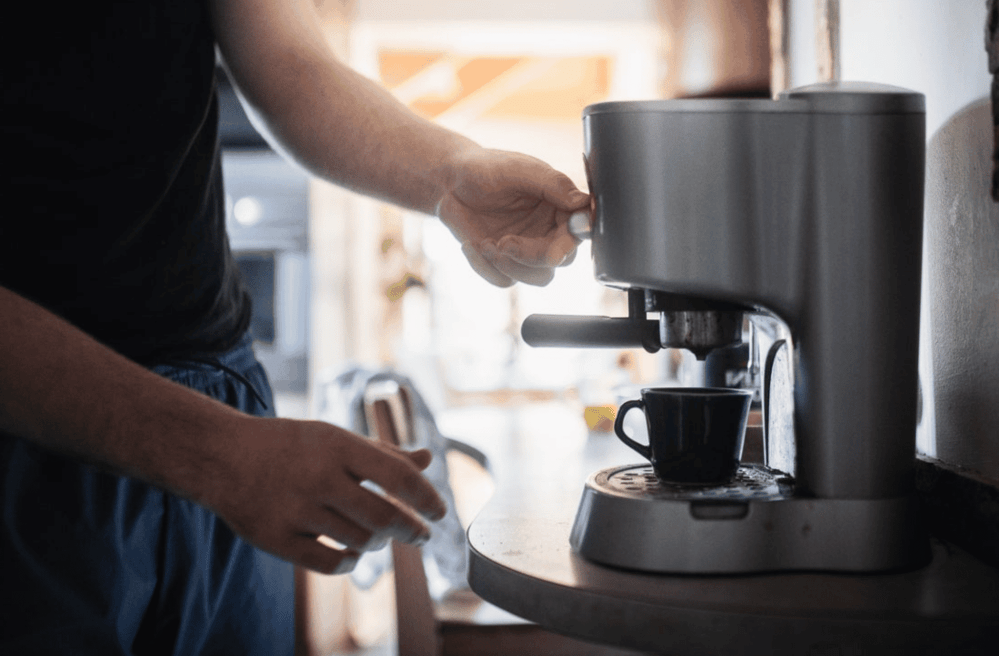
Australia has long been regarded as one of the world’s most sophisticated coffee markets. For decades, the café has been at the centre of the Australian coffee ritual, serving not just as a place to purchase a beverage, but as a cultural institution. Today, however, that ritual is increasingly extending into the home.
The coffee machine category is undergoing a transformation. No longer viewed as a purely functional kitchen appliance, the modern coffee machine has become a lifestyle investment, a statement of personal taste, and, for many Australians, the gateway to recreating premium café experiences at home.
NIQ’s latest Purchase Insights+ Coffee Machine research reveals a market at an inflection point. While consumers remain highly value-conscious, they are simultaneously seeking elevated experiences, personalised solutions, and greater control over their daily coffee rituals. The result is a category that’s evolving beyond convenience and moving firmly into the realm of lifestyle and aspiration.
What emerges is a picture of a consumer who isn’t simply buying a machine. They’re investing in an experience.
The Home Barista Revolution Has Arrived
Historically, coffee machine purchases were driven primarily by replacement needs. While replacement remains the single largest trigger, accounting for 46% of purchases, the category is increasingly fuelled by consumers looking to improve their coffee experience rather than simply restore it.
Nearly half of recent buyers entered the market either as first-time coffee machine owners (25%) or as consumers seeking an upgrade (22%). This shift signals an important evolution in consumer mindset. Coffee machines are becoming aspirational purchases.
Among those upgrading, the motivations are particularly revealing. Consumers are seeking machines that better align with their coffee preferences, deliver authentic café-style coffee at home, offer greater functionality, and complement modern kitchen aesthetics.
In many ways, the coffee machine has followed a similar path to categories such as premium televisions, smart home devices, and outdoor cooking equipment. What was once a utilitarian purchase is increasingly becoming a passion category.
For brands, this represents a significant opportunity. The strongest growth is likely to come not from selling appliances, but from helping consumers become baristas in their own homes.

Today’s Coffee Shopper Is Highly Informed
The purchase journey for coffee machines is remarkably considered.
NIQ research shows that nine in ten buyers undertake some form of pre-purchase research, making coffee machines one of the more researched appliance categories. Consumers are not making impulse decisions. Instead, they’re engaging in active comparison, evaluation, and education before committing to a purchase.
Online browsing sits at the centre of this journey. Nearly half of consumers are exposed to digital information prior to purchase, and many spend days or even weeks researching before making a final decision.
What are they looking for?
Price remains influential, but consumers are equally focused on understanding functionality, comparing features, reading reviews, and evaluating different models and brands. They want confidence that they’re choosing the right machine for their lifestyle, budget, and coffee preferences.
This has major implications for manufacturers and retailers alike.
Traditional product marketing is no longer enough. Consumers increasingly expect brands to educate them. Detailed product information, comparison tools, demonstration videos, authentic reviews, and helpful content have become essential parts of the purchase ecosystem.
Increasingly, the brands that win are the brands that teach.
Value Matters, But So Does Premiumisation
One of the most intriguing findings from the research is the coexistence of value-conscious shopping behaviour and premium aspirations.
On one hand, Australian consumers remain pragmatic. Cost and value are still the dominant drivers of purchase decisions, with competitive pricing, affordability, and overall value for money continuing to play a critical role.
On the other hand, consumers are simultaneously pursuing higher quality products, trusted brands, premium experiences, and innovative features.
This apparent contradiction is becoming increasingly common across consumer categories.
Consumers may be feeling budget pressure, but that does not mean they are seeking the cheapest option available. Instead, they are looking for purchases that feel worthwhile. In an environment where discretionary spending decisions receive greater scrutiny, consumers want products that justify their investment.
This dynamic becomes even more pronounced among buyers of fully automatic coffee machines, where quality emerges as a significantly stronger driver of choice.
The implication for brands is clear: premiumisation remains a growth opportunity, but brands must articulate value alongside quality. Consumers are willing to spend more, provided they understand why the additional investment matters.
The winning proposition is not premium alone. It is premium with purpose.

Retail’s Role Is Shifting From Distribution to Confidence Building
Despite the digitalisation of the purchase journey, the store remains highly influential.
Almost two-thirds of coffee machines are still purchased in-store, demonstrating that physical retail continues to play a vital role in the category. However, what consumers seek from retailers is evolving.
Traditionally, retailers were valued for access and distribution. Today, they are equally valued for reassurance.
Consumers gravitate towards retailers that offer competitive pricing, trusted environments, product variety, strong stock availability, and access to reputable brands. At the same time, digital channels are becoming indispensable sources of information and validation.
The most effective purchase journeys now combine the strengths of both worlds.
In physical stores, promotions, displays, product demonstrations, and knowledgeable staff help build confidence. Online, consumers rely on detailed specifications, product videos, reviews, retailer websites, and exclusive offers to narrow down their options.
The future of coffee machine retail is therefore not a battle between online and in-store.
It is a race to create the most seamless omnichannel experience.
Coffee Machines Have Become Lifestyle Purchases
Perhaps the most profound shift taking place within the category is emotional.
Historically, appliance purchases have been driven largely by functionality. Consumers bought products to solve practical problems. While function remains important, coffee machines are becoming something more.
The category increasingly intersects with identity, self-expression, and ritual.
Consumers are drawn to products that reflect their personal coffee preferences, enhance their daily routines, and help recreate the experiences they enjoy outside the home. Design, aesthetics, coffee quality, and ease of use all contribute to the emotional appeal of the category.
Notably, the single largest individual reason for purchase is that a machine “meets my needs.” On the surface, this may sound functional. In reality, it reflects something deeper: consumers are looking for products that fit seamlessly into their lifestyle and support the experience they want to create.
For many Australians, making coffee is no longer simply part of a morning routine.
It has become a hobby, a ritual, and a daily moment of indulgence.
The brands that understand this emotional dimension will be significantly better positioned for future growth.

As the category enters its next phase of growth, three consumer needs stand out.
Personalisation
Consumers increasingly expect products tailored to their preferences, habits, and lifestyle. The ability to customise coffee experiences is becoming a competitive advantage.
Premium Experiences
Café-quality coffee at home is no longer a niche aspiration. It is becoming a mainstream expectation, creating opportunities for brands that can deliver quality, authenticity, and convenience simultaneously.
Confidence
Consumers want reassurance throughout the purchase journey. Rich educational content, trusted reviews, product demonstrations, and credible retail environments all help reduce uncertainty and strengthen conversion.
The Bottom Line
Australia’s coffee machine market is no longer simply an appliance category.
It sits at the intersection of coffee culture, consumer aspiration, and lifestyle enhancement.
The next wave of growth will not be won by brands offering only superior technology or lower prices. It will belong to those that deliver premium experiences, build confidence throughout the purchase journey, and help consumers participate in the growing home barista movement.
For manufacturers, retailers, and industry stakeholders, the opportunity is substantial.
The battleground is no longer the appliance aisle. It is the morning ritual.
Source: NIQ Purchase Insights+ Coffee Machine Study 2025, Australia (n=304 recent purchasers).
Purchase Insights+
Get inside the mind of your consumers. Get a complete view of how consumer buying behaviour is changing and what will remain changed in the future.
Author:
Mitesh Khatri, Strategic Analytics and Insights – Strategy Lead, NIQ Pacific