Across Asia, “healthier choices” have become one of the strongest drivers of consumer purchase decisions. Yet many brands still face fundamental questions that hold back their growth:
- “I’ve positioned my product as a healthier option, but it hasn’t translated into a sales uplift. What would motivate consumers to repurchase? “
- “What barriers prevent consumers from purchasing healthier products, even when interest is high?”
- “Where do consumers actually get information to determine whether a product is healthier?”
- “How shoppers discover the information and validate healthier options?”
- “Which cues matter most when consumers evaluate what qualifies as ‘healthy?”
These insights are drawn from the NielsenIQ Consumer Panel View Survey, conducted across Hong Kong, Indonesia, and Thailand in mid2025. The study captures the voices of actual buyers by combining what households say with what they purchase, giving FMCG brand owners a reliable, behaviour based view to reveal consumers’ awareness and preferences toward healthier products.
Strong interest toward healthier products signals a promising market
Across the three surveyed markets, the intention to purchase healthier products is strongly present. Indonesia and Hong Kong are already in an active “trial and adopt” stage, while Thailand shows the largest untapped growth opportunity, signalling room for Brands to shape the market narrative.
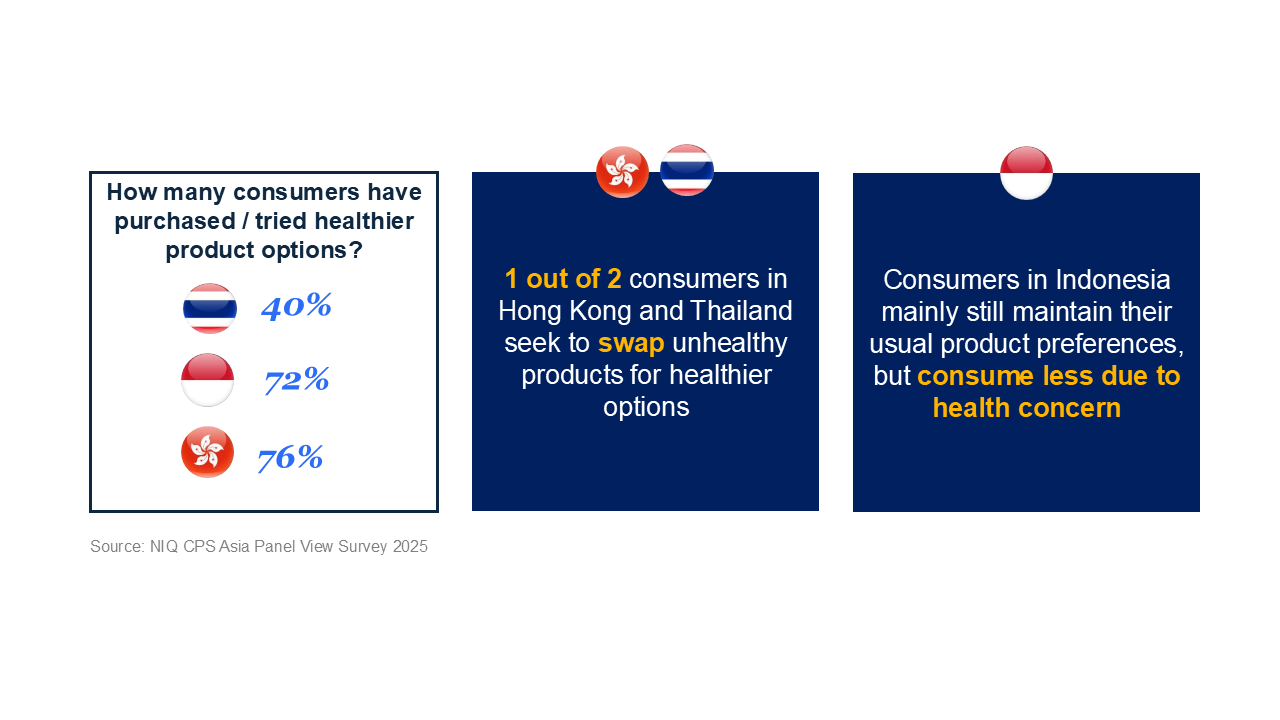
Healthier product choices have influenced consumers to either switch to these alternatives or reduce consumption of their usual choices. 1 out of 2 consumers in Hong Kong and Thailand seek to swap unhealthy products for healthier options. while Indonesia consumers mainly still maintain their usual preferences but consume less due to health concern.
Price, Label Clarity and Taste Are the Main Barriers to Healthier Product Purchases
Despite strong interest, many consumers still hold back from purchasing healthier products. The biggest challenge is price, as healthier options are often more expensive.
When these products become more affordable, interest rises quickly. Beyond cost, shoppers also want clearer product labelling so they can easily understand what makes a product “healthy.”
Taste matters too, with many looking for healthier options that still taste good. Limited availability or product variety in-store also make it harder for consumers to choose these products.
Product labels are a major driver of healthier product decisions
Consumers mainly rely on product labels and word-of-mouth to judge whether a product is healthier, while online sources and social media also play a growing role. Together, these channels shape how shoppers discover and validate healthier options.
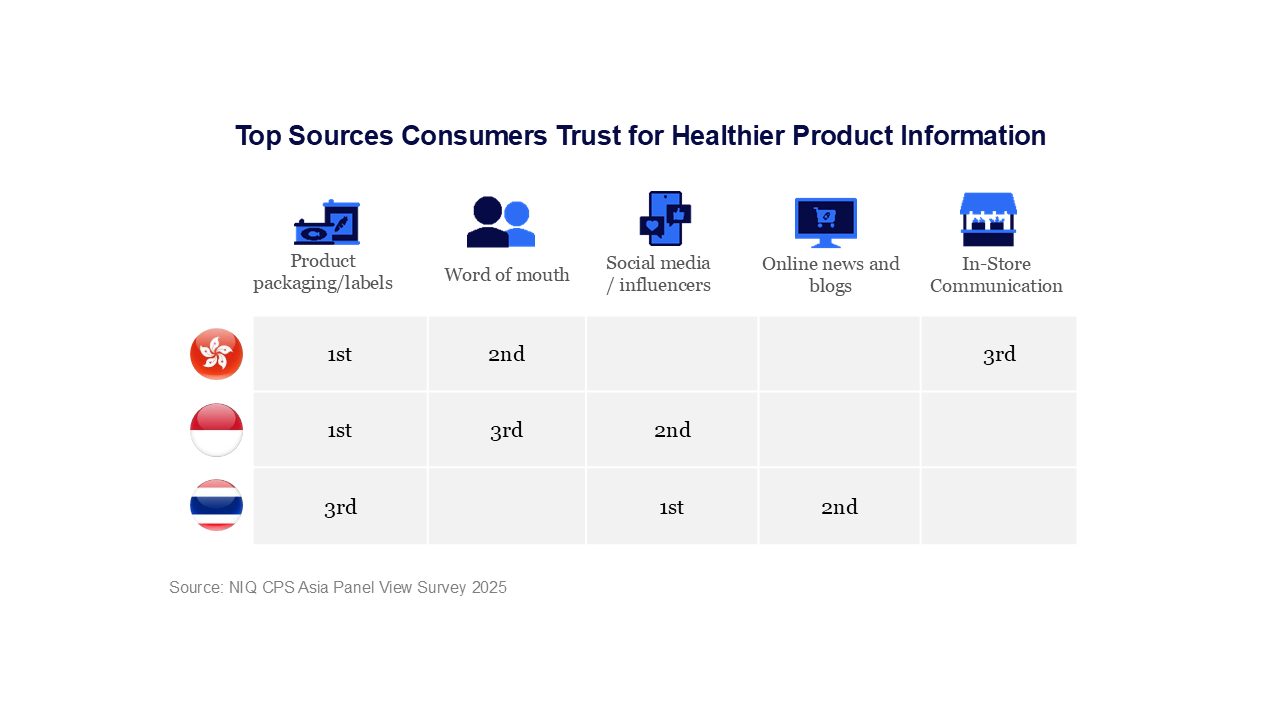
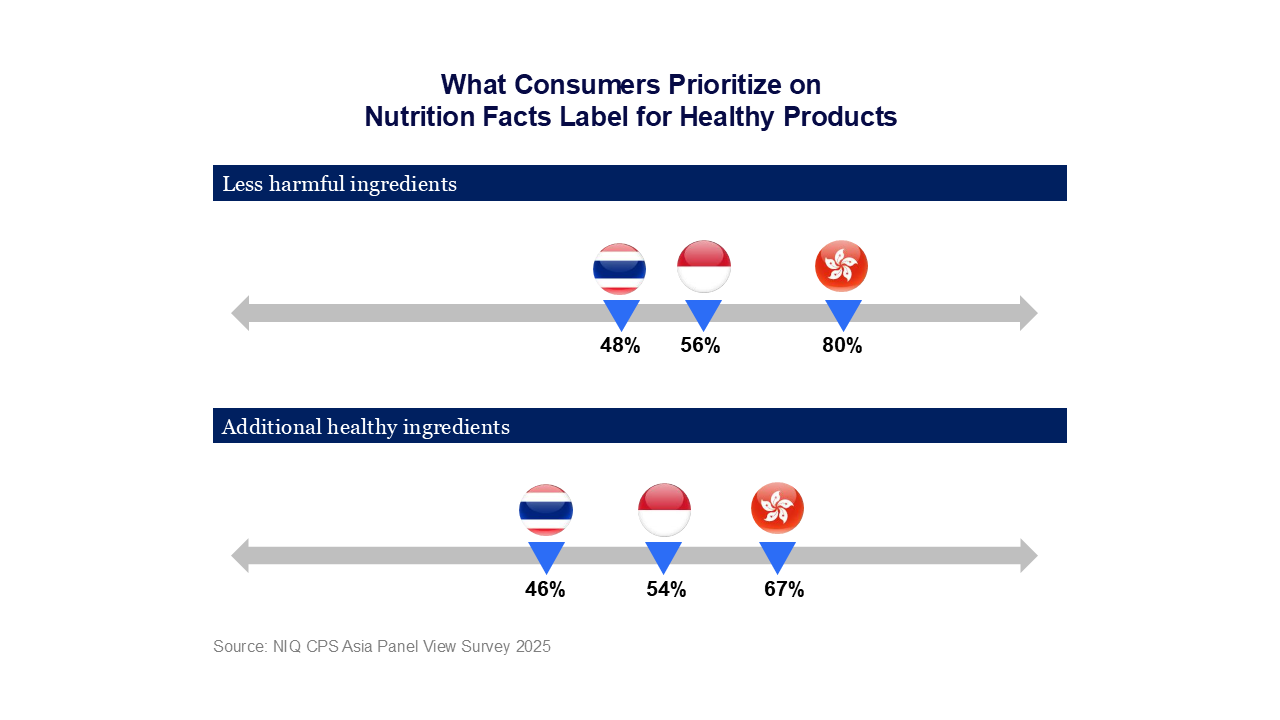
Consumers value ‘Less Harmful Ingredients’ more than ‘Additional Healthy ingredients’
Nutritional fact labels are the most trusted source for determining whether a product is healthy. Consumers place greater importance on products with less sugar, fat, sodium, or artificial additives than on those with added nutrients or functional ingredients. Reducing harmful components has a stronger impact on their purchase decisions than adding “healthy” ingredients.
Curious which categories shoppers are most actively seeking healthier options in?
Connect with us to uncover the top opportunities shaping your category’s future.
Want to understand the WHY behind the BUY?
Dive deeper into shopper motivations with targeted surveys powered by NIQ Consumer Panel Services.
Connect actual purchase behaviour with what shoppers declare about your brand, competitors, and category.