Why hybrid behaviour creates a new growth opportunity for fashion retailers
Today’s shopper can choose an accessible trend in one moment and seek quality, prestige or exclusivity in the next. Growth belongs to brands that understand when and why consumers are willing to trade up.
The biggest misconception in fashion
The reality challenges the idea that ultra fast fashion shoppers are exclusively value driven. Customers of an ultra fast fashion platform also purchase prestige beauty brands outside that platform. The same research shows a shopper base that extends beyond Gen Z, with Generations X and Y representing substantial shares across the European markets studied.
The evidence relates to prestige beauty. But the implication is strategically important: value and premium behaviours can coexist within the same shopper repertoire.
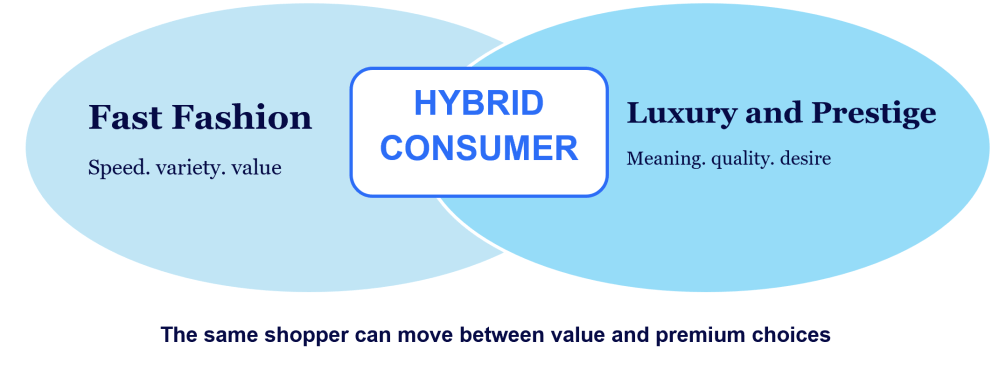
For fashion retailers, hybrid behaviour is not only a defensive challenge. It is an opportunity to capture more consumer missions and create credible reasons to trade up.
More occasions do not automatically create more brand value
Across European ecommerce, fashion represents around one fifth of online sales value. Category penetration reached 76%, while average purchase frequency increased from 8.2 to 9.2 purchases a year. Yet the average basket declined from €54 to €49.
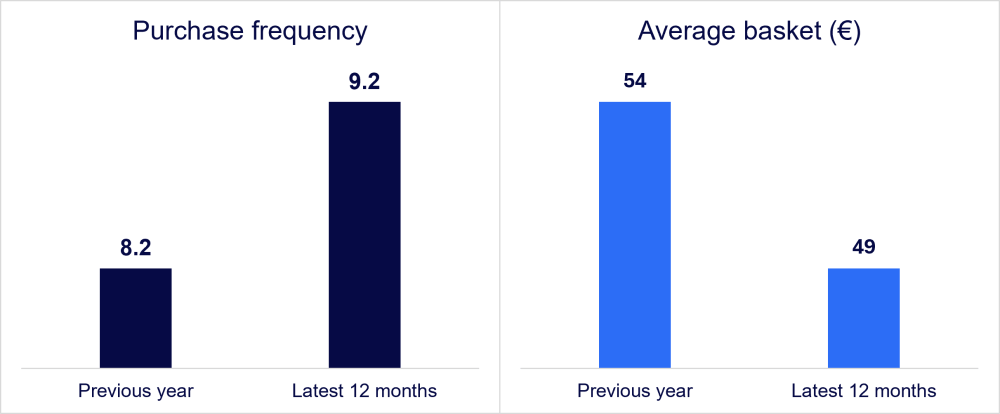
Source: NIQ Digital Purchase e-commerce consumer panel. Fashion: Clothing, Luggage & Bags, Shoes & accessories. Data ending 01 May 2026
Consumers are buying fashion more often, but spending less each time. This creates a two dimensional growth challenge. Retailers need to protect the number of occasions in which consumers choose the brand, while creating enough meaning to sustain value and willingness to pay.
Competing with speed by becoming faster is not a complete strategy
Ultra fast fashion has reset expectations through rapid product rotation, broad assortment, convenience, gamified journeys and aggressive pricing. Across seven European markets, the leading ultra fast fashion platform has a considerably larger share of units than of value, illustrating a model built first on scale, frequency and accessible prices.
Matching that model item for item or promotion for promotion may protect traffic in the short term. It can also train consumers to choose primarily on price, novelty and availability. The stronger response is not to abandon accessibility, but to create a balance that is sustainable over time for the hybrid consumer to choose a higher value proposition when quality, identity or cultural relevance matters more.
Capsule collections can be a bridge, not a shortcut
A capsule collection can be one route to a controlled premium entry point. For a fashion retailer, it can express design, craft or cultural relevance more sharply than the core range without repositioning the entire assortment. For a luxury brand, it can offer a carefully managed point of access while preserving the coherence of the core offer.
But a higher price does not create premium. A higher price is an executional decision. Premium is a consumer response.
A capsule should therefore be treated as a strategic hypothesis to be tested, not as a guaranteed route to premiumisation. Four questions matter:
- Distinctiveness: Does the collection encapsulate a distinctive offer from the brand?
- Connection: Does it embody an image or lifestyle that consumers aspire to, helping them express their identity?
- Mental availability: Does it make the brand relevant in new fashion occasions?
- Accessibility: Does it add a premium layer without weakening the everyday relevance that supports volume?
The objective is not to stop consumers buying fast fashion. It’s to position the brand to earn a share of shoppers’ repertoire in a world where fast fashion in reshaping buying behaviours.
Premium is a measurable variable, not a label
Traditional brand tracking often concentrates on awareness/familiarity, consideration and purchase intention. These measures are useful, but they provide only a partial view when the strategic objective is to increase perceived value.
In our leading brand health approach we’re connecting two complementary dimensions. Brand Choice reflects consumers’ predisposition to buy and therefore the brand’s potential to drive volume. Brand Premium reflects how much more consumers are willing to pay for the brand.
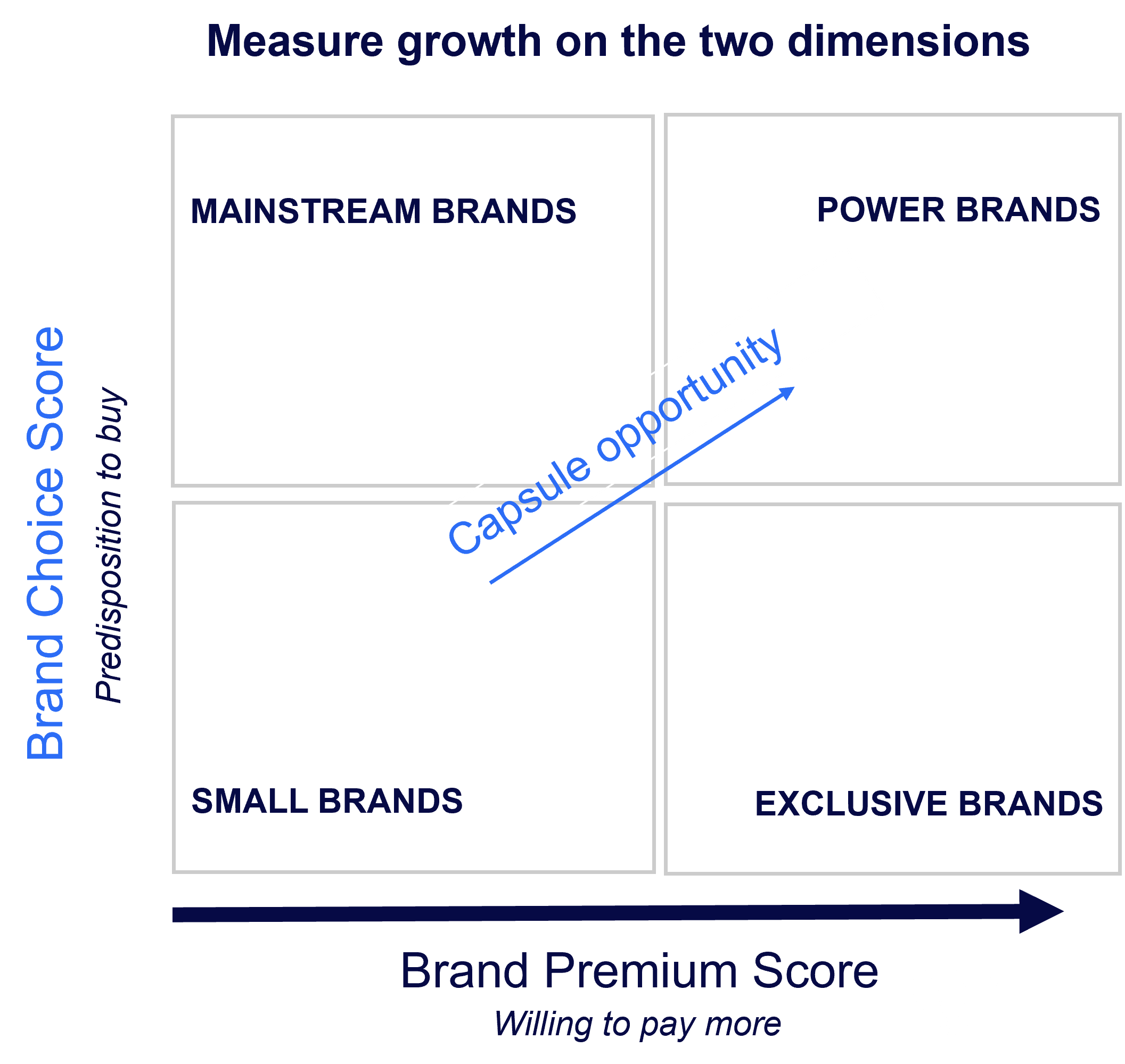
Together, these dimensions reveal whether a capsule grows reach, increases willingness to pay, strengthens both, or simply creates attention. The methodology uses simulated choice contexts that include an indication of price, helping to anchor preference in a more realistic purchase situation.
The right question is: what did the capsule build?
Immediate sales are essential, but they are not a complete verdict. A collection may sell because of scarcity, visibility or strong activation. Conversely, it may strengthen perceptions of quality, expertise or differentiation before that improvement is fully reflected in sales.
Our Brand Health approach separates brand strength from market activation. Diagnostics across mental availability, brand image and brand attachment identify which perceptions changed.
| Stage | Decision | Measurement focus |
| 1 | Starting position | Plot the brand and competitors on Brand Choice and Brand Premium. |
| 2 | Strategic role | Define whether the capsule aims to recruit, build relevance, strengthen premium, or build both dimensions. |
| 3 | Equity effect | Measure brand KPIs following the launch of the capsule collection and identify which dimensions are most strongly driving brand equity, such as Mental Availability, Differentiation, Perceived Quality or Emotional Connection. |
The Fashion Week imperative
Curious about our Brand solutions?
Fashion Week gives brands a rare moment of concentrated attention. But attention alone is not brand strength. The brands best placed to compete will not necessarily be those that produce the most collections or respond fastest to every trend. They will be those that understand where to compete on accessibility and where to create meaning that consumers value.
The hybrid consumer turns this into a growth opportunity. Consumers already move across value and prestige choices. Fashion retailers can serve more of those missions if they create clear, credible reasons either for a more premium item, or buy buying a larger part of the collection.
| Brand Choice reveals the ability to attract demand. Brand Premium reveals the ability to create value beyond price. Winning fashion brands will target both. |
Fashion retailers are no longer focused solely on protecting volume. The challenge is building brands that consumers choose more often, value more highly, and are willing to pay more for. This is what allows brands to sustain demand today while creating the foundations for future premium growth.