Cultural Inclusion at Work: More Than Celebrations – an NIQ Diversity Equity Inclusion Podcast
In this episode of My Story, Our Voices, NIQ leaders and colleagues explore what meaningful cultural inclusion really looks like—beyond celebrations—through personal stories, practical insights, and thoughtful conversations about language, food, identity, and belonging in everyday work life.


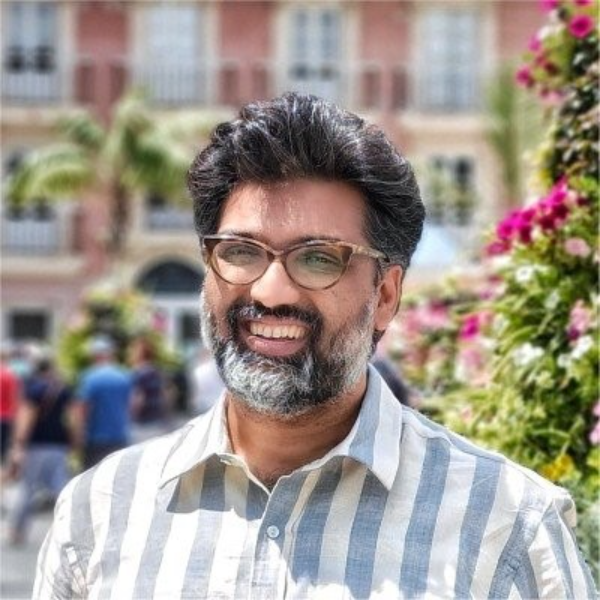
Aritra Kanjilal (He/They)
Kolkata, India
Product Director, Innovation • Product
Aritra Kanjilal, a Product Director at NIQ SAI Innovation with 15 years of experience, specializes in guiding CPG brands from concept to market using his strategic foresight and analytical acumen developed through a solid grounding in Statistics. Currently leading an AI-enabled platform for measuring new product performance and spearheading generative AI initiatives, Aritra also promotes LGBT+ inclusion as the APAC Pride ERG Lead for NIQ,recognized as an OUTstanding Global Top 5 LGBT+ Future Leader in 2022.
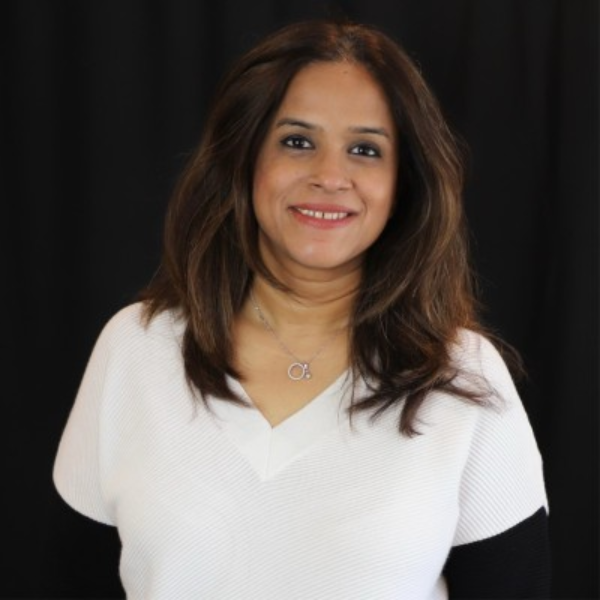
Maria Rakla
Dubai, United Arab Emirates
BI & Customer Support Leader for the EEMEA region
Maria Rakla is a BI & Customer Support Leader for the EEMEA region, currently based in Dubai. With a career rooted in analytics, customer advocacy, and regional collaboration, she enjoys connecting data with real‑world outcomes. She’s been working for the last 20+ years. Maria is passionate about culture, inclusion, and sharing stories that highlight the human side of work across regions.
HIDDEN
Location
Title
Short description
Summary
“We should have a system where people can voice things and share, so these can gradually be incorporated as part of the framework that we are building—we make it a priority, and we make it happen.” – Aritra Kanjilal
“It’s when you don’t have to explain or defend who you are or leave part of yourself at the door to be accepted—you feel seen and respected, not just tolerated.” – Maria Rakla
In this episode of My Story Our Voices, hosts James Anderson and Funda Kalemci are joined by NIQ colleagues Aritra Kanjilal and Maria Rakla for an honest and thoughtful conversation on cultural inclusion—looking beyond holidays and celebrations to what inclusion truly means in everyday work life.
The discussion begins by reframing cultural inclusion as a feeling of psychological safety: a state where individuals no longer need to explain, justify, or dilute who they are in order to belong. Aritra shares personal experiences that highlight how true inclusion allows people to celebrate traditions, make choices, and express themselves freely without fear of judgment. Maria builds on this by emphasizing curiosity, flexibility, and respect as core indicators of inclusive environments, particularly in multicultural and global workplaces.
The conversation explores the dual nature of cultural celebrations: while festivals and observances can build connection and visibility, they can also unintentionally exclude or oversimplify identities when approached without intention. Drawing from Aritra’s article Seven Ways to Be Inclusive of All Festivals, Observances and Identities, the group discusses how language, assumptions, and organizational norms shape inclusion—especially in remote and hybrid work settings where words carry even greater weight.
Food emerges as a universal bridge across cultures, symbolizing community, shared experience, and belonging. Through personal stories tied to Ramadan, Eid, and Durga Puja, the episode illustrates how celebrations often transcend religious or cultural boundaries, becoming collective moments of joy, reflection, and connection.
Importantly, the discussion moves beyond events to focus on inclusion as a year‑round practice. Maria highlights everyday actions—such as flexible schedules, understanding caregiving responsibilities, and respect for religious practices—as essential to embedding inclusion into organizational culture. Aritra underscores the need for intentional systems, feedback loops, and employee resource group (ERG) collaboration to ensure diverse voices are heard and reflected in decision‑making.
The episode also addresses the delicate balance between inclusion and stereotyping. The guests stress the importance of listening, humility, and acknowledging that mistakes are inevitable—but learning from them is critical. Rather than relying on one‑size‑fits‑all approaches, organizations are encouraged to create space for individuals to define what inclusion looks like for them.
The episode concludes with a clear message: meaningful cultural inclusion is not about perfection or ticking boxes. It is about empathy, intention, and consistent action—building workplaces where people feel seen, respected, and empowered to show up as their authentic selves every day.
Transcript
Disclaimer: The views and opinions expressed in this podcast belong to the individuals who share them and do not necessarily represent Nielsen IQ. Note that this podcast discusses sensitive topics that may be triggering for some. For more information specific to this episode, see the episode description.
Jake
The views and opinions expressed in this podcast belong to the individuals who shared them and do not necessarily represent NielsenIQ. Note that this podcast discusses sensitive topics that may be triggering for some. For more information specific to this episode, see the episode description.
Hi everyone, and welcome to the My Story, Our Voices podcast, a core component of NielsenIQ’s DEI Learning Series, Me and You. My name is Jake Conlin, and if this is your first time tuning in, then let me tell you what this podcast is all about. In a nutshell, it’s about stories, your stories. We think stories are important because when we tell them, we open the door and allow others to see the experiences that shaped us, that challenged us, and helped us grow. By doing this, we can create a culture where open dialogue is encouraged, and we can have a space to discuss important topics in a transparent and courageous manner. So minimize that e-mail tab, mute your chat, and take a little break to listen to a NielsenIQ story.
James
Hello everyone, and welcome to another episode of My Story, Our Voices, a podcast from NIQ sponsored by Diversity, Equity, and Inclusion. My name is James Anderson. I’m a senior analyst in the manufacturing section here in Toronto. My pronouns are he and him. And I just want to say hello to everyone and welcome my co-host, Funda.
Funda
Hi, James. Hello, everyone. This is Funda here. My pronouns are she and hers. I am the global leader for Diversity, Equity, Inclusion, and well-being at NIQ. And today, I’m super excited about our topic and our guests because we are talking about cultural inclusion through the lens of celebrations, but also beyond them: moments like holidays, festivals, or observances often make inclusion visible, but real inclusion isn’t limited to a calendar, right? It’s reflected in our everyday choices in how us as humans or organizations acknowledge differences, create space for people to show up as themselves, and avoid making assumptions about what matters to whom. I believe we’re going to talk about these assumptions as well. But anyway, celebrations can be powerful: they can build connection, they can build belonging and understanding. They can also, you know, when handled without intention, unintentionally exclude or oversimplify identities. So today’s conversation is about navigating that balance thoughtfully, learning from lived experiences from our guests, and exploring what meaningful year-round cultural inclusion can look like at work. Okay, I’ll get out of my soapbox and introduce our guests today, Aritra and Maria, because I don’t want to do any injustice to them. Maria, you want to go first.
Maria
Thanks, Funda. Hi, everyone. My pronouns is she and her. And my name is Maria Ratla. I lead BI and customer support across EMEA. I’m really passionate about creating inclusive environments where people feel respected, heard, and able to show up as themselves. So I am super duper excited to be part of this conversation.
Aritra
I guess I’ll go next. So hello everyone. My pronouns are he and they. I’m from India, currently staying in Delhi, but I’m originally a Bengali from Kolkata. This is my 15th year with NielsenIQ and I’m currently working as a product director for our innovation business. I’m also being engaged with our DEI initiatives and have been for several years, and I have led multiple ERGs. I am very passionate about today’s topic so I’m super excited.
Funda
Fantastic. So happy to have you both. Let’s start with a foundational question to ground our discussion. What does cultural inclusion feel like to you personally? How do you recognize it around you and how do you recognize it in your own experiences? Aritra, let’s start with you and then we’ll go to Maria after that.
Aritra
Sure thing. So for me, personally, the perfect state of cultural inclusion will be when I no longer need to think about or worry about what my cultural identity is. Where, for example, I’m able to celebrate the festivals that I care about, eat whatever I want, speak whatever language I choose to, without feeling the need to explain, justify, and sanitize for someone else. I’ll give you an example. So as I said, I’m from India. And even within India, there are some states or communities who prefer to stop eating non-veg during their festivals, while the rest of the country continues. Now, I come from a state where it is very common to eat non-veg during Arabic festivals. It’s almost an integral part of our celebrations. And I don’t want to answer why I’m not giving up on my very favorite mutton biryani during my festivals. So in a state where I don’t even need to worry, it comes naturally. That would be a perfect state of cultural inclusion for me.
Maria
So for me, cultural inclusion feels like psychological safety, if I may say. It’s when you don’t have to explain or defend who you are or leave part of yourself at the door to be accepted. You feel like, you know, seen and respected, not just tolerated. Again, I am coming from Pakistan where we have multicultural people, environment available. And now living in Dubai, we have all sorts of people, like, you know, all different nationalities, different cultures. Everybody’s there. Hence, I recognize it when leaders are curious instead of assuming when flexibility is built into how we work and when differences are treated as strengths rather than inconveniences. So that’s my take on cultural inclusion.
Funda
Thank you both. So I’m going to talk a little bit about something Aritra wrote, I believe a couple years ago, and it was an article called Seven Ways to Be Inclusive of All Festivals, Observances and Identities. That piece has inspired a lot of people, including this podcast and yours truly. Could you tell us what inspired you to write it and share a couple of takeaways that, you know, workplaces can apply?
Aritra
I will start by saying that, like, without you, Funda, and Dom, that article wouldn’t have been possible. So thank you for all the support. And yes, it has been quite a few years since I wrote it. There was no one single point: it was a journey. So I come from a not-so-religious Hindu family. And growing up in Kolkata, we would celebrate different festivals, irrespective of their religious origin. So for example, we grew up celebrating Christmas. And back then, it was pretty normal. We would go to this Christmas cake place. And what’s fascinating about it was it’s a Jewish bakery selling Christmas cakes. And almost all the hawkers there are a mix of Hindus and Muslims. And we never thought about it. We consciously, like nowadays as things are changing, we are becoming more mindful and, oh my God, like it was like that. But it was a very normal thing for us back then. Now, coming from there, the very first trigger was possibly when I saw a festive e-mail coming out during one of the Hindu festivals announcing bonuses. And my very first thought was, okay, what about all the other festivals, other communities, other religions, like why are we attaching like a performance bonus with a particular religious festival? And that was the first trigger. And we have had several discussions since then. And when I became the MOSAIC ERG lead for APAC, I thought, what we’ll all benefit from as an organization, as a resource which senior leaders or communication teams or admin teams or people who are responsible for organizing events or celebrations can benefit from and become more inclusive. Something that kind of like makes it easier for them to be naturally inclusive without relying on, say, for example, individual intelligence or someone’s personal activism, but it’s more like common knowledge. And that’s how the article came to me. And as I said, while I did the initial draft, we all worked on it together. That’s how it became a thing, and I’m proud of it, very proud of it.
James
And just building out a little bit on that writing of the draft, words and the language that we use every day have become somewhat of a hot topic at the moment. So, Aritra, as you wrote the document and some of it focuses on the kind of language we use around diversity, I wanted to ask you why it was important to you, do you think, to mention the importance of the words that we use?
Aritra
Oh, well, think about the current state of work. All of us are either fully remote or somewhat remote. We are working in a hybrid situation. And many of us, even when we are in the same team, we are not co-located and we are connecting through works, be it in a call like this, or be it through e-mail or a Teams chat, and that kind of automatically makes words very critical in building a new sort of connection. And that kind of like is the basic formula for or ingredient for making someone feel included and excluded. Now, I think like Funda at the beginning of the call mentioned that one can be like there can be certain things or misuse of words which are unintentional. And I’ve seen that happen. Like, it may not be always a conscious attempt. I have a very silly story to share. I think this was in the first few months when I started working with the global team, and it was a virtual Christmas party. And we were all supposed to wear these Christmassy clothes. And I wore this. I don’t know why, but I had this red jumbo with real Christmas lights on it, which glows like real ones. And the moment I turned my video on, someone just said, “That’s the ugliest sweater I have seen”. And I was shocked because I always associated the word ugly as a negative tone. I didn’t know the concept of ugly Christmas sweaters back then. And I think my shock was visible on my face. And of course, my manager jumped in and explained, and then I felt much better. But that just goes to show how important words can be, particularly when words develop their own regional cultural meanings. I think all of those and many other such experiences as an example, speak mine or someone else’s kind of like led me to emphasize words as we were writing that article.
James
And don’t assume that everyone has the same context for those words that you might have.
Aritra
Exactly. Yes.
Funda
Love that example. So I want to turn to you, Maria, and see if any of that resonate with you. Have you seen any of the ideas that are mentioned, implemented, or experienced examples of inclusion done well, or like the ugliest sweater example done not so well?
Maria
Absolutely, Funda. Like, you know, what really resonated with me is the emphasis on intention over assumptions. Something as simple as being mindful about language, scheduling or celebrations can make a big difference: when people feel considered, trust grows and that directly impacts engagement and performance. With this, you know, one of the immediate examples that comes to my mind is the New Year party that we have, right? So, it’s been like, one, two to three years earlier, we used to have Iftar at the office. And like, everyone would look forward to coming together. It would be a moment, like, when every culture, every individual from the organization would come. We would celebrate, like, you know, have Iftar together. It’s a meal, like, you know, food is one of those, universal mode of communication. I would say that, you know, that where it resonates with everybody, like, you know, everybody enjoys eating food irrespective of wherever you’re coming from, right? So that stopped happening for the last two to three years, but at the same time, because they said that it is not anymore allowed, cultural celebrations are not encouraged and all that. But then at the same time, New Year, is something that continues to happen. And where we have, it is supposed to be a New Year party, but then we do end up having Christmas gifts and Christmas, like, celebration in it. Which also feels whether this is really an inclusive, like, thing which is happening and whether promotion of Iftar should continue or not? And so those are the experiences that I recently have had. And I have multiple thoughts that keep on happening, coming and going in my mind that, why did we stop the Iftars if we can continue the New Year’s? So that is my experience.
James
And on that note, celebrations, as you just mentioned, often hold deep cultural and personal significance. So I’d love to hear from each of you, is there a particular, sort of stepping back for a second, I’d love to hear from each of you if there is a particular festival or celebration that’s close to your heart and what the essence or spirit of that celebration is and what it does mean to you personally.
Maria
I could go first. For me, Ramadan and Eid are very close to my heart. Ramadan is about reflection, patience, and empathy. It’s time to slow down and be more intentional. Eid, on the other hand, is more joyous, gratitude, connection with family, community, food, celebrations. So what I love is how both celebrations balance inner growth with togetherness. I mean, this is something that we really look forward throughout the year, from adults looking forward to Ramadan, and then children looking forward to Eid. And Eid is more for, a festivity where kids get gifts, in the form of cash, the smaller Eid, right after the Ramadan one, because we got two types of Eid. One is the smaller Eid, which is called Eid al-Fitr. And then we have a bigger Eid, which is called Eid al-Adha. And so, Eid al-Adha is when we have a slaughtering of, or say, sacrificing the animals in the shape of, say, camel, cow, goats, lamb, sheep. These are the ones which are slaughtered. And on the other hand, the Eid al-Fitr is right after Ramadan Eid, and that is when we have, like, you know, the cultural, like where everybody gets dressed up. It’s more festive, I would say, than the other Eid. However, the other Eid is known as a bigger Eid than this one is a smaller. But then again, it’s all about community, festival, family, getting ready, dressed up. So yeah, that’s something very close to my heart.
James
And Aritra, how about you?
Aritra
For me, it has to be Durga Puja. But Maria, thank you so much for sharing about Ramadan. I have many friends who celebrate Eid. That’s like very close to my heart. Yeah, I’m a big time foodie. So I had to say that hmm, I’m coming back to Durga Puja. So it’s originally celebration of this Hindu deity called Durga. But in Kolkata or in the eastern part of the country in general, it has over the years turned into this long celebration of art, culture, and food. The entire city goes crazy. It almost enters into a carnival mode and every single street will have these temporary structures. We call them pandals built, which are part shrine where the rituals take place, but also like part walk through art. art space, like people can just walk and each one of them will have some theme inspired by media regional art form or some literature or even like social issues and current events. I remember one very particularly. So during COVID, one of the challenges we had in India was labor migration, people who did not have like a permanent job. They were stuck in cities, but also not able to go out. And that was a major challenge that the country as a whole. And that topic was brought up in two or three pandals. So the rituals are there, but there is only one part of something which is much bigger. And while it’s rooted in a Hindu tradition and origin, the whole city together celebrates it. So, in Kolkata, you have Muslim communities, and you have some smaller Anglo-Indian or Christian ones. You have a small Jewish community as well. And everyone would come together to celebrate. Interestingly, one of the most loved foods and most sold foods during Durga Puja is biryani, which has its origins in the Muslim kitchens. So this entire thing, like it feels like a melting pot and that’s why I love it.
James
Speaking of pots, I noticed that food plays a role in all of these celebrations. I’ve heard that a few times now. It seems like a common factor across cultural activities as well. Why do you, I’ll ask each of you, why do you think food plays such an important role in celebrations in general?
Aritra
Oh, that’s easy. It’s because food is luck. I don’t know how else to answer that. I can’t think of a celebration without food.
Maria
Food is universal. Like, food is, it’s one of the easiest ways to connect across cultures. Like sharing food is really about sharing stories, memories, identity. Even when traditions differ, food creates a sense of belonging. It’s a way of saying you’re welcome here without needing gourds, you know? And then everybody likes, so for instance, like Aritra mentioned biryani, mutton biryani. Now, biryani in India is very different than biryani in Pakistan, and biryani that probably we get in Dubai. But the thing is, it is biryani. It is something which is a common, what do you call, main item, main dish for any event. Like if biryani is there, it’s festive, you know what I mean? So yeah, it is universal.
James
I think as well, food, it helps break down barriers, I think, because there’s nothing like gathering at the table. And as soon as you start discussing the food, and it’s a great way to just, you know, to cross, to just break away from any kind of formality or anything, you just immediately, we all just start eating and enjoying and sharing together.
Funda
Wow, all of this food conversation makes me hungry. So I want to change the topic a little bit. Because celebrations, we’re talking about cultural inclusivity, right? Celebrations are not limited to holidays. Let’s think of milestones like workplace achievements or other cultural observances. Each of these is a chance to make people feel included. With my DEI hat on, how can organizations ensure that these moments are inclusive for everyone, no matter the time of the year? Maria, you want to go first.
Maria
Sure. So, see, organizations can be inclusive year-round by building flexibility and empathy into everyday practice. That could mean acknowledging different working styles, being flexible with schedules, or recognizing achievement in ways that resonate across cultures. I mean, inclusion doesn’t necessarily need to be a special event per se. It should feel embedded in how decisions are made and how people are treated on a day-to-day basis. So, for instance, like, you know, moms, I would say, they need to do a school drop off; they need to probably pick it up. So you know that flexibility on letting them do what they are meant to do or which can give them that contentment. And then let them focus more on continuing in terms of doing their work is also one form of being inclusive. And I think NielsenIQ does fabulous in this. And the other could also be like, you know, if somebody offer prayers for that matter so that timing of, you know, letting them go, expend like another 15, 20 minutes and just offering their prayers is also one form of being inclusive. So I guess these are like, you know, it has to be on day-to-day basis throughout the year, not pertaining to any special event only.
James
And Aritra.
Aritra
Totally agree with what Maria said. I think like the key remains lies in being intentional, particularly for global companies, which work with people from varied cultures, countries, languages, religions, like we can’t take it for granted that everyone will just automatically naturally come together and there won’t be any cultural clashes. And that’s why we need to be very conscious and intentional that, okay, like how do we bring such changes and upgrades, system upgrades in place, like things that Maria mentioned, like, okay, align for schedule flexibility, which allows offering of friends, like how can we make someone feel comfortable and safe enough so that they can raise that with their managers or other stakeholders. The other piece that I think is very important is, as we are building this intentional framework, I think the article that we wrote and we had included, I think initially seven, and then we expanded it to 10 different things people can do to become more culturally inclusive. That was the starting point of a much bigger framework. And I think as we expand that, we’ll have to be agile because we can’t just say that it’s like the first draft or the first system we have. will be perfect and it will achieve a hundred percent. No, it’s not going to do that. So what’s needed for that is to build feedback loops. I think like it’s very important because I’m thinking about what Maria mentioned about, okay, like if we are able to celebrate New Year’s and as part of New Year, Christmas gifts, why did we stop celebrating Iftar? So that’s the feedback, right? I’m not getting into whether that’s right or wrong or valid or invalid, but that’s a feedback. And as an organization, we should have a system where people can voice these and like they can share it so that these can gradually be incorporated as part of the framework that we are building. And yeah, we make it a priority and we make it happen. Yes. Just like any other business case or business priority.
James
Because all of that plays a role, as Maria mentioned, in affecting engagement and performance when people are, when we know from all those management studies, Maslow’s hierarchy of needs, when people feel respected and respect of their peers, et cetera, et cetera. That’s one of the things that really sort of engages people and keeps people, helps retain people within the workplace as well. And on that note, because we’ve been discussing this, how do we balance being inclusive without accidentally stereotyping or oversimplifying people’s cultural identities? It’s a tricky balance, but I’d love to hear your thoughts, Aritra.
Aritra
No, yeah, absolutely. It’s an extremely tricky balance. I’ll start by saying, like, I don’t, the image of your level first, like, let’s start by accepting that we are going to make mistakes. And whenever we are making mistakes, we try to learn rather than become defensive. I think that’s very important if we want to just become better at balancing this. At an organizational level, and I’m not specifically talking about NielsenIQ, I’ve seen this across many organizations, we often define a culture, we define a country, be it with the images that we are using or the festivals that we are focusing on in very broad brush strokes. And I think a big part of the problem lies there. So, for example, I always share examples from India because I’m from India. So if everyone thinks about India whenever they’re thinking about Diwali or vice versa, I think there’s some problems there because India by itself has so many other festivals happening. Now, it’s not possible for us to talk about every possible festivals, but whenever there’s an occasion, we can possibly take turns. Like, okay, this year it was Diwali, so next year it could be Holi, then the year after that could be the Navratri show. And like we take turns. And how do we do that? We do that through our ERGs. We crowdsource, ask people, okay, like what are the celebrations that are closest to your hearts? And we take them from there. So, building that sensitivity, once again, finding intentions, I think is how we balance stereotyping and oversimplifying cultural identities.
James
And Maria?
Maria
I agree with what Aritra is mentioning, like, you know, that the key is to create space for individuals. However, I would just like to add that that balance also comes from listening. Like, you know, inclusion becomes stereotyping when we assume one person represents an entire culture. okay, which is not always right. The key is to create space for individuals to define what inclusion looks for them rather than applying one size fits all solutions. So curiosity and humility go a very long way here. This is my take on this, that it has to be a balance. And like Aritra just mentioned that if there are so many festivals that maybe we could do is do it year-on-year basis. At least we know that we’ve catered for– or maybe we can do it bits and bits, quarter-wise, so at least everybody feels included. They recognize, they can share the little happiness of doing those respective things that feel closer to their heart.
Funda
Thank you, Maria, and thank you, Aritro. I love this. One thing that I want to reiterate is intent versus impact. The biggest danger there is assumption. If you assume one thing, you know, your intent might be one thing, but the impact is definitely going to be something different. But anyhow, this has been such a rich discussion. Thank you so much, both of you. To wrap up, I just want to leave our listeners with something actionable. What’s one piece of advice you’d give to workplaces or to Aritra’s point, ERGs, striving for cultural inclusion, not just during celebrations, but every day, day-to-day, year-round, just one example?
Aritra
Yes. I think, once again, it goes back to being intentional. I think what ERGs can do more in organizations which are striving for cultural inclusion is to hear more from the members and the people. One thing that I’ve often seen with ERGs is that it’s, of course, primarily driven by a few folks who are extremely passionate, but then whatever is going to happen throughout the year is decided by them. And they don’t often get feedback from other members or, and it could be a bandwidth issue. So just enabling that the leaders are talking to people and hearing from them and hearing from multiple sources, not just like one person. I think that that is very critical for building cultural inclusion. And it’s not just like the ERG that is focused on cultural inclusion. I think it goes beyond just the ERG focused on cultural inclusion. Say, for example, how LGBT+ inclusion is seen is very nuanced based on what is the cultural background or what is the religious background. And I think like that’s where the ERGs can also like interact and collaborate to bring these cultural intelligence into the things that they are doing.
Maria
Adding to what Aritra said, my advice would be start with empathy, then act consistently. Inclusion isn’t about getting everything perfectly done. It’s about being open to learning and willing to adjust. When people feel genuinely respected and heard, inclusion becomes part of the culture, not just a policy.
James
Thank you, Maria. That was very, very well said. In fact, I want to thank both of our guests today for sharing their thoughts and stories with us. I also want to thank my co-host, Funda Kalemci, our producers and editors, and I want to thank, finally, our listeners for tuning in to yet another episode of My Story, Our Voices. Be sure to join us again. Thank you for listening.
Jake
Hey everyone, it’s Jake again. We hope you’ve enjoyed this episode of the My Story, Our Voices podcast. Tune in next time to hear more stories from the NIQ community.
Maria
It’s when you don’t have to explain or defend who you are or leave part of yourself at the door to be accepted. You feel like, you know, seen and respected, not just tolerated.
Aritra
We should have a system where people can voice things and share so that these can gradually be incorporated as part of the framework that we are building. We make it a priority, and we make it happen.