
Hospitality loses three sites a day in tough first quarter of 2026
Soaring costs for businesses and consumers led to a 0.3% drop in Britain’s number of licensed premises in the first quarter of 2026, the latest Hospitality Market Monitor reveals.
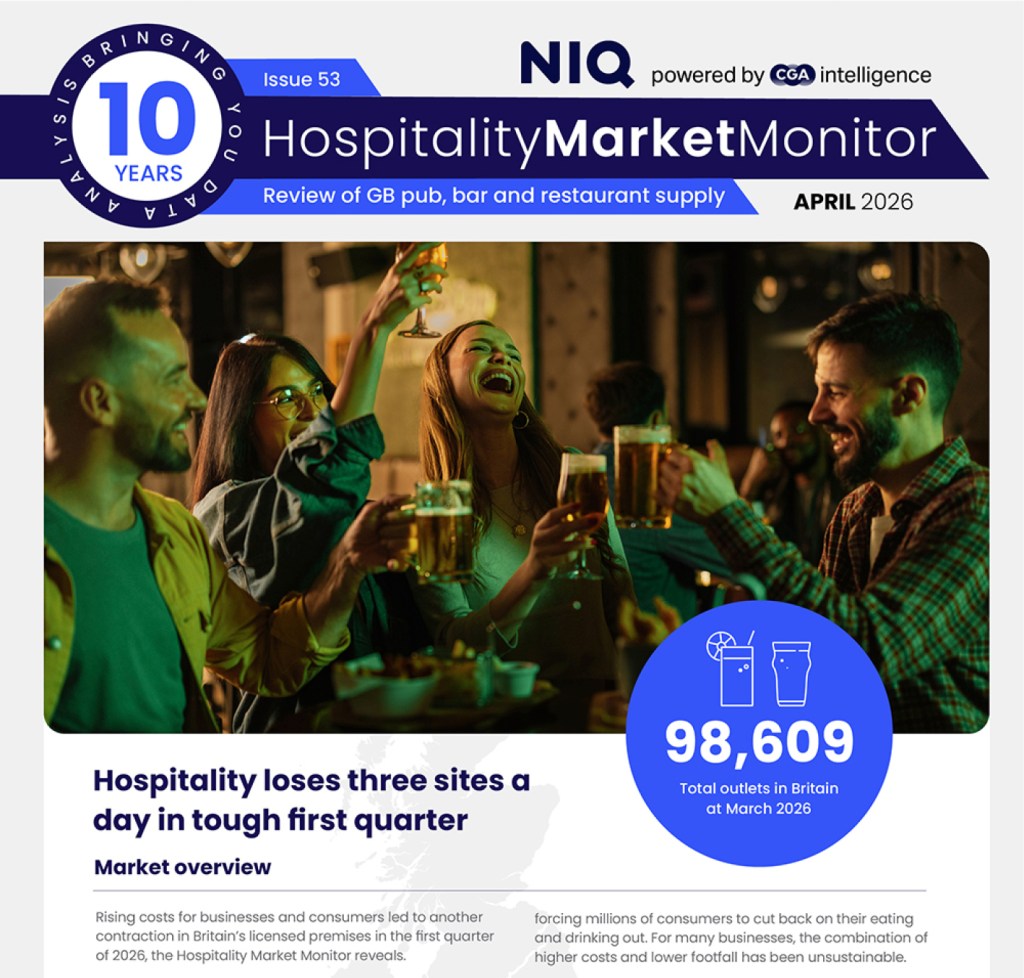
The report from NIQ, powered by CGA intelligence, shows there were 98,609 outlets at the end of March 2026—305 fewer than in December 2025, and an average of 3.4 net closures per day. It is a second successive quarter-on-quarter drop and suggests that momentum of closures in hospitality is starting to build.
The latest business failures follow relentless inflation in essential areas for hospitality including labour, energy and food and drink, alongside fragile consumer confidence about spending. Ongoing conflicts in the Middle East are likely to trigger further price rises in energy-reliant areas in the short to medium term.
NIQ’s research suggests none of hospitality’s main channels were able to record growth in the first quarter. The casual dining restaurant sector has had a particularly difficult start to 2026, with outlet numbers falling by 0.9% in three months. Bars have also been particularly affected by consumers’ cuts in discretionary spending.
The latest edition of NIQ’s Hospitality Market Monitor also provides expert analysis of Britain’s accommodation sector, which has shown above-average resilience in recent years. Outlet numbers in the licensed hotel segment has grown year-on-year and is only 4.7% smaller than it was at the pre-COVID benchmark of March 2020, compared to a 14.3% drop in all outlets. With some household budgets for holidays running low, and more increases in travel costs expected, hotels, guest houses and holiday parks may be poised to benefit from an increase in staycations over the summer.
Karl Chessell, Director – Hospitality Operators and Food, EMEA at CGA by NIQ, said:
“Soaring costs have taken a heavy toll on hospitality in the first quarter and forced hundreds of businesses to close, with distressing impacts for the operators and employees concerned. Confidence among leaders and consumers alike is low, and geopolitical crises are likely to cause more damage in the months ahead. Many pubs, bars, restaurants and other outlets have shown remarkable resilience in the face of unprecedented challenges, but thousands are now nearing breaking point. Without targeted support, more closures can be expected over the rest of 2026.”
The Hospitality Market Monitor from NIQ provides exclusive quarterly analysis of the licensed sector across Britain, with breakdowns of openings and closures by region, channel, tenure and more. Its expert analysis of trends and developments helps operators, suppliers and investors assess opportunities and challenges across the sector.
About NIQ
NielsenIQ (NYSE: NIQ) is a leading consumer intelligence company, delivering the most complete and trusted understanding of consumer buying behavior and revealing new pathways to growth. By combining an unmatched global data footprint and granular consumer and retail measurement with decades of AI modeling expertise, NIQ builds decision systems that help companies turn complex data into confident action.
With operations in more than 90 countries, NIQ covers approximately 82% of the world’s population and more than $7.4 trillion in global consumer spend. Through cloud-based platforms, advanced analytics and AI-driven insights, NIQ delivers The Full View™—helping brands and retailers understand what consumers buy, why they buy it, and what to do next.
For more information, please visit www.niq.com.
Forward Looking Statement
This press release regarding Britain’s licensed premises may contain forward-looking statements regarding anticipated consumer behaviors, market trends, and industry developments. These statements reflect current expectations and projections based on available data, historical patterns, and various assumptions. Words such as “expects,” “anticipates,” “likely,” “may,” “poised to,”,” and similar expressions are intended to identify such forward-looking statements. These statements are not guarantees of future outcomes and are subject to inherent uncertainties, including changes in consumer preferences, economic conditions, technological advancements, and competitive dynamics. Actual results may differ materially from those expressed or implied in these statements. While we strive to base our insights on reliable data and sound methodologies, we undertake no obligation to update any forward-looking statements to reflect future events or circumstances, except to the extent required by applicable law.