

NIQ Cadence
™
AI-Native Marketing Measurement
Marketing has entered an operating-system moment. NIQ experts explore why traditional measurement can’t keep pace — and what AI-native, continuous intelligence means for the future of marketing effectiveness.
Global experts

Jason Tate
General Manager, Marketing Effectiveness
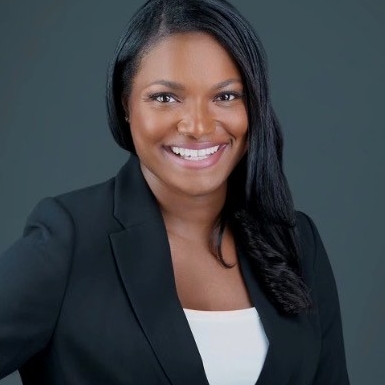
Arica McKinnon
Global Go-To-Market Lead, Marketing Effectiveness

John Puhl
Global Head of Product, Marketing Effectiveness
Watch NIQ experts explore how AI is changing marketing measurement, and why the future is continuous, decision-driven intelligence.
Marketing leaders are under growing pressure to prove marketing ROI, make decisions faster, and navigate an increasingly fragmented consumer journey. Traditional marketing measurement workflows were built for a slower, more linear environment. In this conversation, NIQ experts explain how AI in marketing is changing the measurement model – and how NIQ Cadence is designed to connect data, measurement, intelligence and optimization so marketers can act faster.
The actionability gap
Marketing leaders face greater pressure to prove ROI, while many still lack real-time insight. Cadence is built to close that gap by making measurement continuous.
AI-native, not AI-added
Cadence was designed from the start for AI orchestration, with specialized agents working across data, measurement, analytics, insights and optimization.
From measurement to action
The goal is to shorten the distance between a marketing signal and the decision that follows – moving beyond retrospective reporting.

Beyond the Dashboard: Why the Future of Marketing Effectiveness Belongs to AI-Native Decision Systems
By Lauren Fernandes, Vice President of Global Content, NIQ
The global point of view behind this conversation argues that marketing effectiveness is moving beyond dashboards and retrospective reporting toward continuous intelligence, coordinated AI and faster decision-making.
This interview brings that thesis to life through the people building NIQ Cadence and the operating model behind it.
The conversation- Six editorial chapters
The Marketing Measurement Problem
Jordee O’Brien:
What customer problem ultimately inspired the creation of NIQ Cadence?
Jason Tate:
“There is a 65-point gap between the pressure CMOs face to prove ROI and their ability to access real-time insights. Cadence was built to close that gap.”
The core problem is what we lovingly refer to as the actionability gap. Last year, we did a CMO report globally from NIQ’s perspective, and we found that 74 percent of CMOs stated that they were under more scrutiny for reporting marketing ROI than they had been previously. Another question within that report was around understanding how many CMOs believe that they have unlocked real-time insights, and only 9 percent of CMOs said that. So, we have a 65 percent gap between CMOs saying that they have more pressure to report ROI and the ability to actually do that from a real-time perspective.
About 70 percent to 80 percent of ad dollars are being driven algorithmically at this point. Cadence specifically was built to close that gap in order to make measurement continuous, so that clients can ask questions and get answers back in real time instead of going through a report.
Jordee O’Brien:
What pressure are marketing leaders under right now that traditional marketing measurement workflows were not built to handle?
Arica McKinnon:
“Marketing leaders are being asked to do more with less, prove business impact, and move at a speed that legacy measurement was never designed to support.”
Marketing leaders are being asked to do more with their budgets, prove business impact, and make decisions faster. They’re being asked to do all these things while navigating a consumer journey that is becoming more fragmented. It’s honestly not that the legacy measurement tools and workflows are bad; it’s just that they were really built for a different time. Before there were fewer channels, more linear consumer journeys, and longer planning cycles. Now, consumers are moving across retail and social media, and they’re engaging with streaming, search, e-commerce, and still, in-store experiences. All the while, executives have expectations of understanding how marketing is impacting sales and whether marketing drove sales.
Jordee O’Brien:
When it comes to marketing measurement, where do you see clients getting stuck today, and why is a new approach needed?
Arica McKinnon:
“It’s not about providing marketers with more data. It’s about providing them with connected measurement that links those marketing activity insights to real business outcomes.”
I would say the biggest place marketers get stuck is having more data now than they’ve ever had before, and that data is disconnected. Because the data is disconnected, it makes it very difficult to get a single, trusted view of what’s actually driving their business outcomes. They’re getting data from media platforms, attribution tools, measurement partners, retail media networks, and even their own CRM systems. Each of those sources actually tells a slightly different story, and they’re all using different methodologies. That’s why I truly believe a new approach is needed. It’s not about providing marketers with more data. It’s about providing them with connected measurement that links those marketing activity insights to real business outcomes. More importantly, those outcomes need to be more forward-looking recommendations. Cadence actually brings together data, measurement, and intelligence into a single operating system, and it really helps marketers move from fragmented data and reporting to faster, more confident decision-making.
Jordee O’Brien:
What has changed in marketing measurement in the last few years that makes this a more urgent issue now?
Jason Tate:
“The media environment became much more complex… the speed of decisions has accelerated… AI has really become genuinely capable of doing something about both of those original streams.”
Three trends kind of came together all at one time. The first one is that the media environment became much more complex: more channels, more signals, more opportunities to spend money, and each of the platforms tells a different story. Secondly, the speed of decisions has accelerated. Last but not least, the third thing that is happening is that AI has really become genuinely capable of doing something about both of those original streams.
Within Cadence, what we did is create an AI-native, compound AI architecture, which really put a whole bunch of agents to work. It’s compound AI because you have multiple agents that are going around and trying to handle the tasks, and those agents can do it in such a way, and work with all the other agents, to make sure that we’re getting a good, clean read in terms of what the outcomes are. In my mind, it’s kind of going from the reality that the old workflow isn’t just slow. It’s actually structurally mismatched with how marketing works today. And that’s what Cadence is trying to solve.
Jordee O’Brien:
What are the biggest consequences of relying on fragmented marketing measurement tools or static reports?
John Puhl:
“Fragmented measurement creates fragmented truths, leaving organizations without a single source of confidence for decision-making.”
The biggest consequence that we see is that it really ends up with a partial picture. Signals are fragmenting across all these different places, and the need to have one central source of truth continues to expand as ROI scrutiny continues to evolve. In this case, you end up with a lot of fragmented signals and multiple stories floating across the organization.
Why traditional marketing measurement is breaking down
Jordee O’Brien:
Why do you believe traditional marketing measurement workflows are breaking down today?
Arica McKinnon:
“Traditional measurement was built for a slower era of marketing. Today’s marketers need answers in days, not months.”
They were actually designed for a much simpler ecosystem and slower decision cycles. Historically, marketers could evaluate a handful of channels at one time. They evaluated consumer journeys that were actually more linear and not as fragmented as they are now, and measurement was relatively straightforward.
Those workflows were built for a much slower version of marketing, where you had months to plan and weeks to react. We no longer have the luxury of waiting months to receive insights. Now, marketers need their insights much faster, and they need to be able to act immediately on those insights.
Jordee O’Brien:
When did the idea for NIQ Cadence first emerge?
John Puhl:
“The idea for NIQ Cadence has really been a work in progress over the last 18 months, starting when NIQ reentered the marketing effectiveness space.”
The idea for NIQ Cadence has really been a work in progress over the last 18 months, starting when NIQ reentered the marketing effectiveness space. It’s really founded and predicated on the idea that marketers don’t need another tool. They need a new operating cadence to move at the speed at which the world is operating, making faster decisions and more consistent decisions over time so that they can accelerate and remain competitive in this market.
What Is NIQ Cadence?
In one sentence: NIQ Cadence is NIQ’s compound AI operating system for marketing effectiveness, designed to connect data, measurement, analytics, insights and optimization so marketers can make faster decisions.
Jordee O’Brien:
What is NIQ Cadence?
John Puhl:
“Cadence is a compound AI operating system that turns marketing measurement into a continuous decision-making engine.”
Cadence is our compound AI operating system. It’s a team of 19 agents working together across multiple different workflows, from data ingestion and harmonization to modeling and analytics, to insights generation and optimization. It allows marketers to move faster and make decisions more quickly, while relying on a team of 19 agents working behind the scenes to handle the mechanics. That way, marketers can focus on the decisions that drive their business forward.
Jordee O’Brien:
What differentiates NIQ Cadence from legacy ad effectiveness solutions?
John Puhl:
“Cadence wasn’t retrofitted with AI. It was built AI-native from day one.”
Cadence has been engineered from the first line of code to be AI-native. With the modern technology that’s available today, it allows marketers to move faster and really start to delegate work to agents in the background. That frees up the elusive time they need to focus on their business and drive it forward.
As we look more broadly at what Cadence offers, the idea that it’s compound AI, stitching together multiple agents working across multiple workflows, allows it to expand at a broader scale and touch more business processes. It foundationally encodes knowledge in a system that gets better and better over time, and smarter and smarter, so that it evolves with your business as your marketing cadence evolves.
Jordee O’Brien:
You refer to NIQ Cadence as an operating system for marketing effectiveness, rather than an analytics tool. What’s the distinction?
John Puhl:
“Cadence doesn’t optimize a single task. It orchestrates the entire measurement-to-decision workflow.”
The distinction is that we use compound AI, which means that we’re not just optimizing one individual process. We’re really not bolting AI onto a single process but instead orchestrating a broader ecosystem where it can move across the entirety of a business process, from cleansing and harmonizing data, to running models and evaluating outcomes, to automating optimizations and algorithms that allow marketers to make faster decisions.
We’re doing so at a broader scale, not only within one brand, but across brands around the world. That means it really underpins the business operating system, versus just being a point solution that helps make one part of the process faster.
Jordee O’Brien:
NIQ describes Cadence as a compound AI system. What does compound AI mean in practical terms?
John Puhl:
“Compound AI means every part of the workflow is powered by the model best suited for the task.”
What this allows us to do is stitch together multiple different business processes, things like harmonizing data connected to things that are really deeply analytical. Think about running marketing mix models, while also being able to build agents that deliver and articulate insights. What a compound AI system does is ensure that you’re utilizing the best model for the best job, making sure that it drives the best outcomes across the entire workflow.
Jordee O’Brien:
How is AI-native marketing technology different from simply using AI to enhance an older platform or database?
John Puhl:
“Instead of bolting AI into a pre-AI pipeline, what AI-native means is that everything has been written with the intention of being leveraged and orchestrated together among the grand symphony of agents that are operating.”
From the first line of code that we wrote, we intended all of that code to be orchestrated and available for agents to use. Systems that inherited old legacy technology didn’t have those same intentions when they were built, and that means there are limitations on what they can do.
Instead of bolting AI into a pre-AI pipeline, what AI-native means is that everything has been written with the intention of being leveraged and orchestrated together among the grand symphony of agents that are operating. That allows us to make sure that it continues to build over time and enables us to handle more complex processes.
Jordee O’Brien:
Why did the team choose a multi-agent architecture rather than a single AI assistant?
John Puhl:
“The future isn’t one smarter model. It’s smarter orchestration across many specialized agents.”
The multi-agent architecture is really an intentional choice. There was a study done back in 2025 that really articulated the point that the frontier is not in better models. Models will continue to improve, but it’s really about the orchestration of the models and how they get leveraged, whether that be leveraging them for very specific tasks or orchestrating multiple models together in one workflow to execute.
There is still one AI assistant that works and does the planning, and that’s NIQ Optic. But behind that, what Optic is doing is dispatching and making sure that we have the right agents and the right specialized tools to ensure that it’s able to string together the right level of depth of knowledge across the breadth of things that teams are trying to execute.
How NIQ Cadence Helps Marketers
Jordee O’Brien:
Which buyer is typically the champion for NIQ Cadence: the CMO, analytics leader, insights leader, media leader, or someone else?
Arica McKinnon:
“CMOs want a stronger growth story. Analytics teams want less complexity. Cadence helps both achieve it.”
I really think the champion can vary by the organization’s maturity. The executive sponsor is often the CMO, the Chief Marketing Officer. They’re the ones who are accountable and responsible for growth and for reporting marketing impact to the CFO and the broader executive team.
The day-to-day operational champions are typically the analytics and insights leaders who own measurement and are often very overwhelmed by all the ad hoc requests they receive on a daily basis, all the disconnected data sources that they have to deal with, and the overall pressure to answer those questions much faster.
You have your CMO, who basically wants a stronger growth story and a clear ROI to present to the executive leadership team, while the analytics and insights team just wants to reduce the complexity. They want to be able to move faster from being reactive to more proactive in decision-making.
Jordee O’Brien:
Why should a CMO or marketing leader care about this shift in AI and marketing measurement now, rather than two years from now?
Arica McKinnon:
“The companies modernizing measurement today will outperform those still waiting to act tomorrow.”
I think a marketing leader should definitely care about this shift now and not wait, because the companies that modernize measurement and decision-making today will be able to make smarter investment decisions and prove impact more effectively, especially as market conditions continue to change. This is one of the reasons why we built Cadence: for those marketing leaders who really need a trusted view of what’s driving consumer behavior, what’s driving sales, and what’s driving growth right now, not months later.
They’ll have a greater competitive advantage in how they allocate spend and optimize performance. Unfortunately, those that don’t make those decisions will definitely fall behind, and it’ll be a difficult gap for them to close.
Jordee O’Brien:
What KPIs improve most quickly when organizations adopt NIQ Cadence?
John Puhl:
“The fastest improvement we’ve seen is time to insight, turning opportunities into actions while they still matter.”
What we’ve seen so far is that the time to insight has really improved. From the time that data first lands to the optimization opportunity being surfaced, decision-making speed has allowed organizations to uncover and tap into those opportunities when the moment exists, rather than looking backward at what they should have done in the past.
Jordee O’Brien:
How does NIQ Cadence help marketers prove marketing ROI to senior leadership?
Jason Tate:
“That provides a defense mechanism for the data points that marketers believe to be true.”
The platform helps to give a backbone to marketers. Cadence allows you to ask a specific question and get that specific answer back. That provides a defense mechanism for the data points that marketers believe to be true. It’s a lot better of a time-oriented match for answering questions than historic ways of running a study, waiting for a few months, and then trying to do a postmortem in terms of why something happened five or six months before.
Jordee O’Brien:
What kinds of organizations benefit most from NIQ Cadence today: global enterprises, regional brands, or emerging challengers?
Jason Tate:
“From global enterprises to emerging brands, every organization benefits from faster, more connected decision-making.”
All three are going to benefit. Enterprises are definitively going to benefit because Cadence is an enterprise-oriented solution set. We’ve thought about Cadence as being an operating system that allows projects to turn into programs. And the beauty and the strength behind that is really the empowerment of enterprises to create a solution where you have one common source of truth for what return on investment and other effectiveness KPIs are, and how those interact across brands, regions, or markets that are being looked at. That consistency is really helpful. On the other side of that, newer market entrants are really going to benefit being able to use Cadence in a way that helps them skip the queue a little bit in terms of some of their tech stack building. I think that some of these new entrants into the market are going to be able to use an AI-native, compound AI operating system that’s going to help them make marketing decisions a lot faster than some of the other organizations that are still not using those types of tools.
Why NIQ is positioned to lead
Jordee O’Brien:
What gives NIQ credibility to lead this conversation? Why is NIQ particularly well positioned to bring a new operating system for marketing effectiveness to market?
Arica McKinnon:
“Most companies can provide a dashboard. NIQ Cadence, actually provides the context, the recommendations, and a clear path to action.”
A new measurement operating system requires a few things: trusted data, broad market coverage, and decision intelligence. I truly believe that NIQ is unique in being able to bring all of these things. Through the Full View, NIQ is able to connect consumers, retail media, and business outcomes at a scale that few others can actually match, which gives marketers confidence in not just what happened, but why it happened and what to do next with that information.
NIQ also brings decades of trusted consumer and market intelligence, and that is combined with an independent perspective that spans across the ecosystem. Rather than focusing on just one single channel or platform, all that data is connected within a broader ecosystem. Most companies can provide a dashboard. NIQ, and NIQ Cadence, actually provide the context, the recommendations, and a clear path to action. We know that all of these things are what really help marketers move from fragmented reporting to faster, more confident decision-making.
Jordee O’Brien:
How do NIQ’s proprietary global data assets create a competitive advantage for NIQ Cadence?
Jason Tate:
“Competitors can build platforms. Replicating NIQ’s global data estate is a far bigger challenge.”
The intelligence that we get within Cadence compounds over time. We think of it like a flywheel, so that every study that we do and pass through Cadence makes Cadence smarter.
Here at NIQ, we have a global measurement network across more countries than anybody else in our space, and more categories than anybody else in our space. That provides us with an underpinning that is incredibly valuable to a flywheel-oriented operating system like Cadence. When Cadence agents surface a recommendation or flag an anomaly within the data, they’re drawing on benchmarks and priors that are built from millions of real-world data points across real-world markets. Something that you can’t get from synthetic data points or synthetic markets.
New entrants, like competitors of ours, can kind of come in and make a really snazzy, elegant platform. But I don’t believe that they can replicate the data estate that NIQ represents nearly as quickly as they’re going to need to in order to help with decision-making processes in the near future.
Jordee O’Brien:
What makes The Full View concept particularly valuable in a marketing effectiveness context?
Jason Tate:
“We’re looking at the category dynamics, competitive activity, and market signals that most measurement providers simply don’t have access to.”
Marketing doesn’t operate in a vacuum. A brand’s return on investment for any marketing tactic that they choose to invest in doesn’t shift because of what the brand did in isolation. It shifts based on the context of what competitors did. It’s not just how good the marketing was or whether it was on the right channels.
In the context of Cadence, what that really means is that when a client asks why an ROI increased or decreased last quarter, we, and really the system, are not just looking at their model. We’re looking at the category dynamics, competitive activity, and market signals that most measurement providers simply don’t have access to, especially from a ready, at-your-fingertips perspective like we do here at NIQ.
That means that it’s a materially and fundamentally different level of ground truth. That difference in ground truth, and the full view it provides to us, is what really allows Cadence to move from describing what happened to explaining why it happened and what to do about it.
The future of marketing effectiveness
Jordee O’Brien:
For brands and marketers concerned with measuring advertising impact, what should they be doing now to prepare for the next era of marketing effectiveness and marketing measurement?
Jason Tate:
“Start by consolidating your data. Every measurement transformation begins there.”
The first one is really: consolidate your data and do it now. Get all your data together. Even if you run a traditional marketing mix or marketing effectiveness study, about 50% of the overall cycle time is around getting your data into one common place. We’ve built a lot of tooling and a lot of agents within Cadence that help to do those things: the synchronization and harmonization of the data, and the processing of the data. However, we cannot get all the data into our hands.
Secondly, I suggest and consult clients to shift from project thinking to program thinking. A one-time study is a photograph. It’s a snapshot in terms of what your ROI and effectiveness measures were at the point when you took that photograph. But what clients need is a continuous measurement program. Through Cadence, we can always be updating and refreshing the insights that are coming from that data in such a way that they can then be used programmatically, internally, to match the programmatic marketing buying that’s happening in the industry.
And then third, but definitely not least, I would suggest pressure-testing whether your outcomes measurement right now is connected to decisions. If the leadership team and marketers can’t use the output to change next-course allocations, then the workflow is the problem.
Jordee O’Brien:
What should customers expect from NIQ Cadence over the next 12 months?
John Puhl:
“Over the next 12 months, we’re going to continue to expand into adjacent areas, whether that be creative measurement or audiences, and be able to fold those into the same system that marketers are using to manage their business.”
Over the next 12 months, we’re going to continue to launch more and more features. We’re seeing a lot of adoption, a lot of excitement, and a lot of momentum from our client base in terms of looking at adding and compounding things into the system. They want to have one place that allows all of this knowledge to continue to stream, be measured, and compound over time.
We’ll also continue expanding into adjacent areas, whether that be creative measurement or audiences, and be able to fold those into the same system that marketers are using to manage their business.
Jordee O’Brien:
What capabilities are you most excited to deliver next?
John Puhl:
“We’ve got a lot of automated decision-making and surfacing engines that are coming.”
There’s a lot coming down the pipeline. We’ve got a lot of automated decision-making and surfacing engines that are coming. We’ve also got a number of different capabilities that are centered around knowledge retention and being able to help our customers curate their own organizational knowledge in ways that speak more directly to their marketing effectiveness engines. We’re also enabling them to do so across their entire portfolio at a global level, to get a full view across the world, wherever the markets are in which they’re operating. Cadence brings that together into one global lens on how marketing is performing, what’s driving their business, and where they have the biggest opportunities to improve.
Jordee O’Brien:
How do you see agentic AI reshaping marketing over the next three years?
John Puhl:
“Agentic AI will allow marketers to spend less time on mechanics and more time on strategy.”
I think there’s a lot of opportunity to free up time that was previously spent on low-value mechanics. The best marketers spend more time on strategy and less time waiting on a report, and that allows them to make more impactful business decisions. By letting the agents handle the mechanics, marketers can focus on driving the decisions that move their business forward.
Jordee O’Brien:
If we’re having this conversation in 2030, what do you hope people will say about NIQ Cadence?
Jason Tate:
“I hope that they say that we productively disrupted the marketing effectiveness industry.”
I hope that they say that we productively disrupted the marketing effectiveness industry because, in reality, the marketing effectiveness industry has gotten a bit dusty and a bit antiquated in a number of areas. It has actually become a bit more of a report card for how previous decisions have interacted and performed in the market. In reality, all the discussions that we’ve been having across the industry are about wanting to make decisions in real time, while you’re sitting in the seat of marketing that’s happening right now or in the near future. By 2030, I want the expectation to be that measurement updates as the media does. It’s happening in seconds, in real time, instead of taking months. And that continuous, actionable measurement is the absolute industry norm.