
A Tale of Two Consumers: The polarized mindsets reshaping global consumption
The old consumer playbook is breaking. NIQ and World Data Lab reveal how brands can earn the premium, win the value choice, or avoid being lost in the middle.

Key takeaways
- The biggest divide in today’s market isn’t generational; it’s behavioral. Consumers across every income level, age group, and market are constantly shifting between two mindsets: paying more for products that earn their trust and value, and trading down when that value is unclear.
- The middle market is under increasing pressure. Across categories and regions, growth is concentrating at the premium and value ends of the spectrum, leaving brands with a critical choice: justify the premium, win the value occasion, or risk being squeezed out.
- This report is a cross-generational playbook that brings together NIQ survey, consumption, and shopper data with World Data Lab projections of income, consumer spending across categories, and demographics. It reveals how spending power, generations, technology, private label, and regional trends are reshaping demand—and what brands and retailers must do to capture future growth.


A welcome from NIQ and World Data Lab
There’s a new consumer reality unfolding. Across generations, consumers are moving fluidly between two purchasing mindsets: upgrading when a product earns its place through trust, relevance, performance, or convenience, and trading down when it doesn’t. While our data shows the pressure is most visible in the middle of the market, the implications reach every brand and retailer competing for a place in global baskets.
The result is a new era of premiumization—one driven less by income alone and more by consumers’ willingness to pay more when value is clearly earned.
These mindsets shouldn’t be mistaken for a simple split between consumers who can spend and consumers who can’t, however. The implications are far more significant: Consumers across generations, income levels, and markets are willing to trade up when a product earns the premium, and they’re just as willing to trade down when that value is unclear.
This shouldn’t diminish the very real, concurrent economic pressures shaping how consumers shop. Indeed, the global spending base is itself deeply polarized: Affluent and core consumers are projected to spend in near-equal measure in 2026, despite the core consumer population being more than six times as large. These economic realities shape where and how consumers can spend, but viewing them as the sole measure of consumer behavior would be a strategic misstep. Against this backdrop, one implication for brands and retailers is clear: The status quo is no longer a safe place to stand.
A Tale of Two Consumers: The polarized mindsets reshaping global consumption is a cross-generational playbook that brings together NIQ survey, consumption, and shopper data with World Data Lab (WDL) projections of income, consumer spending across categories, and demographics. This analysis builds on the generational shifts our teams have been tracking and delivers actionable strategies to help brands and retailers capture value and volume in a rapidly changing global consumer ecosystem.
As the global fast-moving consumer goods (FMCG) market continues to transform, our teams are here to help you identify the right pivots for your category and target consumers. If you have questions about our data, our research, or how to navigate these two consumer mindsets, we welcome the conversation.
Introduction
Today’s biggest consumer divide isn’t generational; it’s behavioral. Consumers are no longer moving through the market as fixed segments defined only by age, income, or loyalty. They’re making more informed, situational decisions about which products deserve more of their money, what should cost less, and what no longer belongs in the basket at all.
So, how did we get here?
From 2021 through 2025, global FMCG prices rose by 26%,1 driven by sustained inflation (particularly in the post-COVID era) and ongoing price increases. This, in turn, reshaped what consumers consider affordable, necessary, and worth paying more for, and for many households, wages didn’t keep pace. The result wasn’t simply a more cautious consumer—it was a more discerning one.
At the same time, the global spending base has been splitting in ways that clearly challenge traditional consumer segmentation. NIQ and World Data Lab (WDL) identify a large core consumer group spending $13 to $90 (USD) per day,2 alongside a smaller but disproportionately powerful affluent group spending more than $90 per day.3 In a global population of 8.1 billion people, core consumers account for 4.1 billion people, while affluent consumers account for just 657 million—meaning the core group is nearly seven times larger. Yet affluent consumers spend far more per person, with annual per-capita spending of $54,700 compared with $7,900 for core consumers.4
This imbalance matters profoundly. In 2026, affluent consumers are projected to account for slightly more global spending than core consumers—$35.9 trillion versus $31.6 trillion—despite being far smaller in number.5 This means there’s real money available for premium, higher-value, and differentiated offerings, but capturing it will require precision.
- The consumer with money to spend still must be convinced.
- The consumer under financial strain may still upgrade when the payoff is clear.
- And a single household may do both in the same shopping occasion.
Affluent consumers have outspent core consumers since 2022
2015–2036
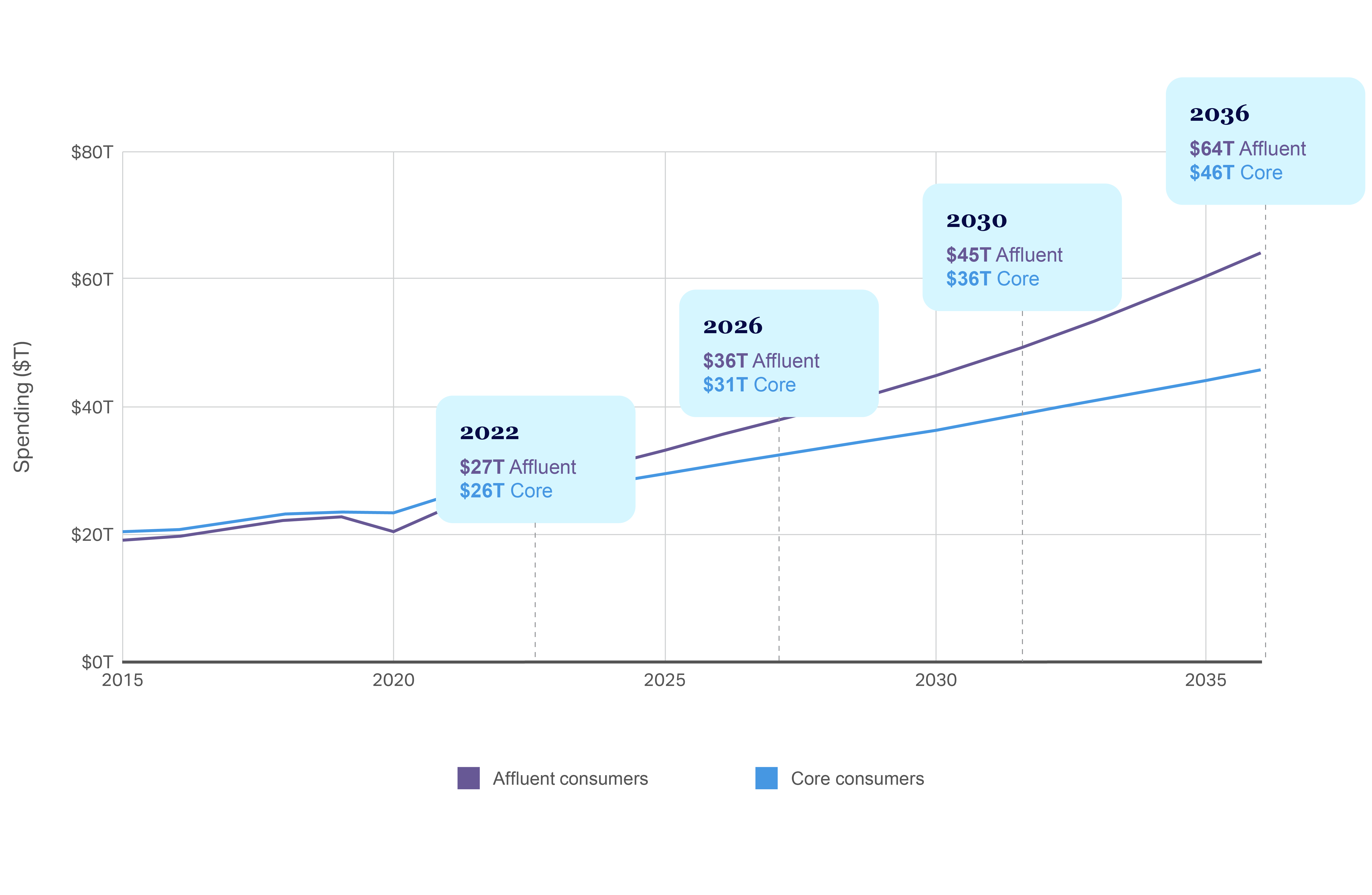
This also helps surface one of the most profound paradoxes in today’s market: Consumer confidence, as measured by multiple consumer confidence indices, is at a point of historical weakness, yet spending continues to grow. But spending growth is far from evenly distributed. As mentioned, affluent consumers continue to account for a disproportionate share of global spending, while core consumers remain far larger in number—but far more constrained in how that spending shows up in their baskets.
Looking ahead, affluent consumers will remain the primary engine of value growth, while growth in the core consumer population will create greater runway for volume growth.
Growth has two engines: spend and population
2026–2036
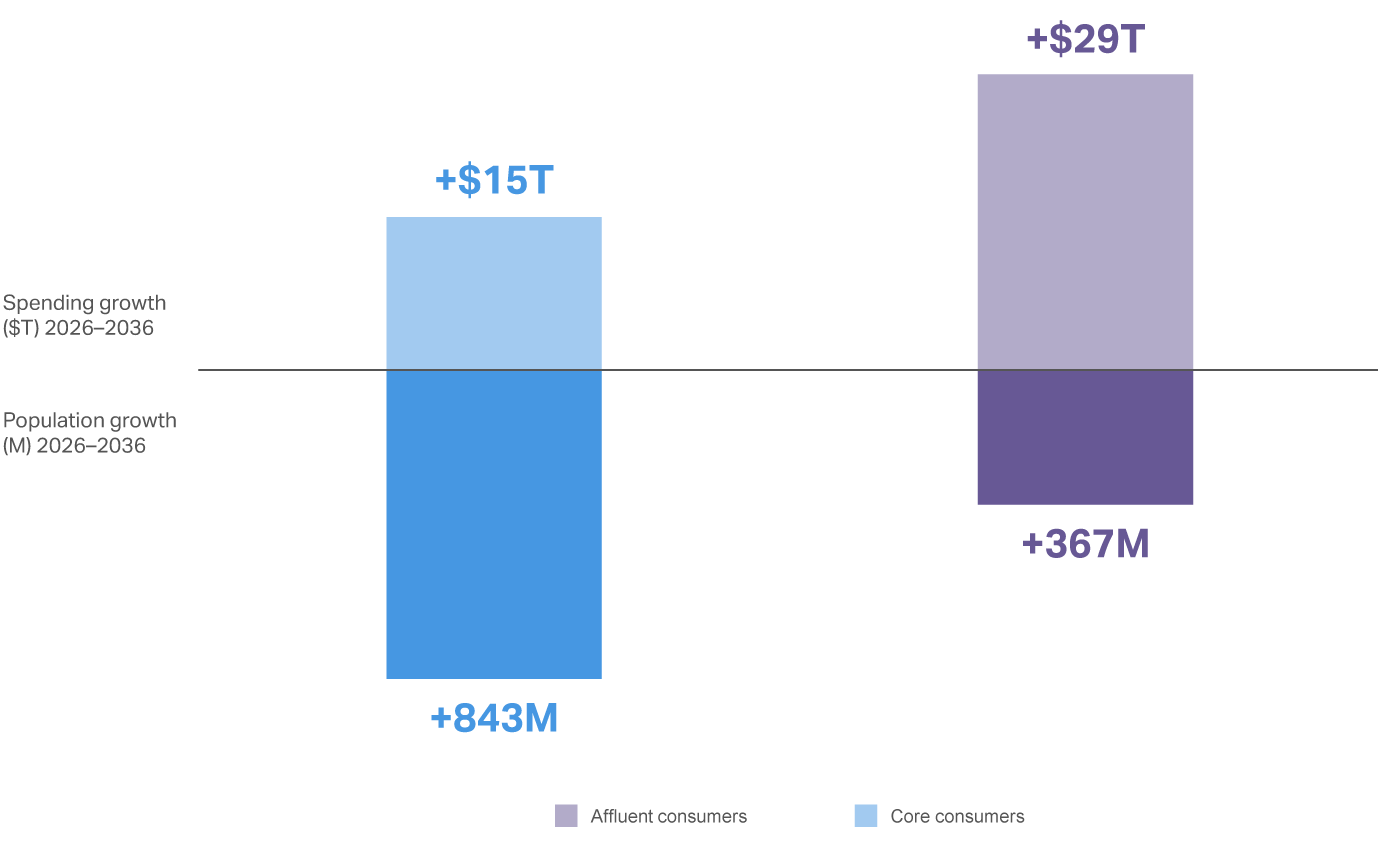
For manufacturers and retailers attempting to gauge demand through aggregate spend, this risks blurring the true consumer story. Global markets may appear resilient—or even strong—at the macro level, but they look far more pressured when we examine consumers’ baskets. Income, consumer confidence, and generation all remain critical inputs, but none tells the full story on its own. Manufacturers and retailers must understand how consumers are making trade-offs across markets, categories, shopping occasions, and price tiers.
If sentiment is falling, why is spending increasing?
Consumer confidence indices aren’t weighted by income level. The top 10% of spenders account for an increasingly higher spending share over the bottom 50%.
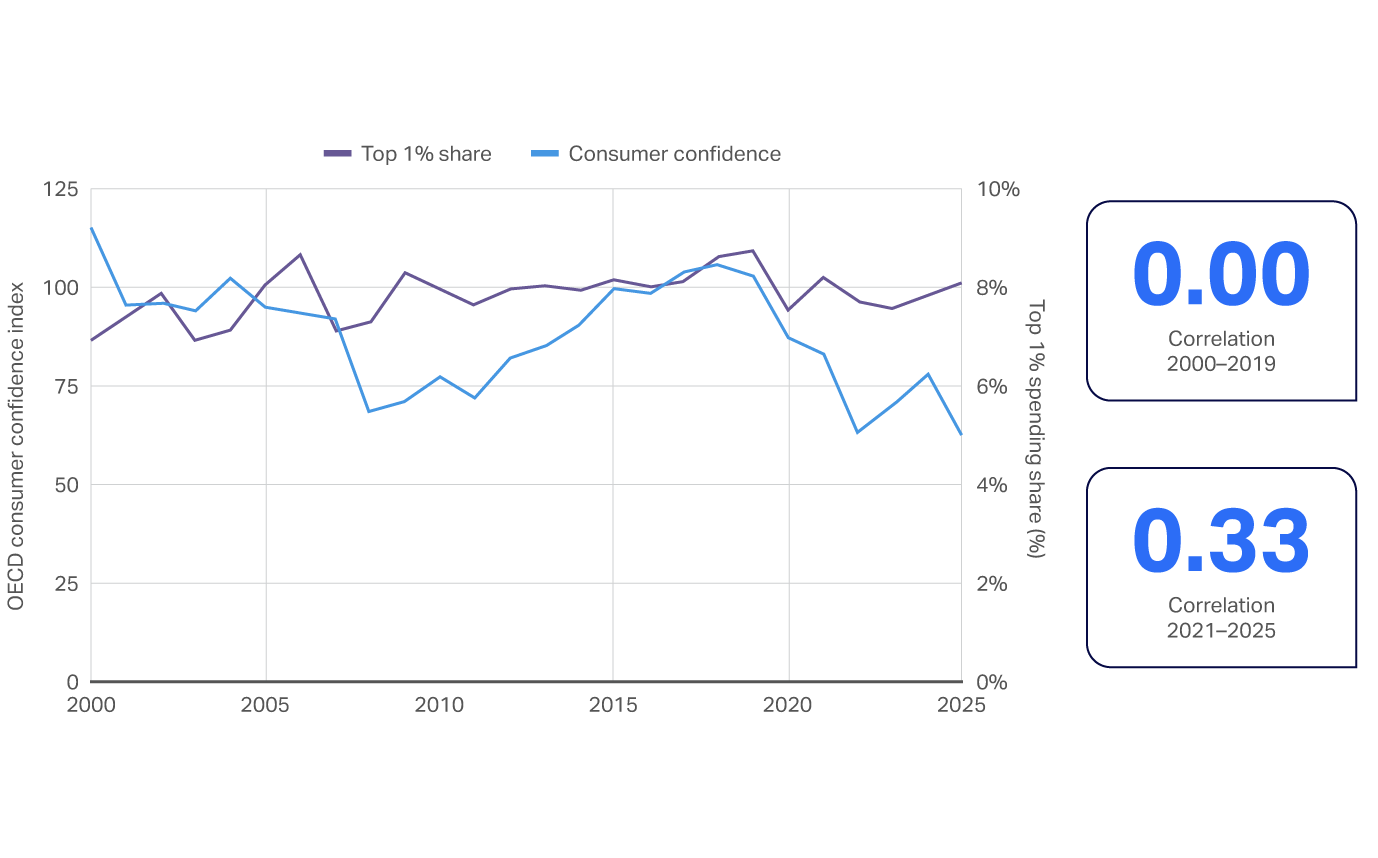
Over the next decade, this divide will also become more geographically important. North America, Europe, and parts of Asia Pacific (APAC) will remain vital premium markets, while other parts of APAC and Latin America (LATAM) will create different growth opportunities as income mobility, affluent populations, and category development expand. For brands and retailers alike, the warning is clear: The same playbook won’t satisfy both a saturated, mature market and a rising growth market.
And though income has set the stage for this divide, it doesn’t fully explain the behavior reshaping global consumption. After several years of inflation, uncertainty, digital comparison, and expanding private label quality, all consumers (regardless of income and wealth) have learned to manage the basket more deliberately. They protect the purchases that feel meaningful, functional, or identity-reinforcing, and they optimize the purchases where the premium no longer feels justified.
This is how macro pressures morphed into a fluid set of consumer mindsets:
- Affluent consumers will upgrade, but not indiscriminately—and there are only so many additional units a high-income household can purchase. Their growth opportunity is increasingly about value capture, not volume.
- Price-constrained consumers may still trade up, but they’ll do so selectively because their dollars can only stretch so far. Their decisions aren’t simply about buying the cheapest option; they’re about choosing where a higher price is justified and where savings are required.
NIQ and WDL have been tracking the signals behind this shift across several reports. In Spend Z, we showed how younger consumers were bringing new spending power, digital influence, and sharper expectations around value into the market. In The X Factor, we showed that Gen X, one of today’s most powerful global spending cohorts, will spend on quality and convenience—but only when value is clearly communicated.
Meanwhile, in Finding Harmony on the Shelf, NIQ showed that the brand playing field had already become more democratized, with consumers increasingly open to whichever brand—including retail—best fits their needs.
Upgrade and price-constrained behaviors aren’t fixed consumer identities; they’re decision modes that shift by category, need state, occasion, region, and perceived value. The result is a more fluid, unforgiving retail landscape. Legacy brand strength, price tier, and household income are no longer reliable predictors of behavior alone. Every product must justify its role: as a premium worth paying for, a value worth switching to, or a trusted staple worth keeping in the basket.
The pattern is global, but the growth paths aren’t the same everywhere:
- In mature markets, volume growth is increasingly difficult to find, and future growth will depend more on capturing value through premiumization, sharper claims, stronger brand alignment, and more precise portfolio architecture.
- In emerging and developing markets, the opportunity looks different: Rising income mobility continues to create runway for mass-market volume growth, even as premium opportunities expand in selected categories and consumer groups.
This new growth framework is significant because it shows why the same product, price, or innovation strategy can’t be applied universally. In one market, growth may come from premiumization, sharper claims, accessible luxury, or stronger brand distinction. In another, it may come from distribution, pack architecture, affordability, and products that help newly affluent households participate more fully in the category.
Consumer confidence is at a point of historical weakness, yet spending continues to grow. Affluent consumers continue to account for a disproportionate share of global spending, while core consumers remain far larger in number—but far more constrained in how that spending shows up in their baskets.
This nuance is reinforced by WDL’s geographical analysis of the mass market, which reveals that the majority of compression is occurring in mature Western markets, yet mass-market demand isn’t disappearing globally. Instead, it’s shifting toward regions where population growth, income mobility, and category development still create room for volume expansion. This serves as both a global opportunity and a clear inflection point for manufacturers and retailers expecting mass-market volume growth to resurface in the West.
The West’s share of the world’s core consumers falls from 41% to 13% by 2036
North America and Europe’s share of the core consumer class
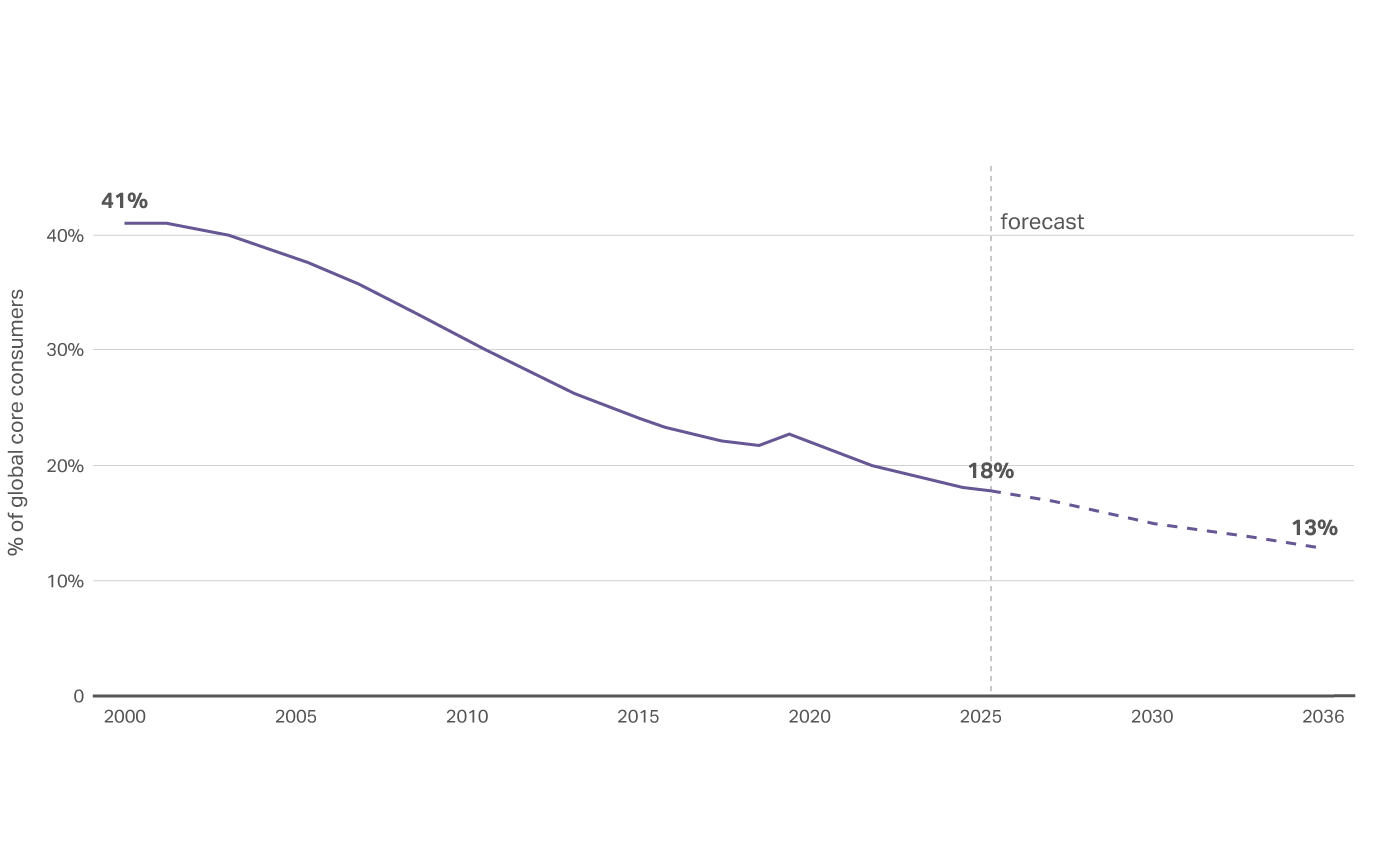
The West’s shrinking share of core consumers is only half the story. The other half is the rapid expansion of the mass market across Africa, Emerging Asia, and LATAM, which is creating significant volume-growth opportunities in these developing markets—even as that runway narrows in the West.
Mass market is flat in the West but still alive in Asia, LATAM, and Africa
Middle-class population growth is shifting toward emerging markets, while mature Western markets face compression.
Middle-class population index, 2025 = 100, baseline scenario
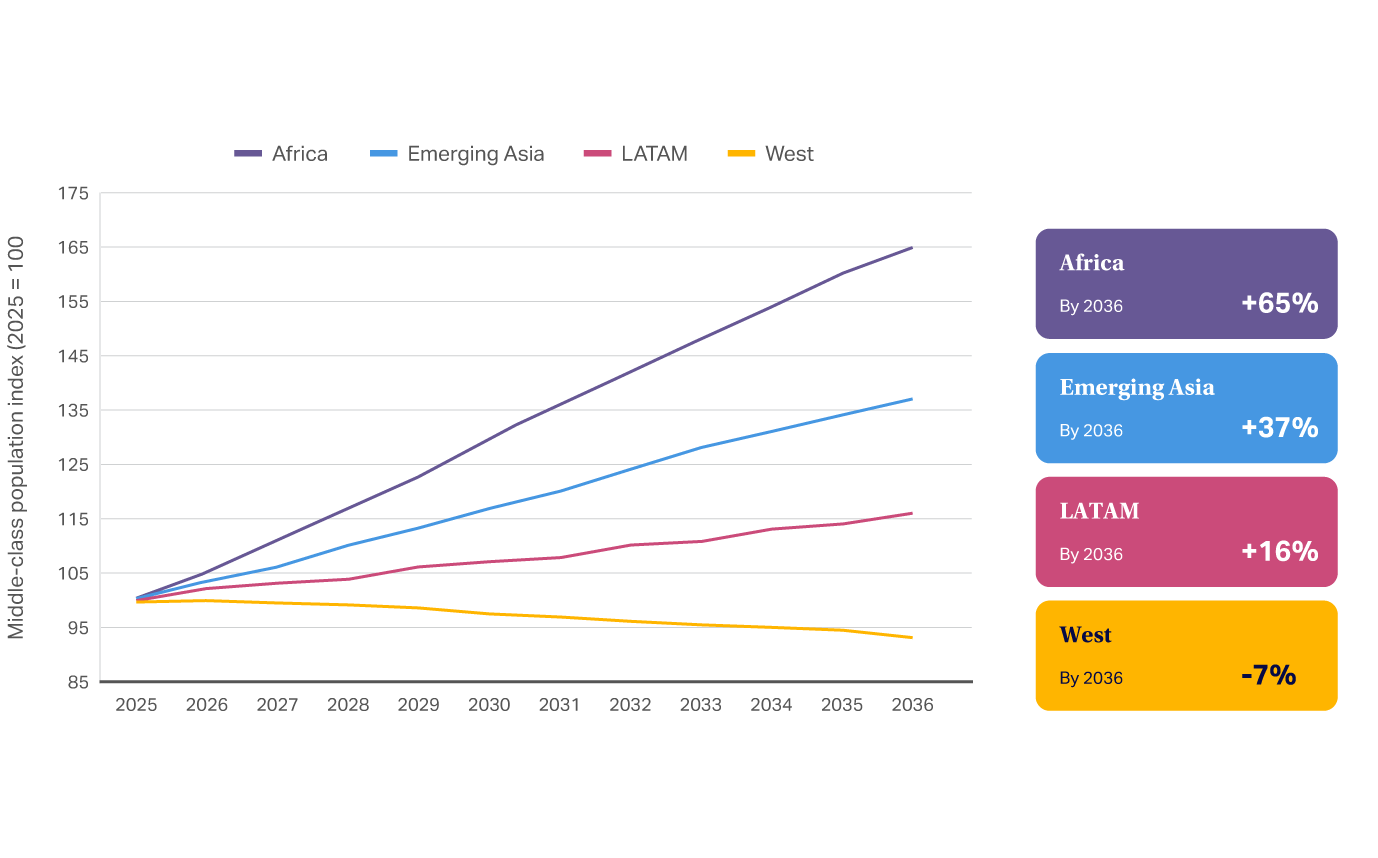
The implication is clear: The “average” consumer is no longer a reliable growth target. Likewise, depending on middle-market growth from reasonably priced, broadly accepted products is no longer a functional strategy in a growing number of markets.
Growth now depends on understanding how upgrade and price-constrained behavioral mindsets show up within each category, market, and generation. Today, global Boomers, Gen Xers, Millennials, and Gen Zers all have similar shopping behaviors, but what triggers them differs vastly. Many seek simplicity, function, or convenience. Others are looking for transparency, personalization, cultural relevance, or affordability—without compromise.
- Source: NIQ, Global Strategic Planner, 59 markets (MAT 2021—MAT 2023 to May 2023), 54 markets (MAT 2024–MAT 2025 to June 2025), Eq vol price % change, Latest 52 weeks vs. previous periods, converted to USD
- Source: World Data Lab, NIQ Tale of Two Consumers analysis; Consumer classes defined as core consumers spending $13–$90 per day and affluent consumers spending $90+ per day
- Source: World Data Lab, NIQ Tale of Two Consumers analysis; Consumer classes defined as core consumers spending $13–$90 per day and affluent consumers spending $90+ per day
- Source: World Data Lab
- Source: World Data Lab
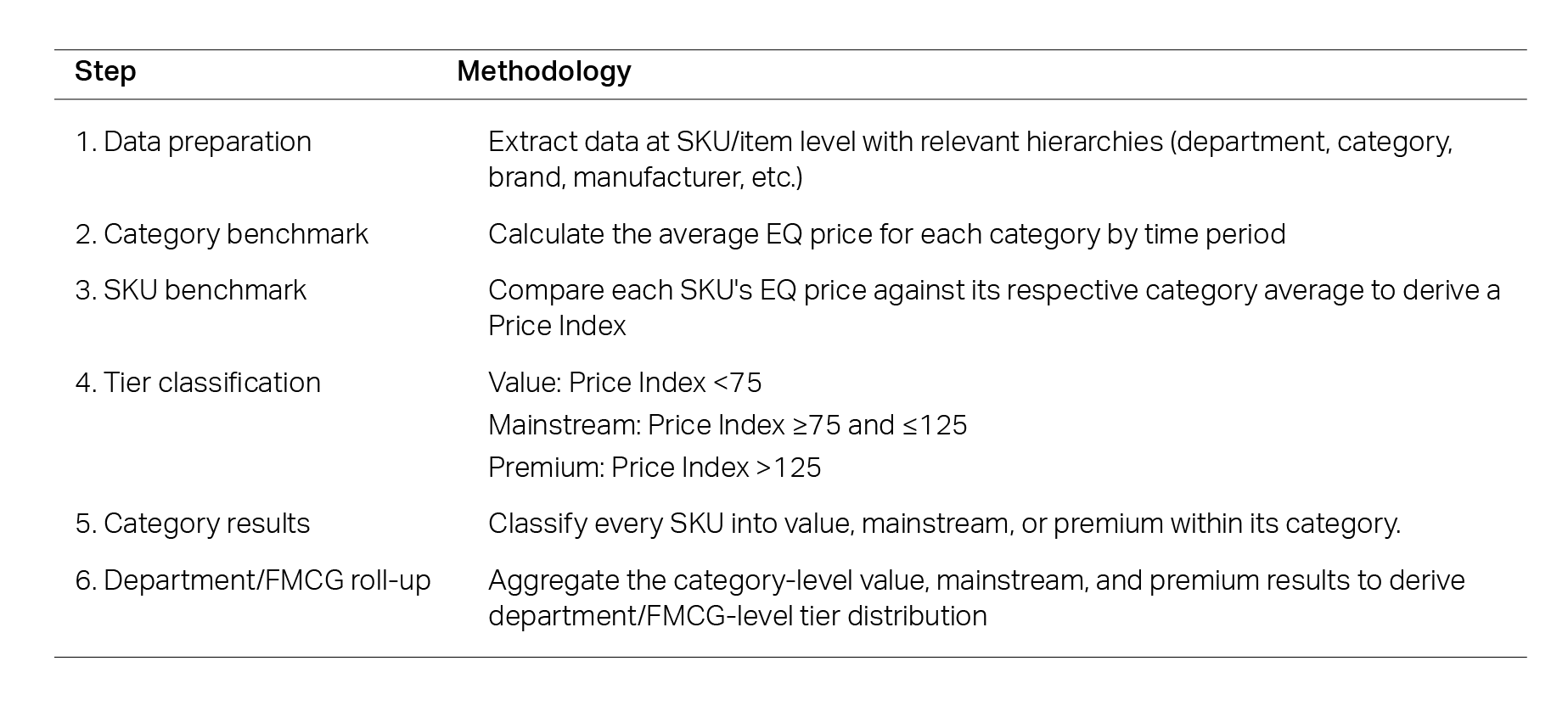
About this report and NIQ’s Relative Price Index methodology
A Tale of Two Consumers examines how polarized mindsets are reshaping global consumption across generations, markets, categories, and channels. It brings together NIQ survey, consumption, and shopper data with World Data Lab income and demographic projections to identify where growth is moving, why and where the middle is most exposed, and how brands and retailers should adapt.
NIQ’s Price Tier Classification Methodology (Relative Price Index)
The central question today is no longer whether consumers are willing to spend; they are spending. The question is whether a product can clearly justify its place in the basket—as an upgrade, as a smart value choice, or as something worth choosing again—and which markets, categories, and consumer priorities businesses should invest in today to secure long-term revenue growth.
Key takeaways
- Income set the backdrop for consumer polarization, but it doesn’t define it. Upgrade and price-constrained behaviors are mindsets that consumers move between based on category, need state, occasion, market, and perceived value.
- Consumer polarization shouldn’t be viewed as simply generational. It expresses differently within each generation, reshaping category growth, innovation priorities, and brand strategies.
- In mature markets, growth is concentrating at the edges, leaving mid-tier products most exposed.
- In emerging markets, rising incomes continue to surface volume opportunities, while expanding affluent populations create new premium potential.
- Consumers are increasingly maxed out on price. Innovation, sharper value communication, and more precise portfolio architecture will be critical to capturing growth.
Read the full report now
The new consumer reality
For years, brands and retailers in many mature Western markets have grappled with both the “K-shaped” economy (K economy) and the correlated erosion of middle class income. Despite these economic realities, businesses across both mature and emerging markets have historically been able to grow by serving a broad “average consumer” with mainstream products designed for mass appeal.
While not incorrect, previous classifications of the consumer have failed to fully capture the fluidity between these two mindsets: the way consumers trade up or trade down depending on category, need state, perceived value, and whether a product aligns with what matters in that moment.
As mentioned previously, what shouldn’t be diminished is the reality that many consumers across mature markets remain economically stretched. The challenge—and the opportunity—lives in how they’ve responded to years of that financial reality.
Historically, periods of financial strain 2009 recession, for example, real aggregate consumer spending declined about 2% over the first 18 months. What we’re seeing now is more selective: When financial stress becomes the new normal, consumers adapt by focusing their spend with near-laser precision on products that earn a place in their basket—often by spending more.
Consequently, the new consumer reality is one of bifurcation, reflecting many characteristics of a modern barbell economy, in which growth concentrates at opposite ends of the spectrum. At one end is a growing middle class in developing markets (including LATAM and APAC) and at the other are “tapped” consumers in mature markets (such as the United States (US) and across parts of Europe). But “tapped” means two different things. Affluent consumers may have the dollars to spend more, but there are only so many additional units a household can buy. Price-constrained consumers may still trade up selectively, but their dollars can only stretch so far.
With two parallel growth realities emerging, each consumer shouldn’t be treated as static within a cohort. Value is no longer determined by affordability alone; it’s shaped by situational constraints, personal needs, trusted claims, convenience, and what the consumer is trying to solve in that moment.
This selective prioritization makes data, shopper insights, and advanced consumer behavior research even more important for manufacturers and retailers. The ability to view trends by country, generation, category, and price tier can help uncover where consumers are willing to stretch, where they’re determined to save, and where brands risk being replaced.
Let’s look at the high-level characteristics of these two important consumer mindsets and what brands can focus on to win.
Upgrade consumers
Upgrade consumers aren’t just looking for luxury. They’re looking for products that justify the premium. They are value-led, with 60% saying they focus on value for money.6 They’re also willing to pay for convenience (46%) and are often early adopters, with 38% open to new products or brands.7
What often activates this consumer mindset is some combination of benefits, values, and/or trust. Wellness, sustainability, convenience, authenticity, and utility also frequently help to create permission to trade up when the payoff is clear. Unsurprisingly, this is why our data has shown the upgrade mindset appearing in categories with strong value signaling—like Clean Beauty, Functional Beverages, and Specialty Foods.8
But upgrade behavior is far from automatic. Even consumers willing to pay more will trade down in categories where the premium is unspecified or unclear, where claims appear less personally relevant, or where a lower-priced option feels sufficient. This will become clearer in the sections that follow. Premiumization doesn’t look the same across Boomers, Gen X, Millennials, and Gen Z. Nor does it show up the same way across markets such as the US, the United Kingdom (UK), Saudi Arabia, Brazil, and China.
Price-constrained consumers
By contrast, price-constrained consumers are managing for control, stretch, and utility. They find value in multiuse, bulk, and concentrated formats. One-third will switch to lower-priced options and buy whatever brand is on promotion, meaning brand loyalty is more vulnerable when value isn’t clear.
This isn’t simply a lowest-price mindset, however. Price-constrained consumers often hold many of the same values as upgrade consumers, but their trade-offs are sharper and far more unforgiving. They may sacrifice preferences when price is the determining factor, but they’ll still trade up selectively when the payoff is clear and the product makes the value equation easy to defend.
This is precisely where legacy narratives of trade-downs become far too limiting. A consumer may choose a lower-priced product because it saves them money, but they may also choose a private label, value-tier, or promotional product because it feels equivalent, trusted, or better suited to the occasion. Likewise, premium private labels can function as a trade-up when they deliver quality, experience, or credibility at a more defensible price point.
For manufacturers and retailers, winning this mindset requires more than discounting. It requires mass-value innovation, pack-size optimization, frictionless convenience formats, value-anchored brand variants, and digital platforms that help consumers feel confident they’re making the smarter choice for themselves and for their families.
Together, these two mindsets create the framework for the rest of our report:
- The generational sections show how the triggers differ by age, life stage, and spending power.
- The technology and retail media sections show how discovery, targeting, and AI are making these consumer behaviors easier to identify—but harder to win.
- The private label section shows how substitution has become more fluid across the shelf.
- And the regional and category playbooks show where this polarization is most visible—from premium and value pressure in mature markets to volume opportunities in emerging markets, and from Beauty & Personal Care to Beverages to Snacks.
Key takeaways
- The old consumer playbook is no longer enough. Analyses of the K-shaped economy and middle-class erosion help explain the backdrop, but they don’t capture how consumers make decisions today. Growth will depend less on static income or demographic cohorts and more on understanding fluid upgrade and price-constrained mindsets.
- Price-constrained mindsets have raised the stakes for brands and retailers. These consumers aren’t simply seeking the cheapest option; they’re actively deciding where to cut costs and where value still justifies a higher price. Winning them requires sharper pricing decisions, clearer value alignment and communication, strategic promotions, and packs and formats that will help them stretch household budgets—without sacrificing brand confidence.
- Upgrade mindsets create opportunity, but only when the premium is earned. Consumers with the ability or willingness to spend more are still selective. Brands must prove why a higher price is worth it through stronger claims, performance, convenience, trust, or identity alignment—transcending historical brand playbooks and disrupting momentum.
- The same mindset won’t show up the same way everywhere or for everyone. Generational context, category specifics, and regional variances will all be deterministic relative to where consumers upgrade, when they trade down, and where brands are most exposed.
The middle market is breaking
Across markets, growth is increasingly concentrated at the poles, reinforcing a broader premiumization trend and accelerating pressure on the middle market.
The result is a barbell-shaped retail landscape in which consumers are visibly rewarding products that earn their upgrade or shifting toward options that are “good enough” and better satisfy their households’ needs for value or their ability to stretch. Products caught between these two poles remain exposed, requiring a broader brand strategy and clearer value communication to defend share.
Mainstream is no longer the default; it’s the segment under attack
US – MAT APRIL 2026 ($1165.8B, +3.7% vs. 2YA): Value mix by department and price tier in each department and change vs. 2YA
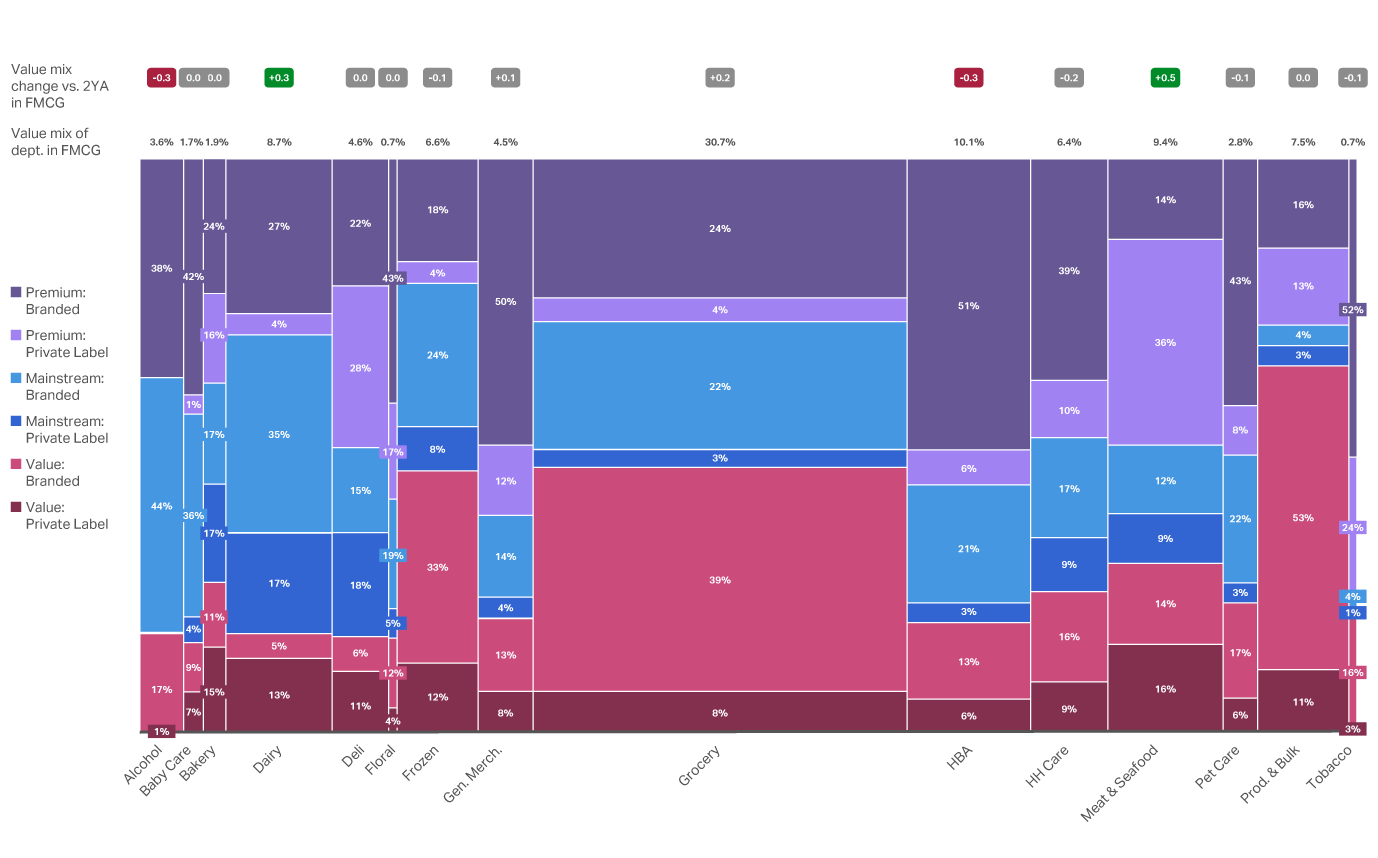
In the US, this shift is visible across total FMCG. Premium branded, premium private label, and value-oriented products are gaining ground, while mainstream offerings are losing momentum. This is the middle-market challenge in its clearest form: Products that aren’t clearly differentiated enough to justify an upgrade, but not value-oriented enough to win the trade-down, risk being squeezed from both sides.
This pattern becomes more obvious when we examine the data at a category level.
US Detergents growth is increasingly fueled by younger shoppers and a shift toward premium offerings
Category value sales reached $13.4B (+8.4% vs. 2YA), supported by strong gains among Millennials and Gen Z, alongside substantial premium tier expansion (31.2% growth; +10.2 share points).
US Detergents – MAT APRIL 2026 ($13.4B, +8.4% vs. 2YA): Value mix by cohorts and price tier vs. 2YA
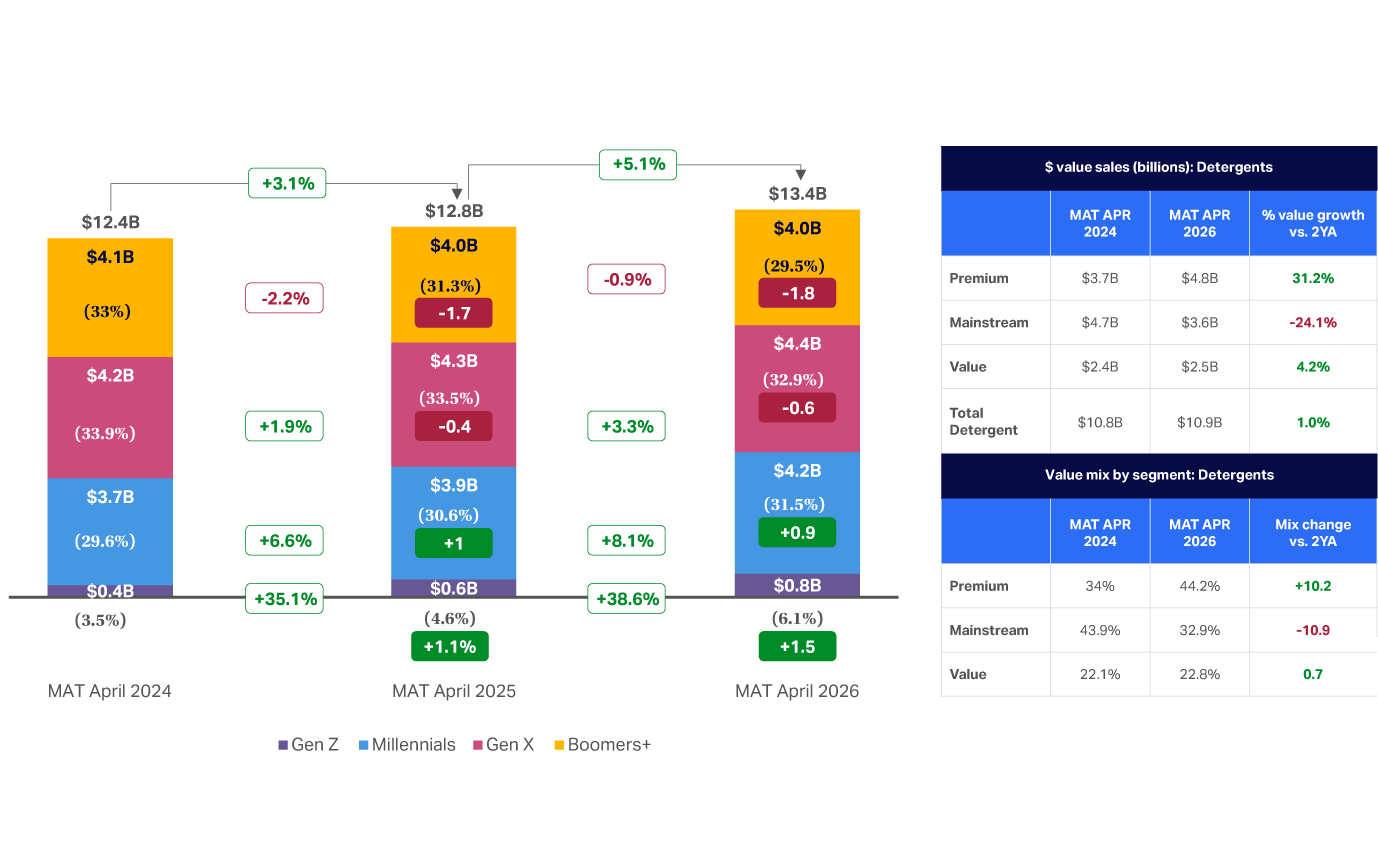
Detergents make this mid-market erosion especially clear. Premium products are driving category growth, supported by strong gains among Millennials and Gen Z, with value remaining resilient. The middle market, by contrast, is losing both sales and share. This reinforces the risk for offerings that are neither differentiated enough to earn an upgrade nor compelling enough to be chosen on value.
And the story doesn’t end in the US.
Mainstream continues to lose share as UK consumers polarize across price tiers
In the UK, premium growth is coming at the cost of mainstream in most categories. Premiumization is alive but more selective—strongest in quality-led categories—while economic pressure is simultaneously boosting value tiers, creating a dual-track consumption pattern.
UK – MAT APRIL 2026 ($121.8B, +5.8% vs. 2YA): Value mix by department and price tier in each department vs. 2YA
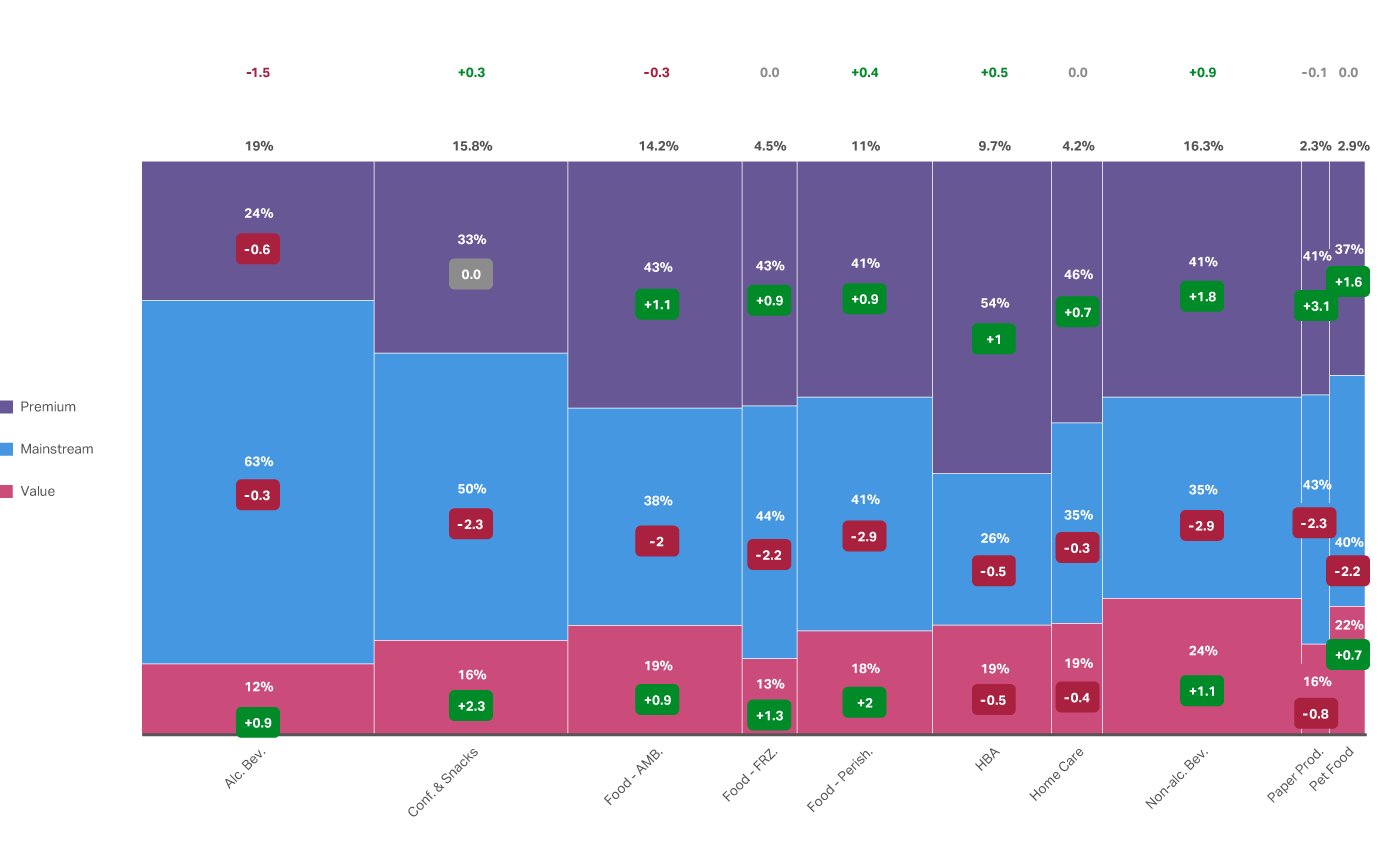
In the UK, mainstream erosion is also visible across categories, though the balance between premium and value varies by department. In Health & Beauty Aids (HBA), premium growth is taking share from both mainstream and value. In categories like Confectionery & Snacks, Perishable Foods, and Alcoholic Beverages, value growth is being driven more strongly by price-constrained behavior. The implication is important: Middle-market pressure isn’t uniform, but the vulnerability is the through line.
The same pattern is also appearing outside more mature Western markets, but with nuanced mechanics.
The consumer polarization trend extends to Saudi FMCG
Saudi Arabia shows clear polarization, with strong premium gains across most categories while mainstream declines sharply. At the same time, value is also growing in all categories except Pet Food.
Saudi Arabia – MAT APRIL 2026 ($10.7B, + 8.3% vs. 2YA): Value mix by department and price tier in each department vs. 2YA
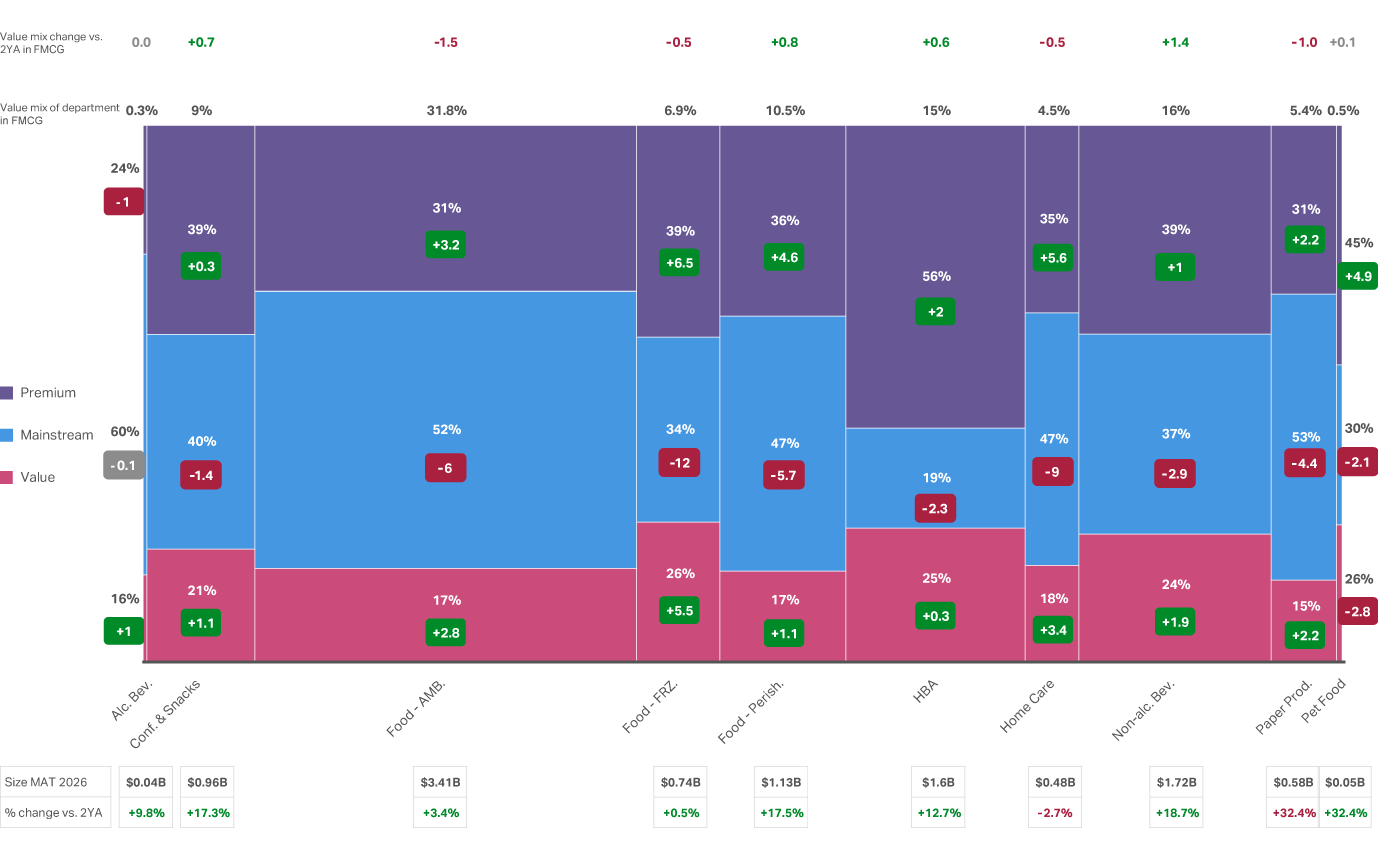
In Saudi Arabia, premium- and value-priced products are stealing share from mainstream products across categories. In a familiar trend, premium products are capturing a larger share of middle-market volume and value losses across HBA and Perishable Foods, with strategic promotions helping to drive some of that growth.
This reinforces a key dynamic for brands and retailers: Polarization is occurring globally, but the path to capturing growth in either premium or value depends heavily on regional variables, category specifics, and consumer expectations that span demographics and markets.
Taken together, these growth trends show why the traditional growth engine for many categories—the middle market—can no longer be relied upon.
The implication isn’t that consumers have stopped spending. It’s that consumers are becoming increasingly exacting about where those dollars go. To win today, products must increasingly occupy one of three roles: a premium worth paying for, a value worth switching to, or a tried-and-true staple with enough staying power to earn its place in the cart.
As such, the rest of this report looks beyond the “average” consumer. Generations still matter. Technology investments are critical. Private label remains a key growth opportunity for both branded manufacturers and retailers. But for these levers to deliver growth in the short, mid-, and long term, businesses must view each one through the lens of how it:
- reinforces established brand equity;
- helps earn an upgrade;
- or positions a product as a smart value choice.
Generational spending trends in 2026: From Boomers to Gen Z
We’ve said that upgrade and value consumer behaviors aren’t driven primarily by generation, as they’re evident across all age groups. However, generational dynamics do shape the motivations behind these choices and the categories they land on. Understanding these generational values can help manufacturers and retailers identify opportunities to capture spend.
When we look at spend more broadly, Millennials and Gen Z are emerging as the primary long-term growth engines, with strong relevance in premium, quality, and experience-led choices while also showing selective value-seeking. Gen X remains a dominant spending force today, but its growth is increasingly shaped by pragmatic trade-offs between quality, convenience, and value. Boomers remain important—particularly in high-net-worth and need-based categories—but their overall growth influence is beginning to taper as younger generations gain spending power.
When we segment by generation globally, we find that in high-income countries, Boomer and Gen X spend still dominate; in low- and middle-income countries, Millennial spend leads, with Gen Z not far behind.
Boomers
The age of Boomer dominance may be waning, but they still hold significant wealth. For this older generation, inflation has been particularly acute—especially for those who are retired or living on fixed incomes.
Healthcare remains a top concern, which gives this generation high medical and replenishment spend. Over half of Boomer consumers are also looking for products that help simplify their lives.
Boomers are likely to trade up in categories tied to health, specialty foods, and premium over the counter (OTC). On the other side, price-constrained Boomer behaviors are more likely to show up in deal-seeking around Home Care basics, OTC generics, and other replenishment-driven essentials.
Categories positioned to win:
- Premium: Supplements, Skincare, Fresh Food, Specialty Foods, premium OTC
- Value: Home Care basics, OTC generics, replenishment essentials
Innovation implication
To capture Boomer spend, brands should focus on accessible premiumization, trusted efficacy claims, simplicity, reliability, and convenience.
Generation X
NIQ and WDL’s groundbreaking joint report, The X Factor, examined the spending dominance of Gen X—a generation now in its peak expenditure years and actively supporting multiple households: their own, their children’s, and their aging Boomer parents. For context, Gen X collectively spent $15.2 trillion (USD) in 2025 alone and is projected to lead generational spend globally through 2033.9
Gen X will be the largest affluent spending market until 2036
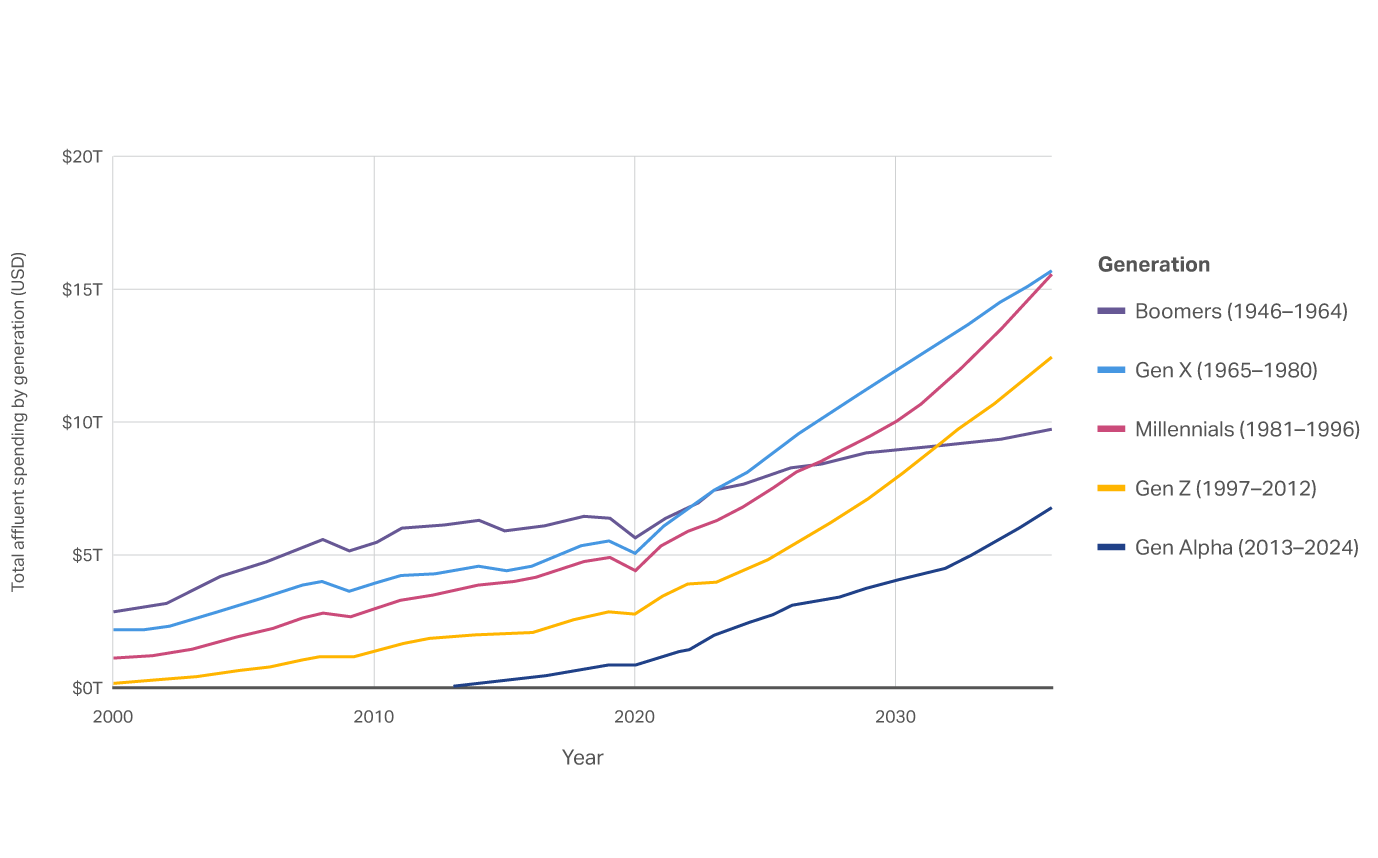
This solidly positions Gen X as one of the most important consumer groups for manufacturers and retailers in both the short and mid-term. This spending power shouldn’t be mistaken for indiscriminate spending, however. Due to their multi-household responsibilities, Gen X consumers are pragmatic shoppers by necessity—actively seeking reliability, functionality, clear product value, utility, and efficiency. The net: Gen X will spend when the value is obvious and clear.
This behavior actively plays out across both mindsets. Gen X consumers will trade up for products that save them time, simplify their caregiving efforts, support health and wellness (for themselves and their parents), and deliver performance benefits. Conversely, Gen X will value-seek around bulk formats, multiuse products, and practicality in pack architecture, and they’ll also search for promotions that help them manage their financial demands without sacrificing quality or brand trust.
Categories positioned to win:
- Premium: Functional Beverages, Specialty Snacks, Beauty & Personal Care, health and wellness foods, Coffee & Tea
- Value: Family staples, multipacks, Household Care, Pet Care, bulk and multi-use formats
Innovation implication
For Gen X, innovation should focus on relieving pressure points. Products that will win with this cohort are those that help stretch time, reduce decision fatigue, support wellness, and manage household complexity while clearly communicating why the product is worth buying.
Millennials
On the heels of Gen X, Millennials are entering their highest-spend household years. They’re building families, purchasing homes, raising children, and moving into more complex household dynamics—but doing so in a very different, more challenging economic landscape than prior generations.
Millennials will remain the largest core spending market until 2036
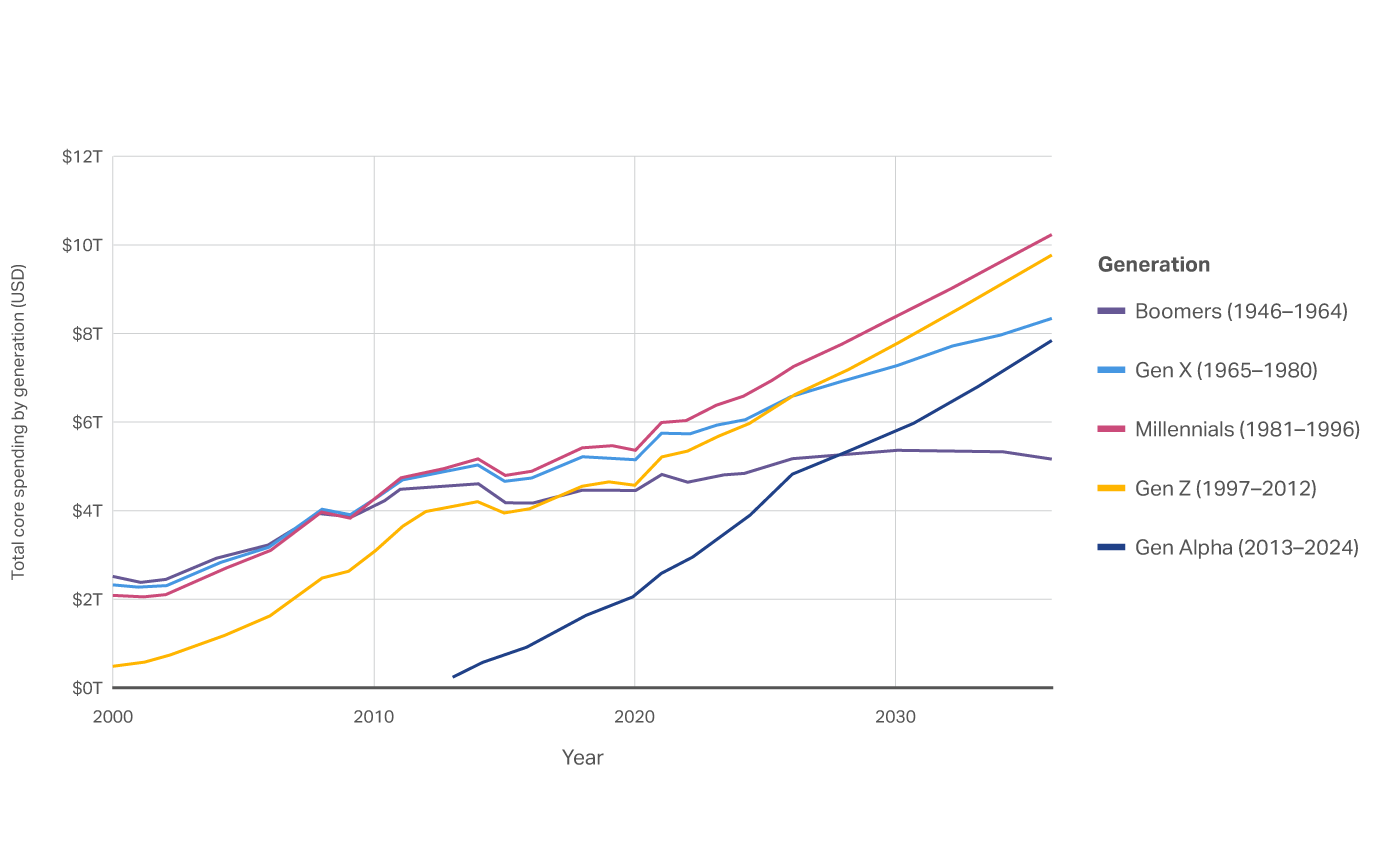
This positions Millennials as a critical representation of both consumer mindsets. They’re a major long-term growth engine, especially as it relates to core spending, but they’re balancing this spend with the mounting pressure of higher housing expenses, student loan debt, childcare, and elevated “everyday” prices—notably, without the runway of savings that benefits Boomers and Gen X.
At the same time, Millennials are the first true digitally fluent generation. As such, they’re inherently research-driven shoppers who actively leverage social media, peer reviews, and AI-powered recommendations to help guide them along their purchase journeys. For this generation, values and value are intertwined. They’re willing to trade up for products that feel healthier, more transparent, more sustainable, personalized, or are more aligned with their personal identity, but they’re also conditioned to seek out value where the premium isn’t justified or earned.
For manufacturers and retailers, the Millennial opportunity isn’t simply premium or value. It’s defensible premium: products that make higher prices easier to justify through ingredient transparency, trusted claims, convenience, personalization, and clear household utility.
Categories positioned to win:
- Premium: Beauty & Personal Care, clean-label food, Functional Beverages, Specialty Coffee & Tea, Pet Care
- Value: Household essentials, family staples, affordable wellness, Baby and Childcare products, multipacks
Innovation implication
Millennial innovation should make premium feel practical and value feel elevated. Brands should prioritize transparent ingredients, trusted claims, personalization, convenience, and formats that help households manage cost without sacrificing quality.
Generation Z
NIQ and WDL’s Spend Z report found that Gen Z will be the largest and wealthiest generation in history. Though still young, this generation has the fastest-growing spending power and is expected to overtake Boomer spend by 2029—positioning Gen Z as a future growth engine for brands and retailers.10
Gen Z is the fastest-growing generation and will spend at unprecedented rates
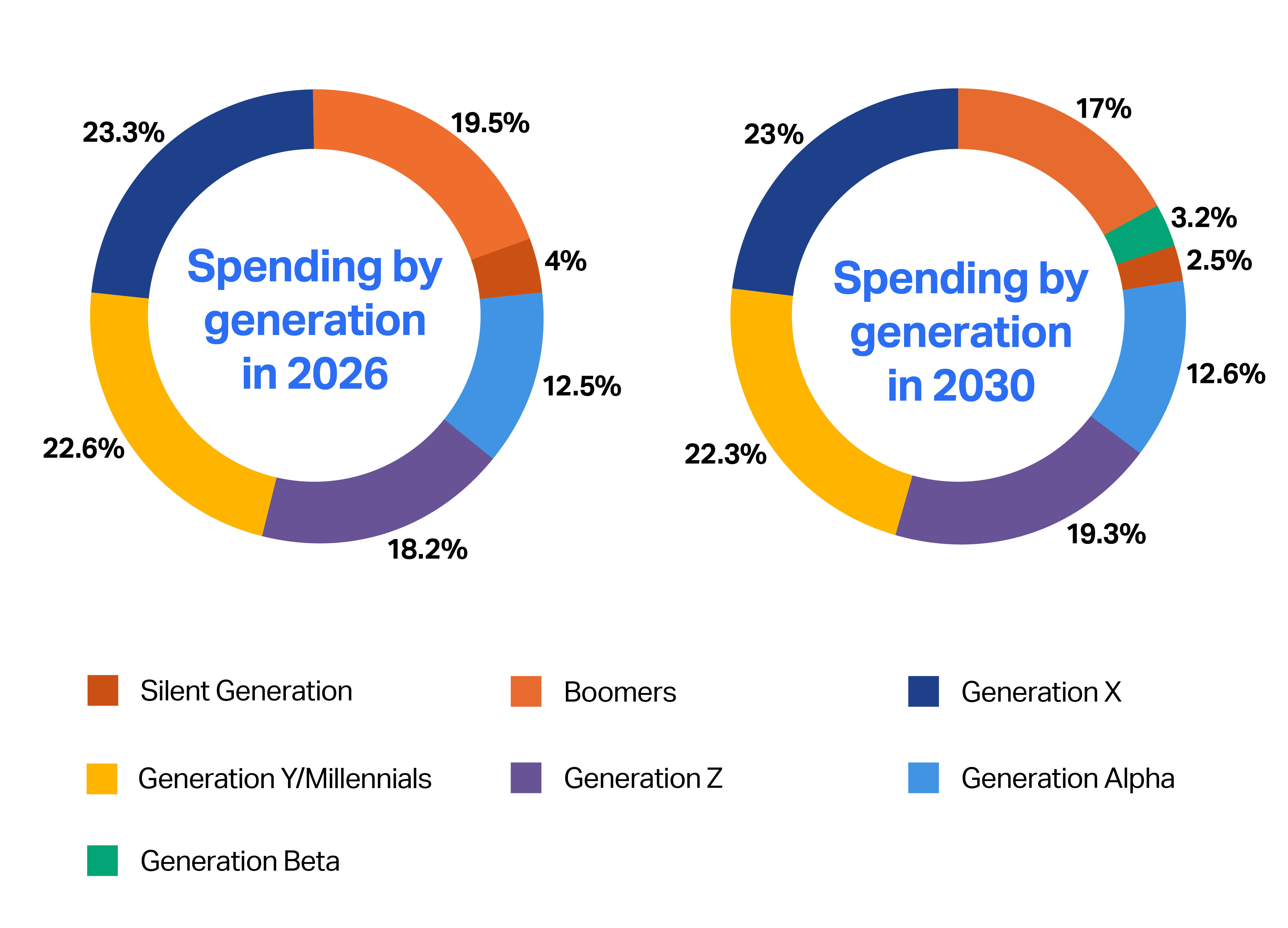
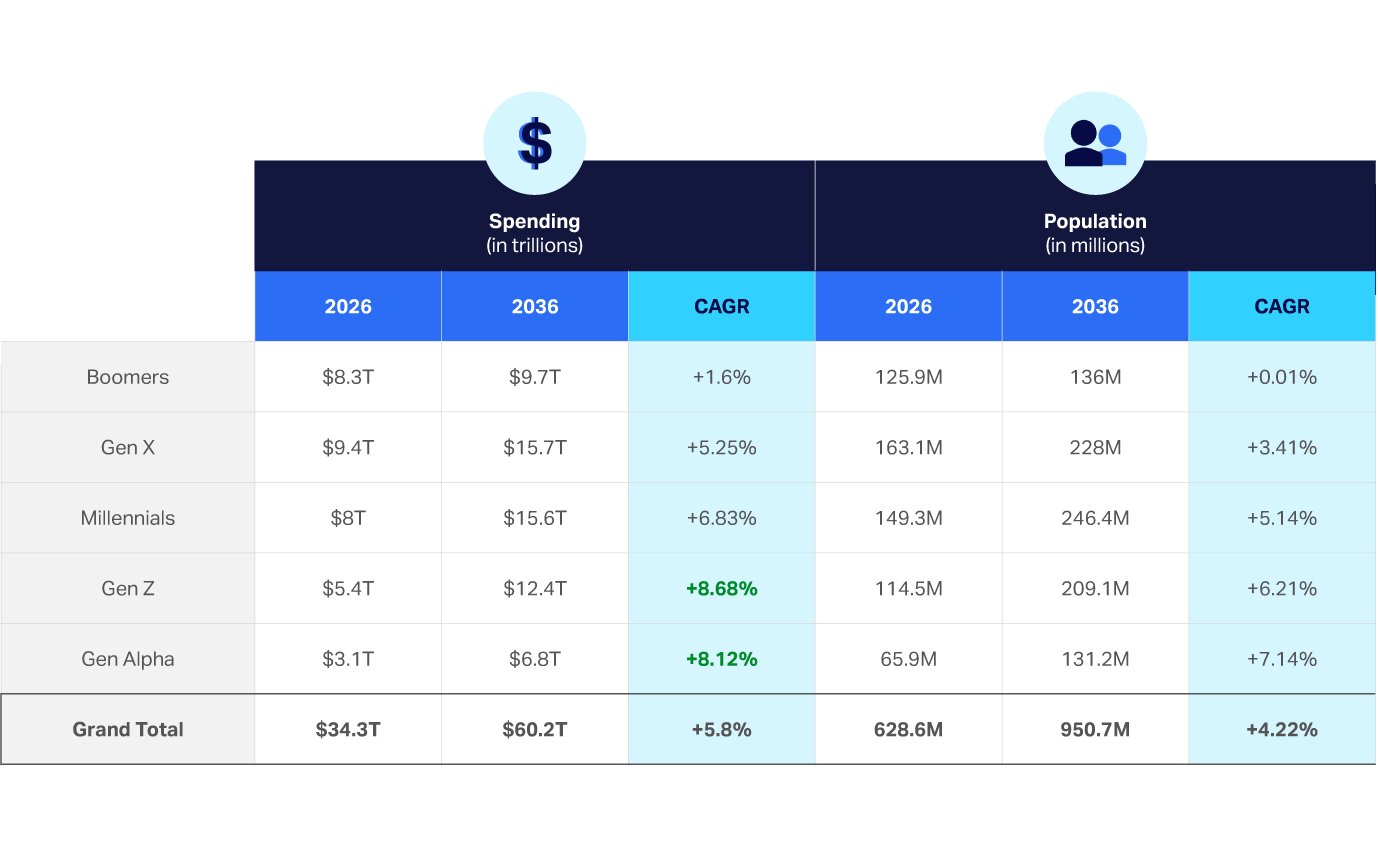
Gen Z will lead affluent spending growth at double the CAGR of core spending growth of the same generation
Affluent growth by generation
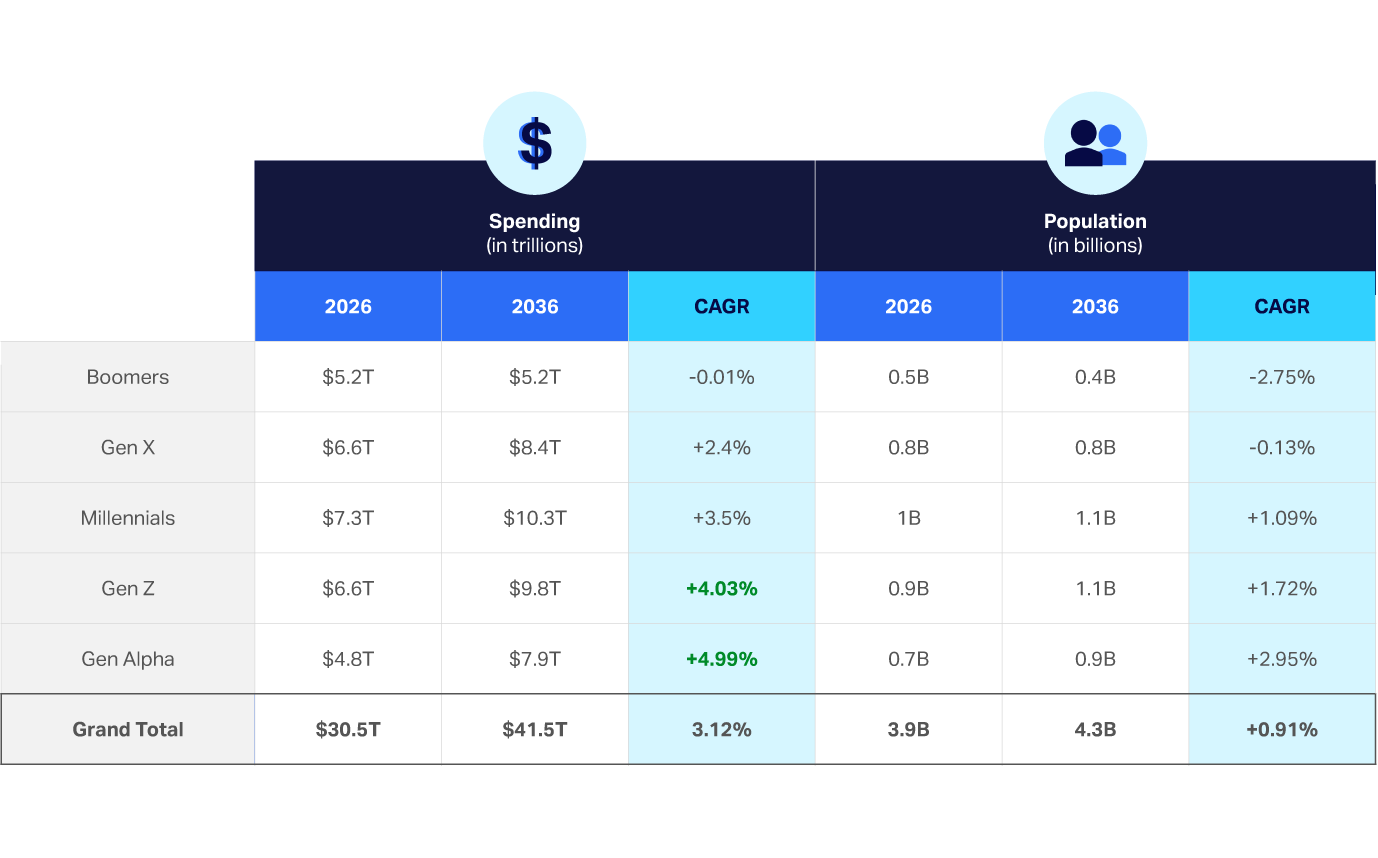
Gen Z and Gen Alpha will lead core spending growth, at 4.03% and 4.99%, respectively
Core growth by generation
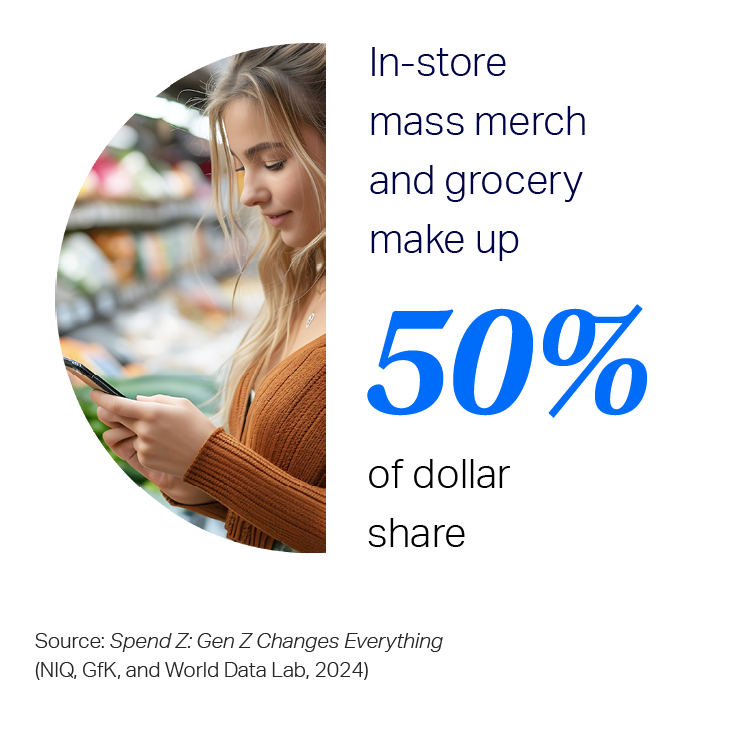
While Gen Z’s current purchase frequency and household-level spend remain lower than those of the generations that precede it, their influence shouldn’t be undervalued. Gen Z is actively shaping culture, influencing their parents’ household purchases, and dictating new, experience-first shopping behaviors. As the first digitally native generation, Gen Z begins many of its shopping journeys online, relies heavily on product reviews and social media, and has helped define true omnichannel shopping.
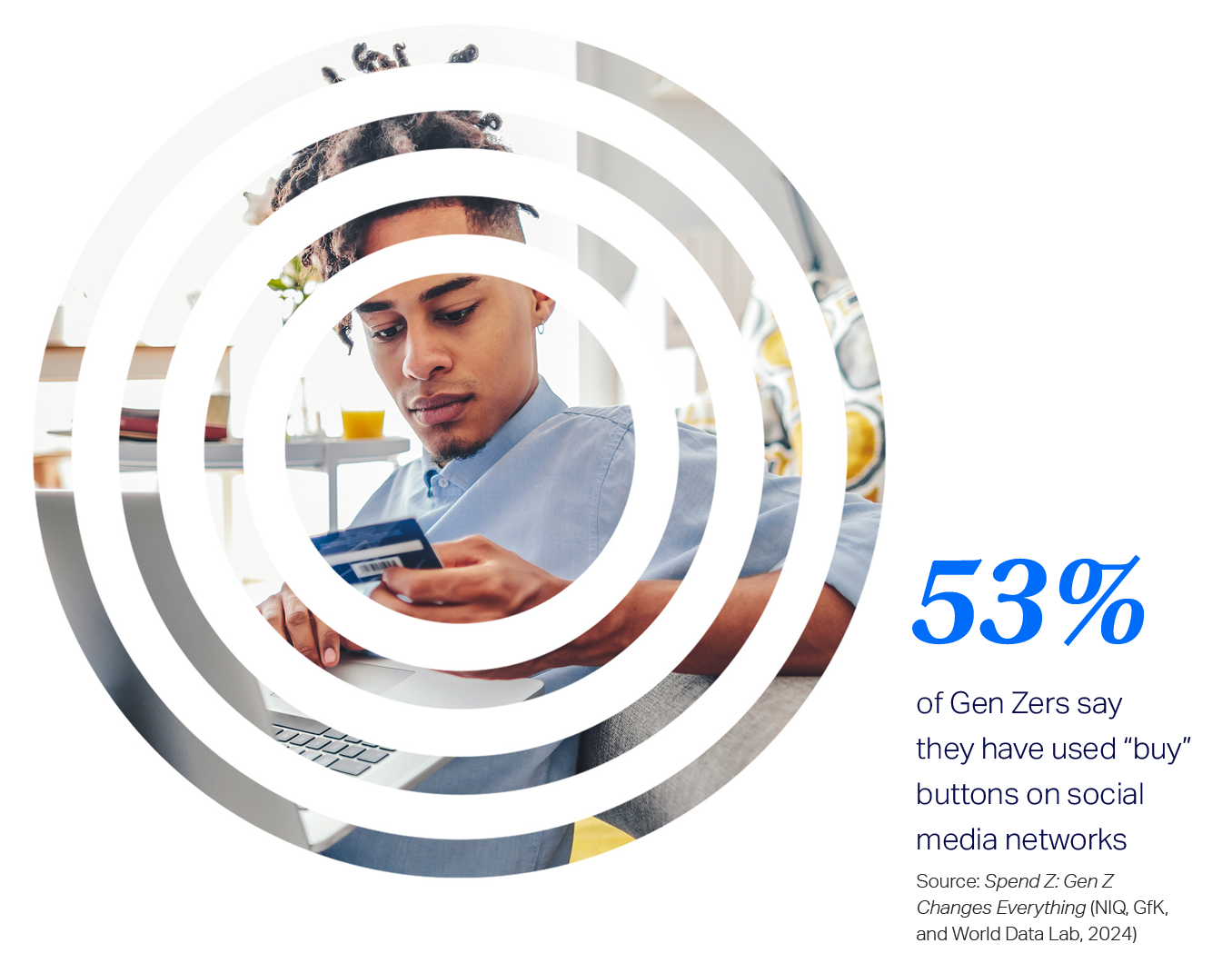
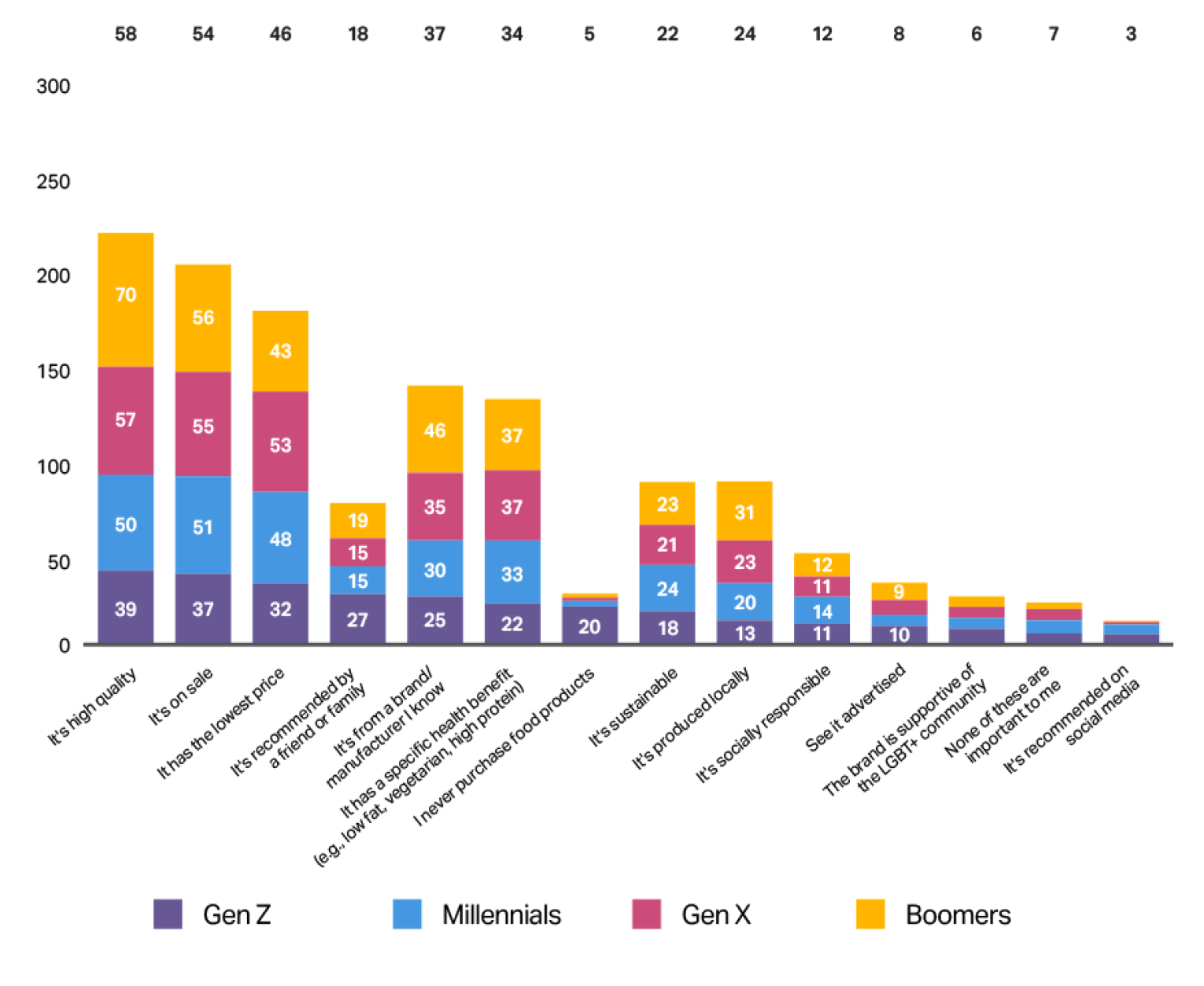
Due to their life stage, Gen Z is highly value-sensitive today, with price playing an outsized role in purchasing decisions despite the generation being remarkably values-oriented. But as more Gen Zers enter the workforce and advance financially, their spending power will accelerate. Brands and retailers can’t afford to underinvest in aligning their products with the values that will resonate with what’s expected to become the wealthiest consumer cohort in history.
What makes Gen Z unique is that their behavior has surfaced a clear Say–Do gap: Gen Zers may claim to prioritize sustainability, authenticity, and values, but price, quality, convenience, cultural relevance, and consumer psychology often determine what actually makes it into their basket. Whether this continues as their wealth accumulates remains to be seen. But businesses must invest today in the data that will help bridge this gap and align short-term innovation strategies with the products that will win with Gen Z in the mid- and long term.
Purchase drivers by generation
Categories positioned to win:
- Premium: Creator-led Beauty, facial Skincare, functional wellness, Better For™ food and beverages, probiotics
- Value: Snacks, Yogurt, Food & Beverages staples, Personal Care, Household Essentials
Innovation implication
Gen Z innovation should be rooted in data that helps brands and retailers pressure test what this generation actually buys—not simply what they say they value. NIQ’s Say–Do Gap Measurement Framework can help brands identify which claims, attributes, and value signals are most likely to convert—helping teams prioritize products that will feel personalized, culturally aligned, and financially worthwhile.
Key takeaways
- Generations still matter, but they don’t determine behavior on their own. Upgrade and price-constrained mindsets appear across every age group. Generational context helps explain where those mindsets are most likely to show up, what consumers value, and which categories are best positioned to win.
- Gen X is the immediate spending prize. With the highest global generational spend today, Gen X offers near-term opportunity for brands that can deliver clear value, convenience, reliability, and practical premiumization.
- Millennials are entering their highest-spend household years under significant financial pressure. This creates a dual opportunity: premium products that feel transparent, useful, and worth paying for, and value-oriented products that help households manage everyday costs without sacrificing quality.
- Gen Z is both a current influence force and a future growth engine. While their current household-level spend remains lower than older generations, Gen Z is already shaping culture, household purchases, digital discovery, and omnichannel expectations—making early loyalty and relevance critical.
- Innovation must be designed around generational needs, not generational stereotypes. The strongest opportunities will come from understanding where each generation is willing to trade up; where they need value; and which claims, benefits, and formats actually convert.
Key insight: Growth is no longer about targeting generations alone. It’s about winning with upgrade and price-constrained consumer mindsets within each generation.
How AI, retail media, and social commerce are reshaping discovery
Technology will play a critical role in helping manufacturers and retailers navigate the shifts created by consumer polarization. As mass-market, one-size-fits-all approaches become increasingly less effective, businesses will need better ways to identify consumer mindsets. This will require technology-assisted targeting, personalized messaging, and measurement across an increasingly fragmented commerce landscape.
NIQ’s recent report, The Commerce Revolution: Where East Meets West, showcases how commerce is evolving beyond discrete channels into a connected global ecosystem where discovery, influence, purchase, and measurement increasingly work together. AI-driven personalization, retail media data, and social commerce are reshaping how consumers discover, evaluate, and purchase products.
For FMCG leaders, the priority is building the commerce intelligence needed to understand how consumers move through this ecosystem. Three areas are especially important as they relate to upgrade and price-constrained consumption: AI, retail media, and social commerce.
Commerce Intelligence is NIQ’s approach to bringing together the full range of signals that shape the market—product, consumer, and retailer data—into a unified system that can understand complex dynamics and power AI-driven decisions that were previously out of reach. Learn more about NIQ’s Commerce Lab, which will make commerce intelligence real at scale.
AI as the new gatekeeper of discovery
Consumers have long made decisions about what warrants an upgrade or a trade-down through independent research, reviews, social media, peer recommendations, and brand recognition or familiarity. As we saw in the preceding generational analysis, all of this is still clearly occurring. The new landscape is more nuanced, however—and trickier for brands and retailers trying to earn a place in the cart. Today, tools and agents driven by artificial intelligence (AI) are beginning to educate and direct consumers on where trade-ups should occur, where products are “good enough,” and how to make the most of increasingly stretched wallets. AI is also influencing how products are evaluated, recommended, and ultimately purchased.
AI is a double-edged sword, though. On one hand, it’s an incredible tool for creative innovation, testing, and optimization. Our data shows that emerging brands have been quickly gaining momentum and winning in categories where AI discovery is accelerating.11
On the other hand, AI is creating new discoverability challenges as AI agents and large language models (LLMs) make hyper-personalized recommendations for individual consumers. These algorithms are quietly separating value and premium shoppers by shaping which products enter the consideration set in the first place. Brands that aren’t optimizing for AI search risk being shut out of the conversation altogether, making discoverability a critical issue on par with distribution.
AI as a sorting mechanism
AI is increasingly shaping how consumers discover, evaluate, and filter choices—quietly separating value-led from premium-led behaviors.
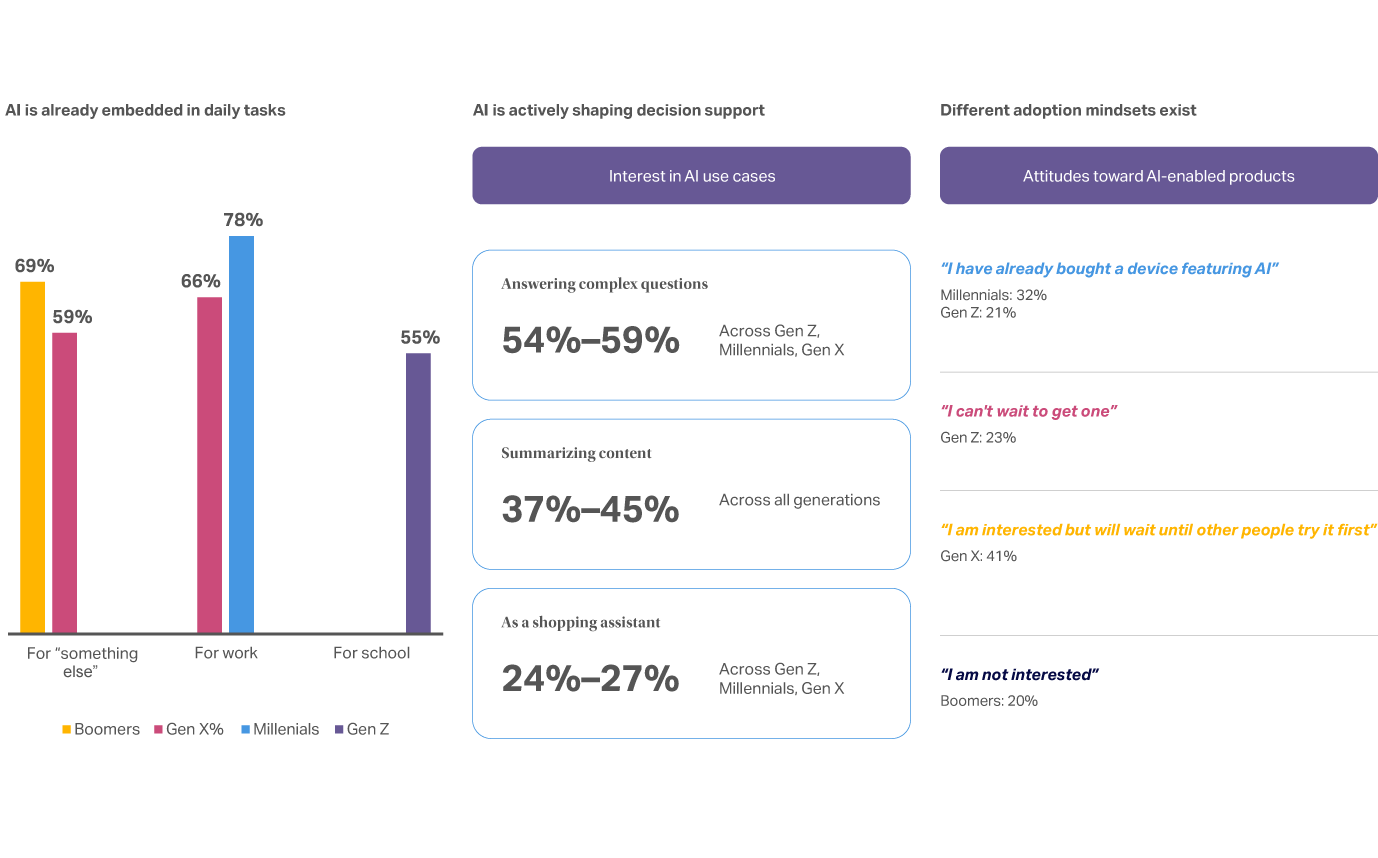
The proliferation of AI assistants across shopping platforms and social media is further pushing consumer adoption. Today, about three-quarters of shoppers use AI for product discovery, and 20% use AI for shopping.12
This creates an additional challenge for brands and retailers. For years, brands have used retail media placements to influence consideration and reinforce premium or value positioning through targeted claims, attributes, and offers. AI threatens to complicate that model. As agents and recommendation engines begin filtering options on behalf of consumers, paid placement alone will no longer be enough to earn visibility, trust, or conversion.
That shift has implications beyond brand discoverability. It also puts pressure on a fast-growing retail media revenue engine that many retailers are counting on for future growth. If AI increasingly determines which products consumers consider, retail media networks (RMNs) will need to evolve from ad-placement platforms into intelligence-driven systems that connect paid visibility, behavioral data, product relevance, and measurable conversion.
This reinforces the need for brands and retailers to partner more closely on how products are positioned, surfaced, and validated—not only as premium or value choices, but as the right choices for increasingly educated and discerning consumers.
AI is reshaping how decisions are made.
Find out how to pair NIQ’s 100 years of global consumer intelligence with the world’s latest AI advancements.
Retail media’s new behavioral targeting
Emerging retail media networks (RMNs) are increasingly helping brands identify behavioral signals that traditional demographic targeting often misses.
Retail media’s rich data set, particularly in the West, is making it possible for brands to segment consumers by behavior rather than demographics alone. This matters because upgrade and price-constrained mindsets show up across every generation, income level, and market. Demographic context can help explain consumer needs, but purchase and loyalty data can reveal how those needs actually show up in the basket.
AI tools within RMN platforms are also helping brands make predictions from large and fragmented data sets. As of this year, 63% of US advertisers say they are using generative AI as part of their RMN programs.
As retail media becomes more sophisticated, RMNs will become an even more powerful tool for reaching consumers in the moments that matter. Demographic attributes, purchase data, and loyalty signals can be used together to identify when a consumer is likely to trade up, when they’re likely to seek value, and which message is most likely to convert.
Social and live commerce
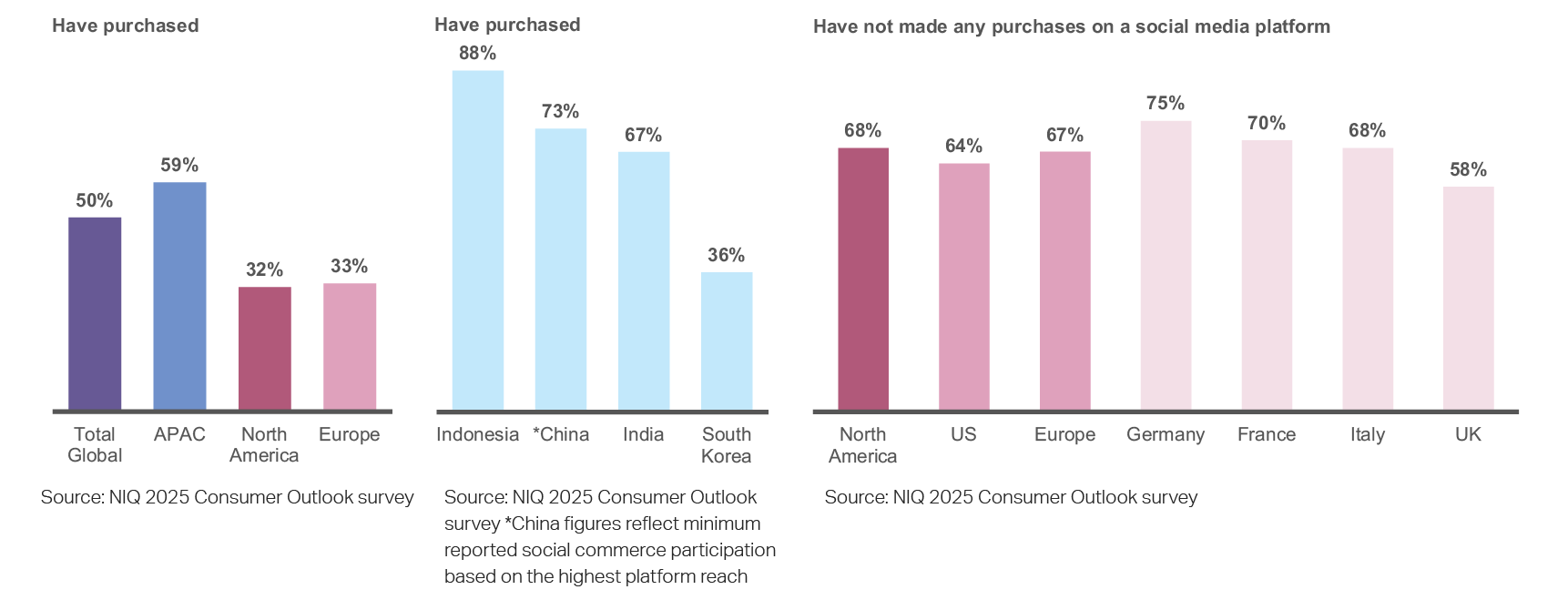
Purchasing via social media platforms is still early-stage in the West, but it’s already mainstream in APAC. For brands and retailers, the opportunity isn’t simply that consumers can buy through social platforms; it’s that social and live commerce can be leveraged to accelerate discovery, position products as premium or value choices, and drive conversion at the same time.
A clear runway to grow: Social commerce is mainstream in APAC, still early-stage in the West
Q: Have you ever purchased a product directly through a social media platform?
In more mature markets, social and live commerce have become powerful tools for launching products, building early awareness and testing premium positioning before brands shift investment into more cost-effective channels. Beauty & Personal Care offers one of the clearest examples: Higher-margin categories are better positioned to sustain social and live commerce investment because creator-driven storytelling and product demonstrations can build trust and help justify the premium for consumers.
At the same time, platforms like TikTok Shop and super apps have become highly effective mechanisms for personalized promotions on everyday staples, driving sustained growth for value-tier products that fit seamlessly into consumers’ lifestyles and shopping behaviors.
Non-Food categories driving surge in TikTok growth in the US; Food dominates quick commerce usage in the US
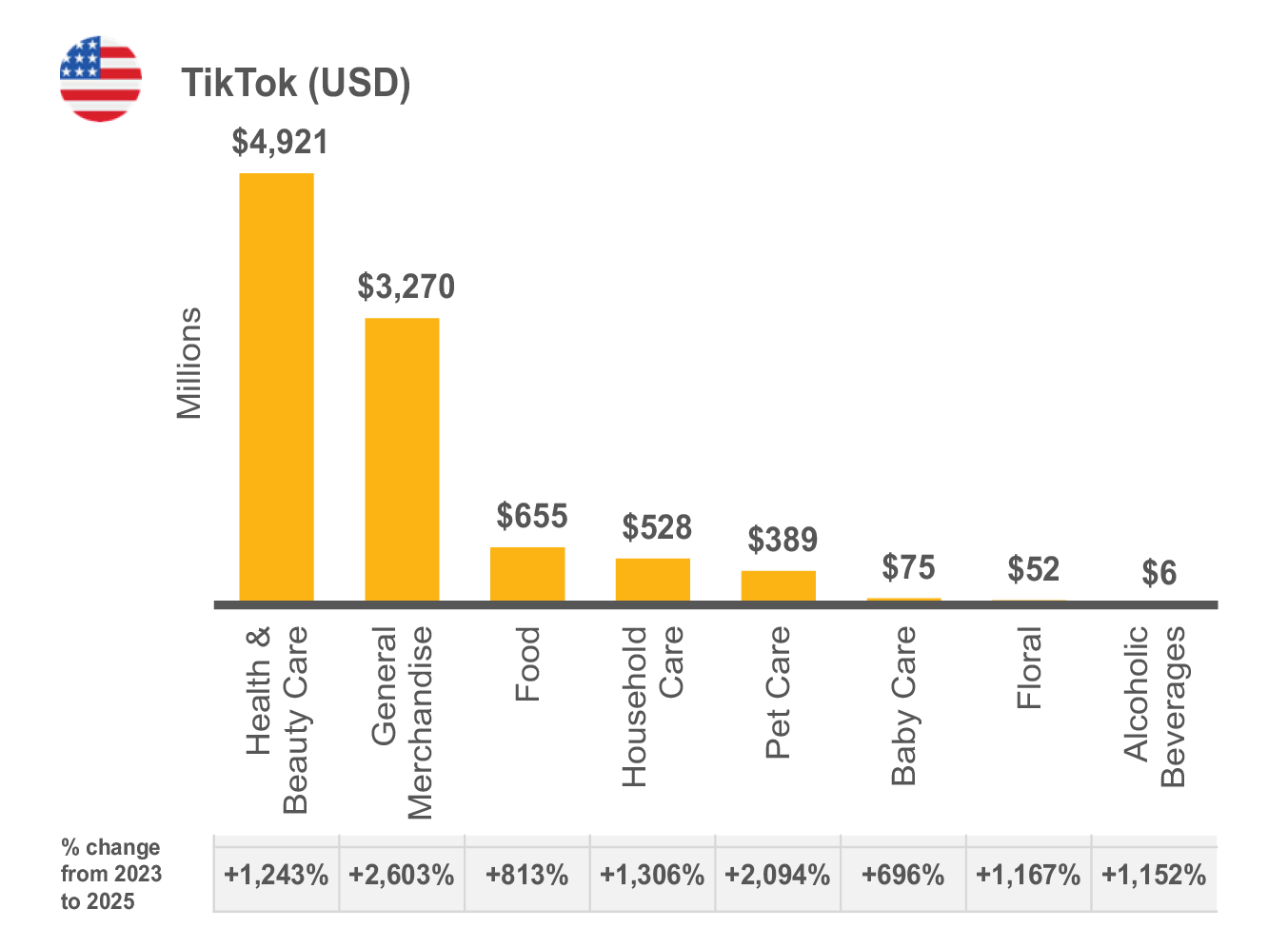
This is paramount across today’s polarized consumer landscape because social commerce can help brands earn the upgrade or win the value buy. Creator ecosystems bring claims and attributes to life, show products in active use, and build cultural connections with the audiences most likely to purchase. At the same time, social platforms and super apps support value-seeking behaviors by showcasing deals, bundles, reviews, and alternatives that help consumers feel confident they’re making a prudent, educated choice.
For manufacturers and retailers, the implication is clear: Social commerce isn’t just a Gen Z channel. It’s becoming a discovery and conversion system that can shape household decisions across generations, help products premiumize quickly, move value-tier products, and give brands a faster read on which claims, creators, and value signals actually convert.
This will likely continue to exacerbate the middle-market erosion being seen across markets and channels.
Private label vs. national brands: The new shelf reality
It used to be that consumers traded down to private label for a better price. This is simply no longer the story. Private label is now competing across global shelves as a value choice, a premium alternative and, in many categories, a “good enough” substitute for legacy brands.
As NIQ noted in Finding Harmony on the Shelf, consumers are increasingly making needs-driven decisions: 58% say brand or store brand is irrelevant and that they simply buy what they need, underscoring growing pressure on traditional brand loyalty models. This shift is especially pronounced among younger consumers, with 67% of Gen Z consumers saying private label products are just as good as national brands.13
This has put private label on much more equal footing with national brands—particularly in categories where shoppers don’t see enough differentiation in branded product attributes, claims, or values-driven alignment. When a private label product satisfies consumers’ needs, they’re far more willing than ever before to consider whether the branded premium is worth the incremental price.
Because of these shifts, viewing private label growth as a trade-down story would be a strategic misstep. In some categories, private label is helping consumers stretch increasingly strained budgets and feel confident in a value choice. In others, retailers are using smart packaging and strategic innovation to more clearly communicate their place in carts through claims, attributes, and premium cues that have moved private label upmarket. The result is a more fluid shelf where consumers trade down, trade laterally, or trade up into private label depending on the shopping occasion and unique perceived value equation.
For national brands, this has further raised the stakes. Private label isn’t only taking share from the bottom of the market, as it historically has. It’s also eroding the middle by giving consumers valuable, credible product alternatives when legacy brands fail to articulate their value proposition. If the product feels undifferentiated, the claims aren’t compelling, or the brand value has eroded, private label often surfaces as the obvious choice—at the bottom, middle, and top of the market.
At the same time, what’s good for the category is often still good for both manufacturers and retailers. Strong private label growth can bring more consumers into a category, expand usage occasions, increase volume in a landscape where volume continues to disappear, and build a clearer product architecture across value and premium tiers. But that only works when brands and retailers understand the role each product is playing: earning the upgrade, winning the value choice, or defending tried-and-true staples.
All of this has created a more democratized shelf, with consumers buying more brands across more categories than ever before. Yet while competition is intensifying, many national brands are cutting back on marketing spend to protect margins as volume weakens. As we’ve seen from our data, that choice has often come at a high cost. In a shelf environment where private label is increasingly trusted, brands simply should not and cannot rely on brand legacy alone.
To compete, national brands will need to recalibrate branding, innovation, and marketing around the two consumer mindsets shaping growth. For upgrade consumers, the premium must be made unmistakable through stronger claims, clearly differentiated performance, brand trust, values alignment, utility, or convenience. For price-constrained consumers, value must be communicated with equal clarity through pack architecture, promotions, accessibility, and proof that the brand is worth choosing over a private label alternative.
Private label’s rise doesn’t mean national brands can’t win. It’s an additional proof point that middle-market share is becoming harder to defend. Brands that can’t clearly explain why they deserve the premium—or why they remain the smarter value choice—risk being replaced by private label products that consumers increasingly see as equal, better, or simply good enough.
Beyond the barbell: Category and market nuances
While the barbell pattern is becoming increasingly visible across markets, category-level data shows that polarization doesn’t play out uniformly. Some categories are clearly splitting between premium and value. Others still show resilience in mainstream products when those products are tied to wellness, convenience, familiarity, or a clearer consumer need.
For manufacturers and retailers, this distinction matters. The question isn’t simply whether consumers are upgrading or trading down; it’s where the middle is truly exposed, where mainstream still has room to defend share, and which category-specific signals should shape pricing, innovation, assortment, and media investment.
Just because we aren’t seeing the same level of middle-market erosion today in certain markets or categories doesn’t mean we won’t begin to see it in the near or mid-term, however. The erosion already seen across a host of markets and categories should serve as a stark warning to brands and retailers alike: Prepare for polarization before it fully arrives. Once consumers begin to reorganize around premium and value choices, reclaiming the middle becomes significantly harder.
Emerging growth markets
Emerging markets will account for much of the next decade’s consumer growth, but the composition of that opportunity differs sharply by market. Mature, largely Western markets have a much higher concentration of affluent consumers, while core consumers represent the dominant base across much of the emerging world.
These economic classes help reveal where volume and value growth are most likely to emerge, but they don’t determine how individual consumers will behave. Consumers within either group may upgrade or seek value depending on the category, occasion, and perceived payoff. At the same time, affluent populations are expanding within major urban centers across emerging markets—creating concentrated premium opportunities within a much broader mass-market growth story. This further reinforces our central finding: Demographic and economic trends can help brands and retailers identify where growth is most likely to emerge, but capturing that opportunity still depends on understanding the consumer mindsets at work within each market.
The two consumers are split across the world map
% of consumer class in affluent, 2026
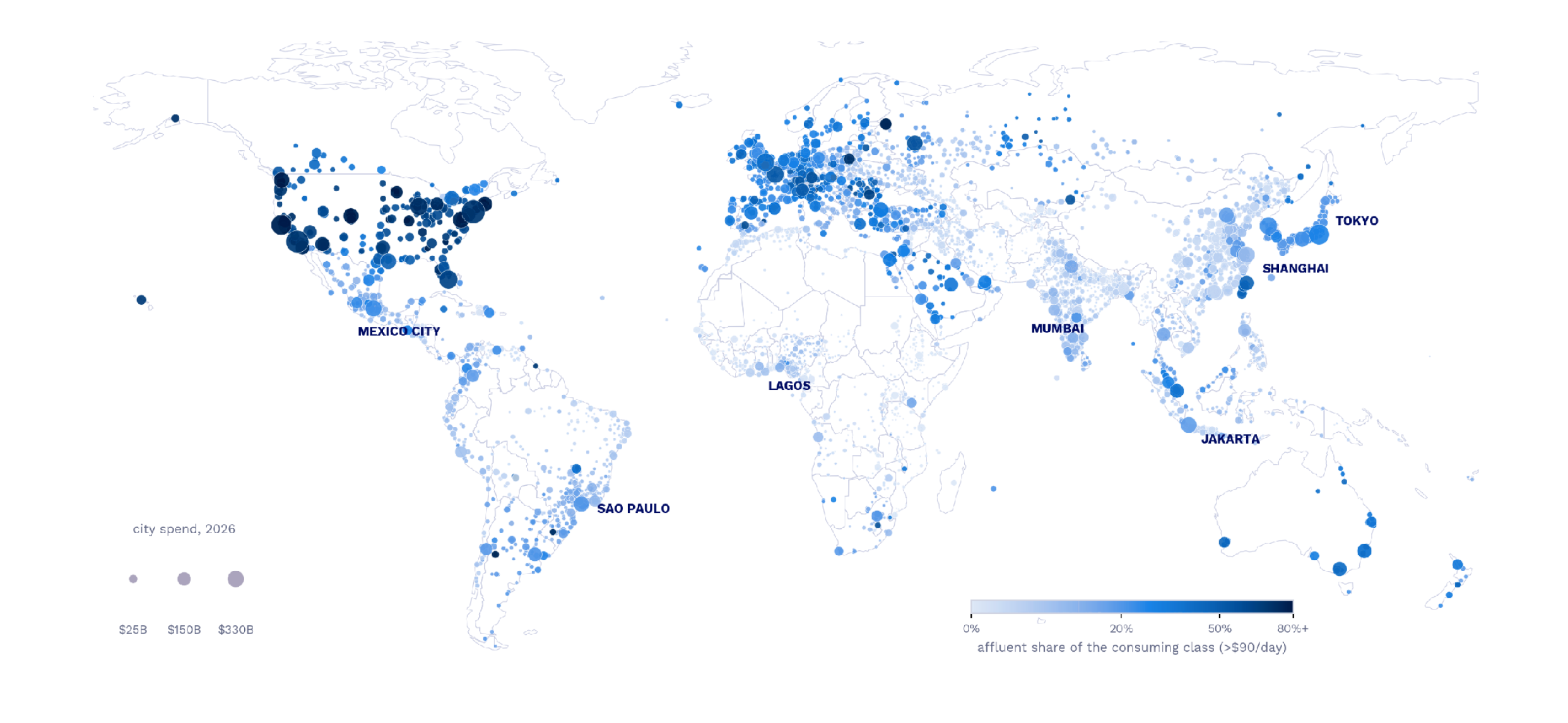
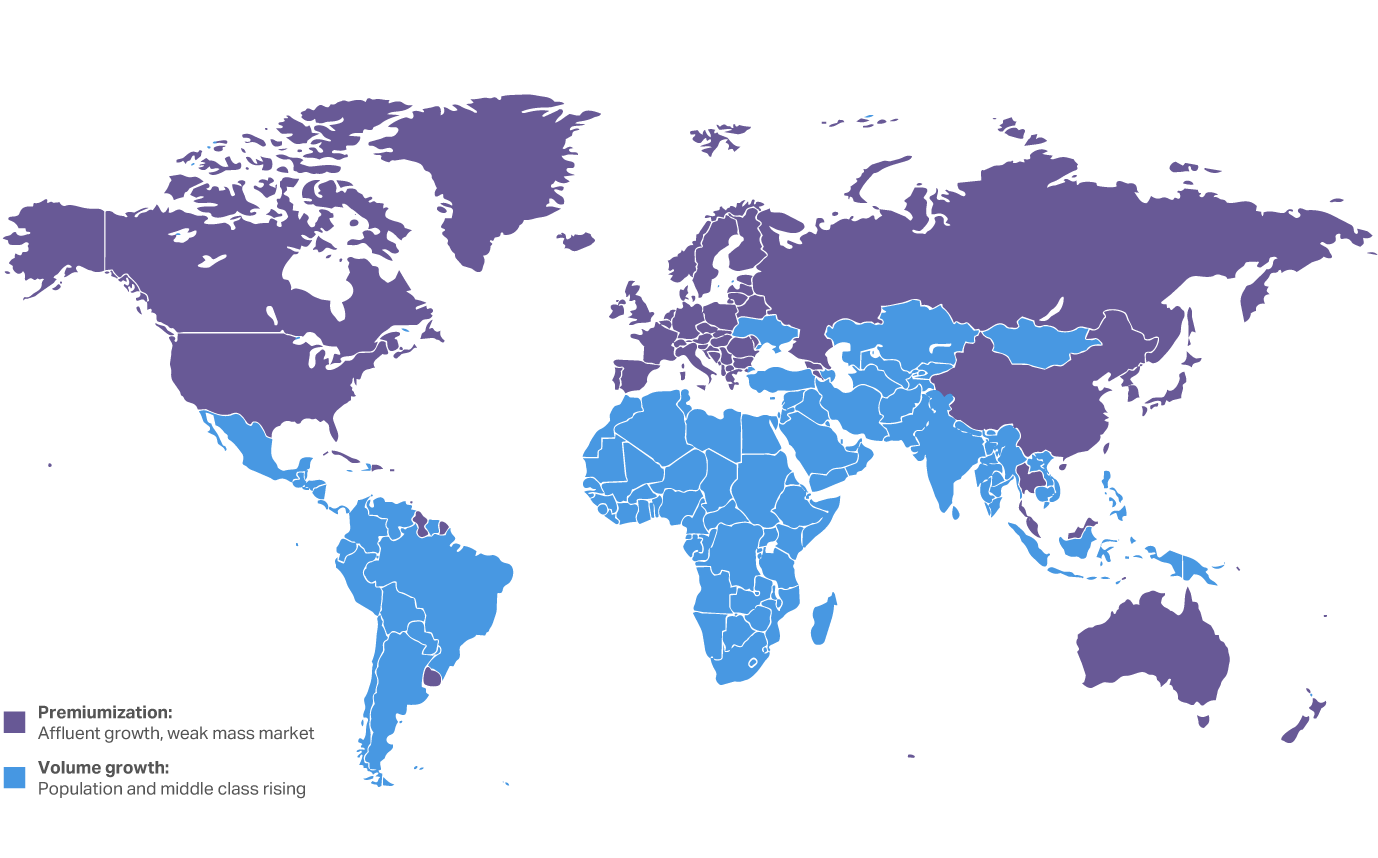
Through this lens, geography is reshaping—but not dictating—the retail and brand growth roadmap. Emerging markets will offer a broader runway for volume growth, while mature markets will become increasingly dependent on capturing value through premiumization, clear differentiation, and precise portfolio strategy and architecture. Within both, however, growth will still depend on understanding when consumers are willing to upgrade, look for value, or remain loyal to trusted, familiar products.
The retail roadmap: Volume in emerging markets, premiumization in mature markets
Market maturity is reshaping the growth playbook: Emerging markets offer volume growth as population and middle-class participation expand, while mature markets depend more heavily on affluent spend and premiumization.
Classification based on population, middle-class, and affluent growth, 2026–2036
Asia Pacific and Latin America
While many mature, largely Western markets will be increasingly defined by value growth, emerging markets across Asia Pacific (APAC), Latin America (LATAM), and Africa present manufacturers and retailers with a different growth opportunity. Across these markets, rising incomes, expanding affluence, and category growth are creating room for both volume and value growth.
For the purposes of this report, we focus primarily on APAC and LATAM, where the available market and category examples show how these dynamics are already taking shape across consumer classes, price tiers, and categories.
This makes the narrative far more complex than a simple emerging-market volume story. In some categories, growth will be driven by broader household participation, affordability, or distribution. In others, it will come from premium purchases as newly affluent consumers look for products that deliver on quality, convenience, or status.
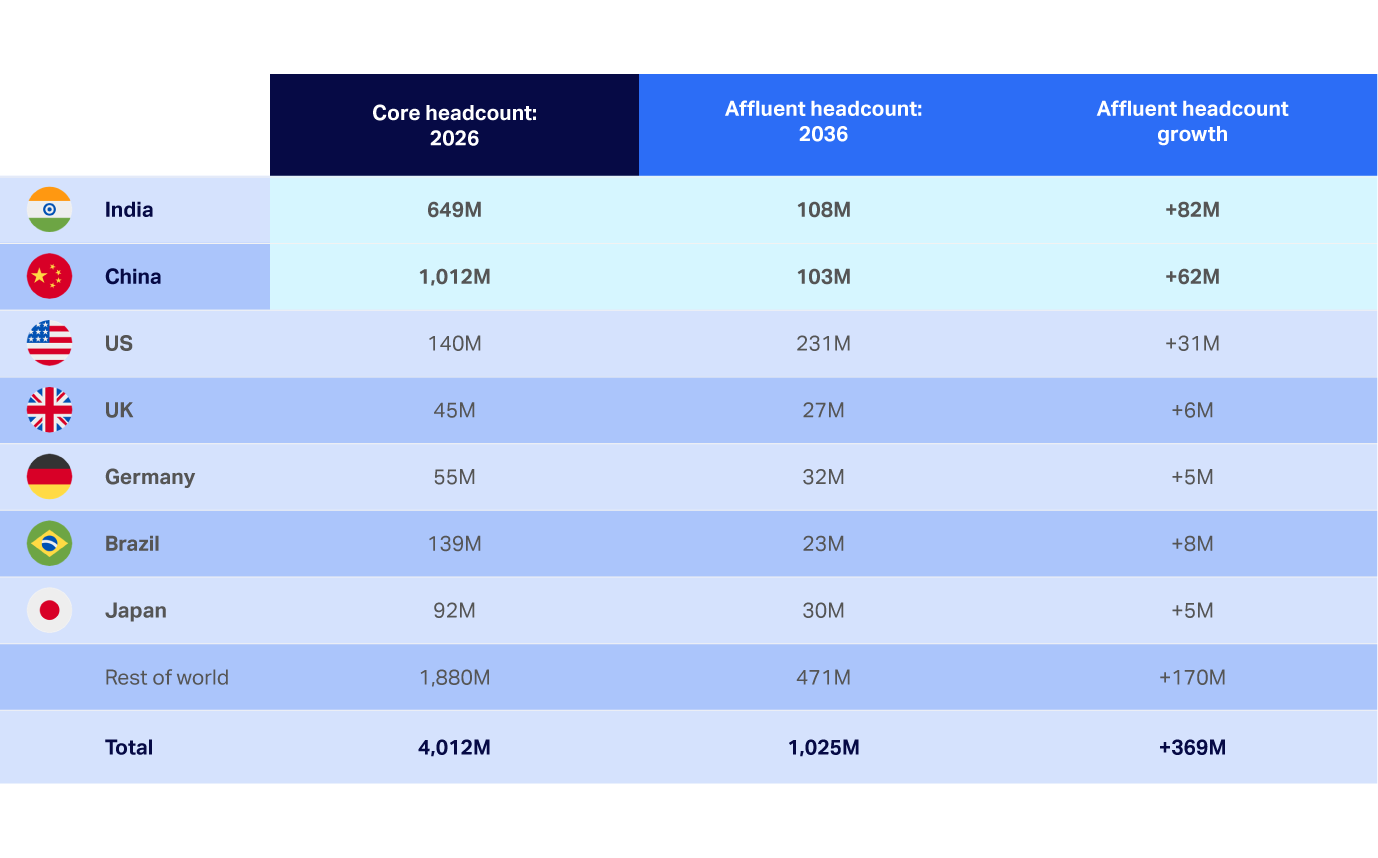
For brands and retailers, growth across APAC and LATAM will depend on portfolios that can simultaneously deliver against the needs of both mindsets. India and China reveal the scale of the future affluent-consumer opportunity, with both markets projected to have more than 100 million affluent consumers by 2036.14 Brazil adds another dimension to the market growth story, highlighting the role of promotions, affordability, and selective premiumization. China then shows what can happen when premium product opportunities exist within a pressured, contracting FMCG environment.
The relevant market examples that follow demonstrate how differently this can play out. We begin with mature Western markets, where the pressure on the middle is already highly visible and where future growth will depend more heavily on capturing value, premiumization, and strategic portfolio development. We then move into markets where the dynamics are different—but equally important strategically.
When evaluated together, these markets reinforce a broader point: Growth markets can still offer brands and retailers volume runway, but winning it requires a level of precision that hasn’t historically been mandated.
By 2036, both India and China will have over 100 million affluent consumers
United States
In the United States (US), consumer spending is polarizing toward the premium segment (led by both branded and private label products), despite consumers’ persistent concerns about their overall financial health. Meanwhile, value-seeking consumers anchor the lower end of the market in the US. This is hollowing out the middle-market and creating a clear barbell shift across FMCG.
Trading up and trading down: The new FMCG reality
In the US, consumers are polarizing toward the premium segment, led by both branded and private label, while value-seeking consumers anchor at the lower end—hollowing out the mainstream and driving a barbell shift.
US TOTAL FMCG – MAT APRIL 2026 ($1165.8B, +3.7% vs. 2YA): Value mix by price tier and change vs. 2YA
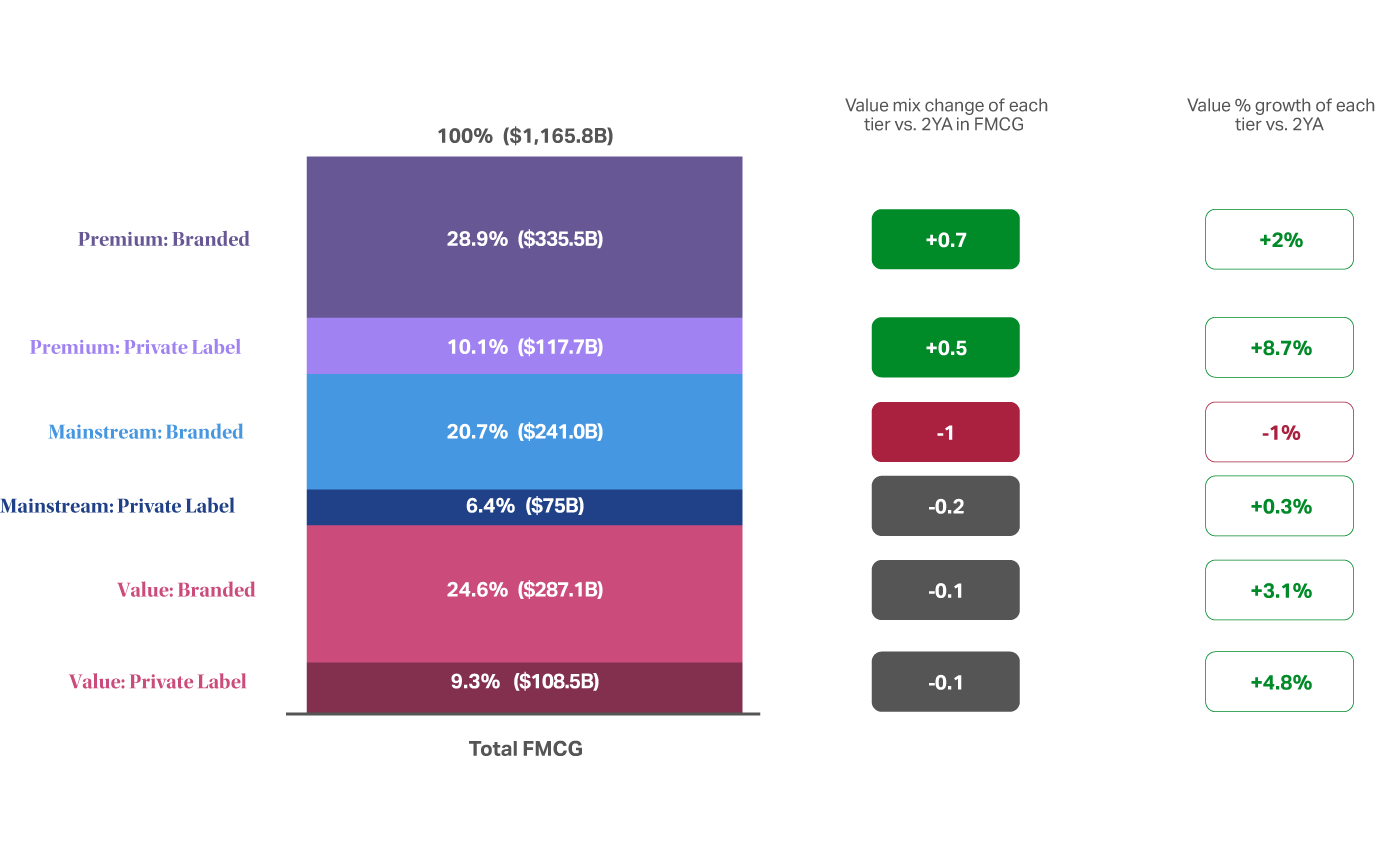
But the “hollowing out of the middle” US story isn’t across every department. Category-level data shows varying combinations of premium growth, middle-market pressure, and value growth depending on the aisle we’re evaluating. In some departments, premium is gaining share. In others, value is driving growth. And in many cases, private label is no longer confined to the value tier—with premium private label contributing significantly to category-level growth.
This matters because the strategic question isn’t simply whether a category is premiumizing or trading down; it’s which tier is gaining momentum, whether branded or private label products are capturing that growth, and where middle-market products are most exposed.
Price tier shifts vary by department, but premium continues to lead the mix story
US – MAT APRIL 2026: Value mix change within each department vs. 2YA and absolute value % change vs. 2YA
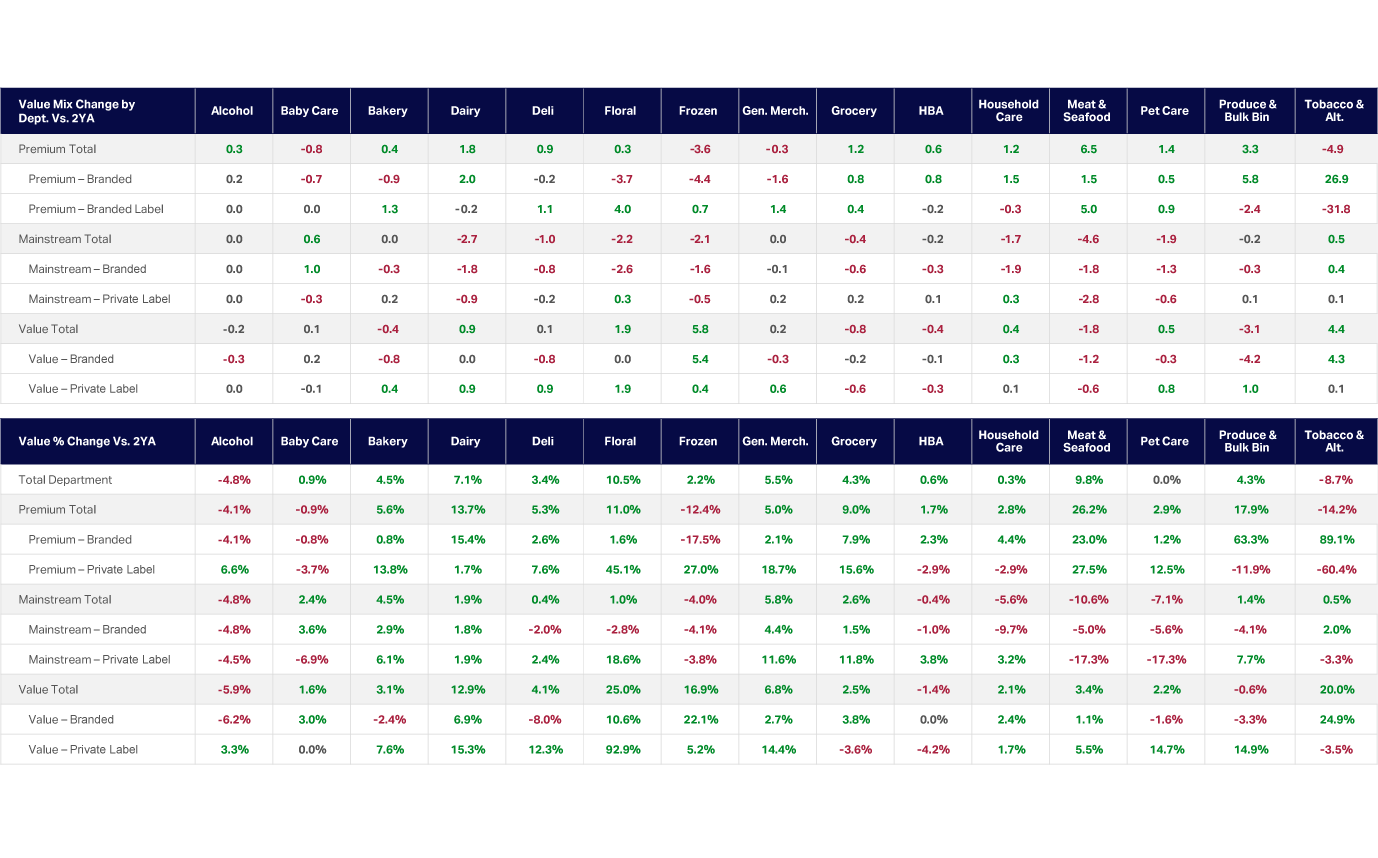
The Health & Beauty Aids (HBA) and Beauty & Personal Care categories offer clear examples of premium growth. In categories tied to performance, wellness, and identity, consumers are still willing to pay more when the product delivers a clearer benefit or stronger perceived value. This is where branded products can continue to defend premium positioning, but it’s also where premium private label is poised to be a significant threat to brands.
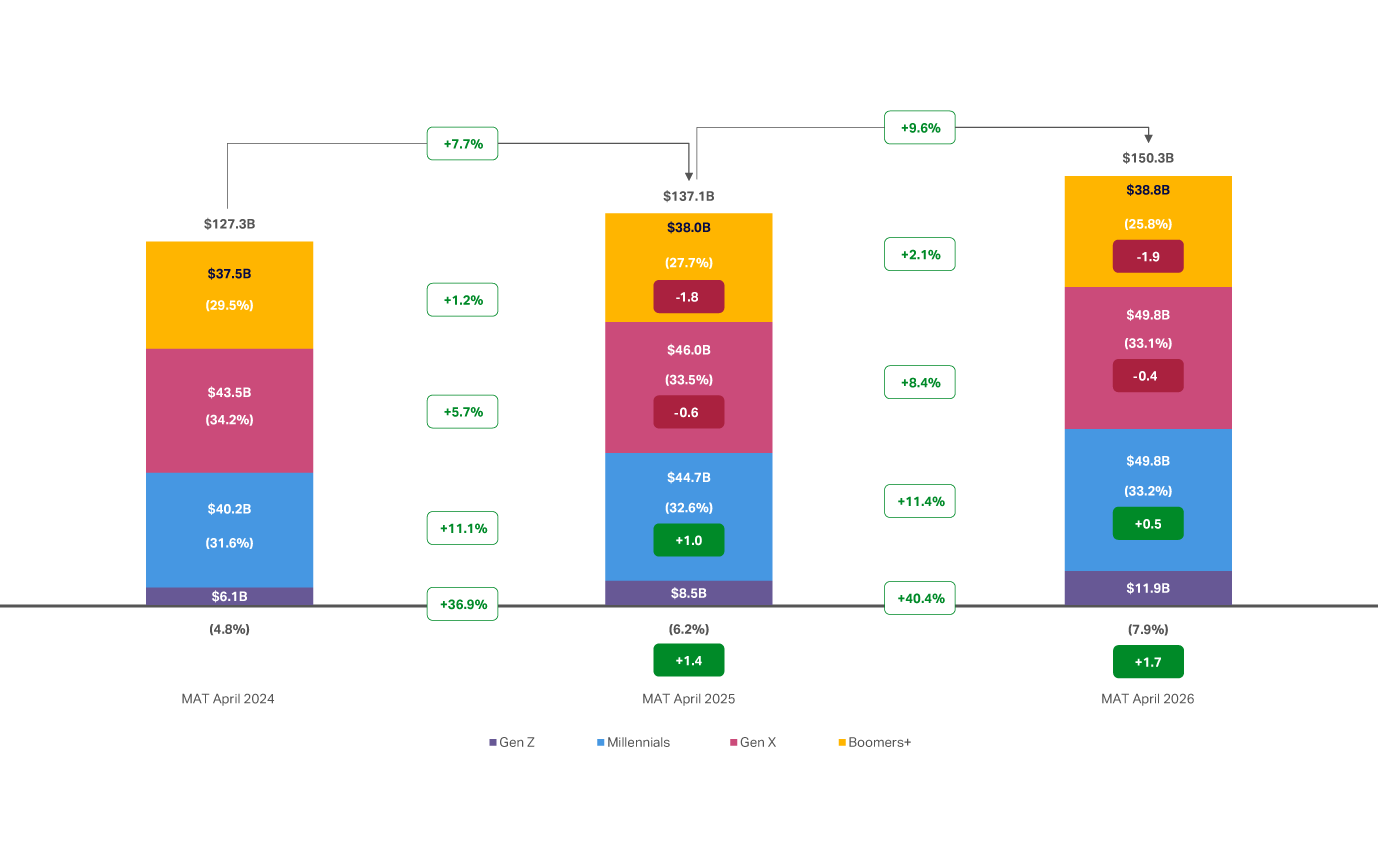
Beauty’s growth engine is young—and increasingly premium
US Beauty & Personal Care clearly reflects a “tale of two consumers”: Younger cohorts (Gen Z, Millennials) are overtrading (8% on Beauty & Personal Care, 7% on HBA, 6% on FMCG), signaling a strong tilt toward premium, quality-led consumption. What’s more, 57% of the HBA spend by Gen Z is driven by premium—and still growing—versus two years ago.
US Beauty & Personal Care – MAT APRIL 2026 ($150.3B, 18% vs. 2YA): Value mix by cohorts and price tier vs. 2YA
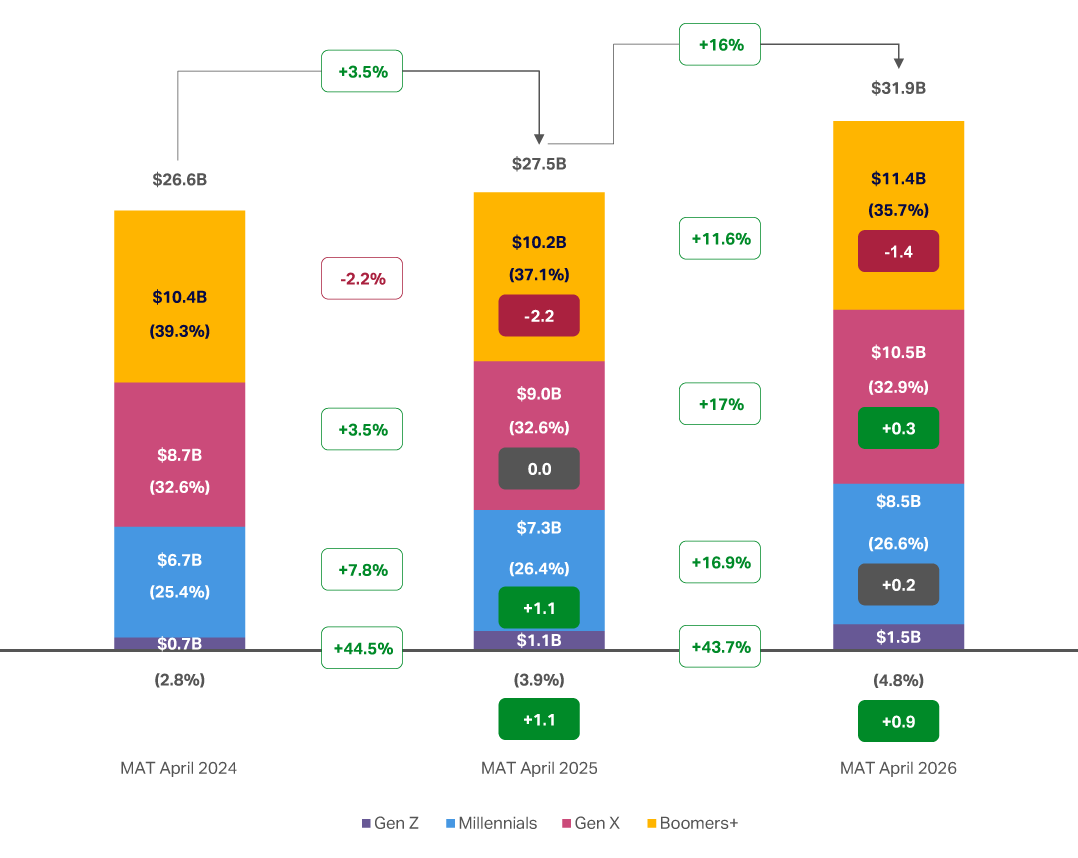
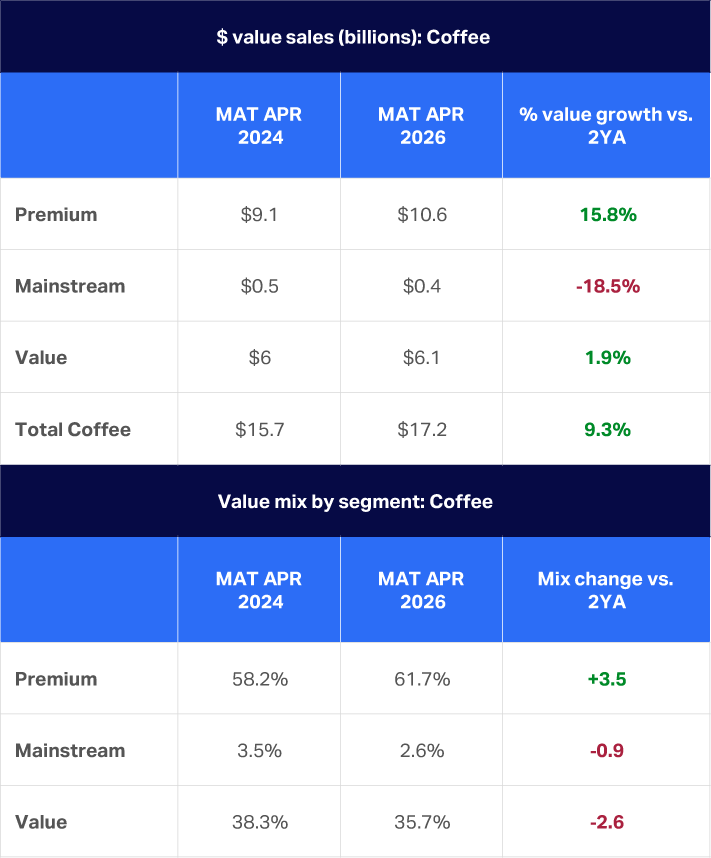
Non-alcoholic Beverages reveal a different brand of pressure. In categories like Coffee, consumers are splitting between premium indulgence and a value-seeking mindset. Some shoppers are trading up for products that are perceived as higher quality, while others are trading down to manage everyday costs. This split is precisely what puts middle-market, mainstream offerings at risk.
Premium fuels Coffee category growth, while mainstream continues to lose share
Unlike Total Beverages, Coffee shows early signs of polarization-led erosion, as consumption growth is split between premium and value (but more skewed toward premiumization).
US Coffee – MAT APRIL 2026 ($31.9B, +20% vs. 2YA): Value mix by cohorts and price tier vs. 2YA
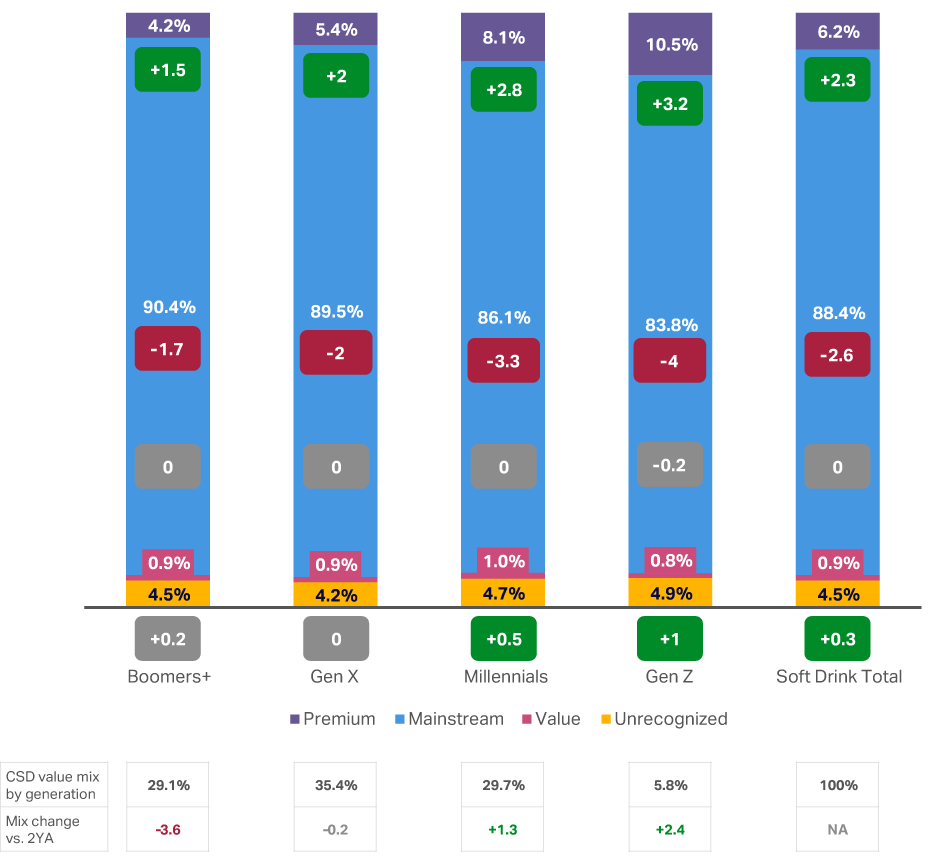
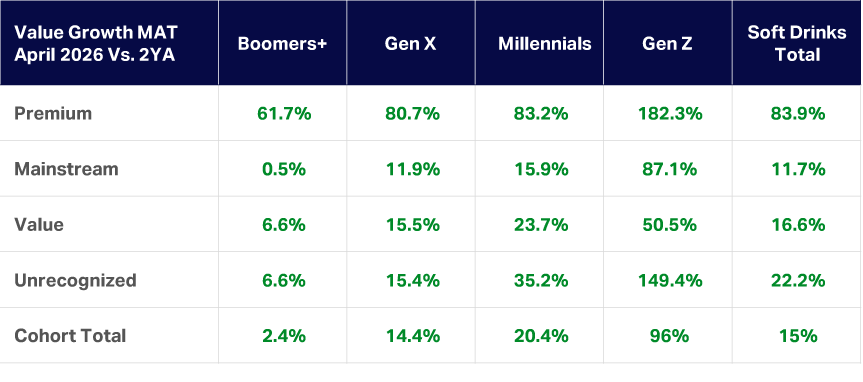
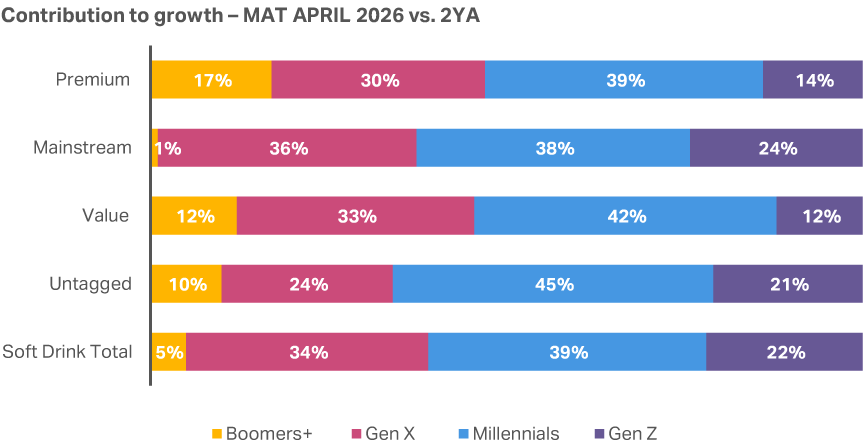
The Carbonated Soft Drinks category shows how the barbell can bend upward. The category grew 15% versus two years ago, with premium products growing far faster than mainstream or value.15 Millennials and Gen Z contributed the majority of total category growth, while Gen Z shows the highest premium mix among cohorts. This suggests that younger consumers are helping accelerate premiumization in Soft Drinks, even as older cohorts contribute less to mix growth.
Younger consumers are powering Soft Drinks growth through premiumization
Gen Z and Millennials contribute over 60% of category growth while driving more than half of premium growth, reinforcing premiumization as the category’s primary growth engine.
US Carbonated Soft Drinks – MAT APRIL 2026 ($36.5B, +15% vs. 2YA): Value mix by cohorts and price tier vs. 2YA
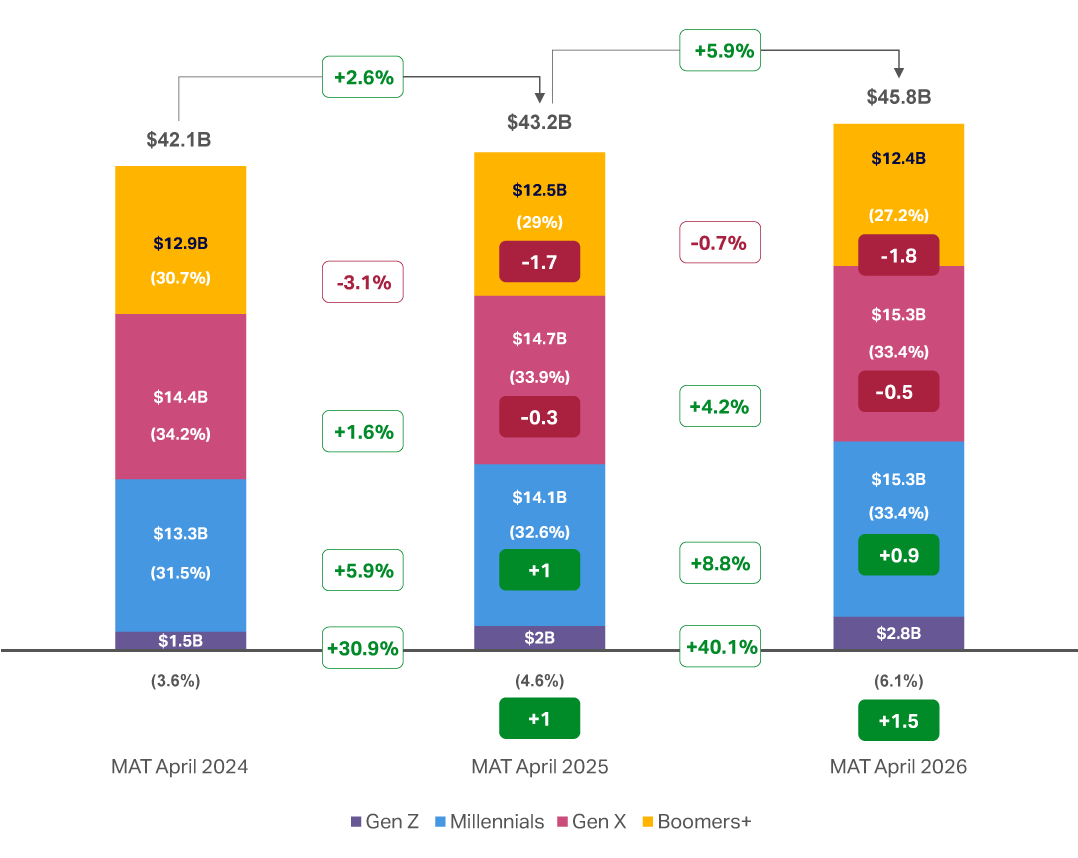
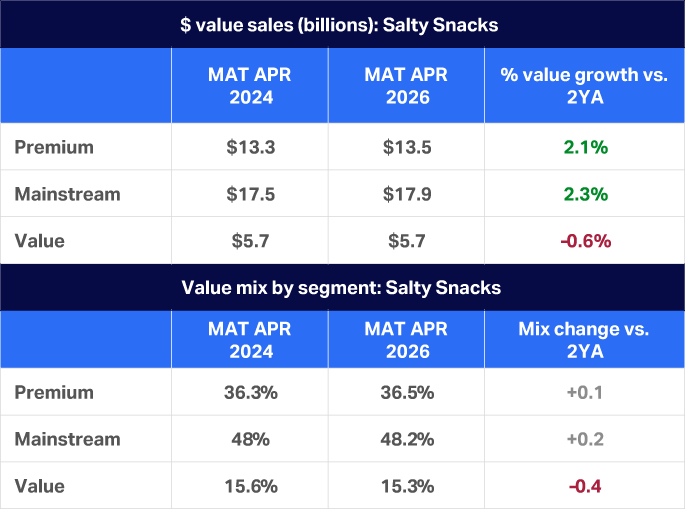
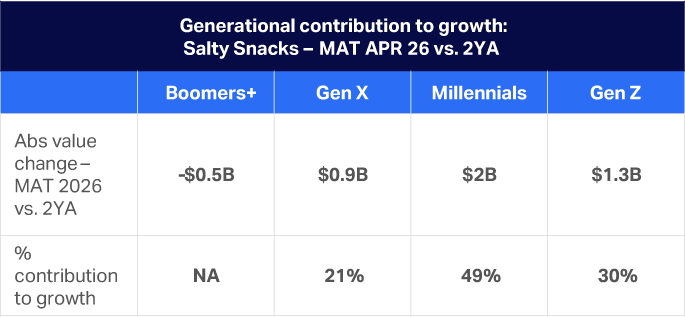
The Salty Snacks category also demonstrates how the barbell may bend in specific categories. Unlike categories where value and premium products are absorbing all the growth, Salty Snacks are seeing stronger momentum in mainstream and premium products, while the value tier is losing share. The category grew 8.7% versus two years ago, with Millennials and Gen Z contributing nearly 80% of that growth. This suggests that younger consumers aren’t simply trading down in everyday snacking—they’re continuing to support mainstream and premium options when products deliver the right mix of eating experience, convenience, and perceived value.
Young consumers are fueling Salty Snacks growth as value loses relevance
Millennials and Gen Z contribute ~80% of category growth, driving expansion through premium and mainstream tiers while reducing value-tier participation.
US Salty Snacks – MAT APRIL 2026 ($45.8B, +8.7% vs. 2YA): Value mix by cohorts and price tier vs. 2YA
United Kingdom
The United Kingdom (UK) tells a different version of the same story, shaped by persistent UK inflation pressures and broader cost-of-living concerns. Middle-market pressure is visible across categories, but the growth isn’t moving in one direction. In some categories, premium is gaining share. In others, value is growing as consumers manage continued and mounting economic pressure. That makes the UK a useful reminder that the barbell doesn’t bend the same way in every market, category, or cohort.
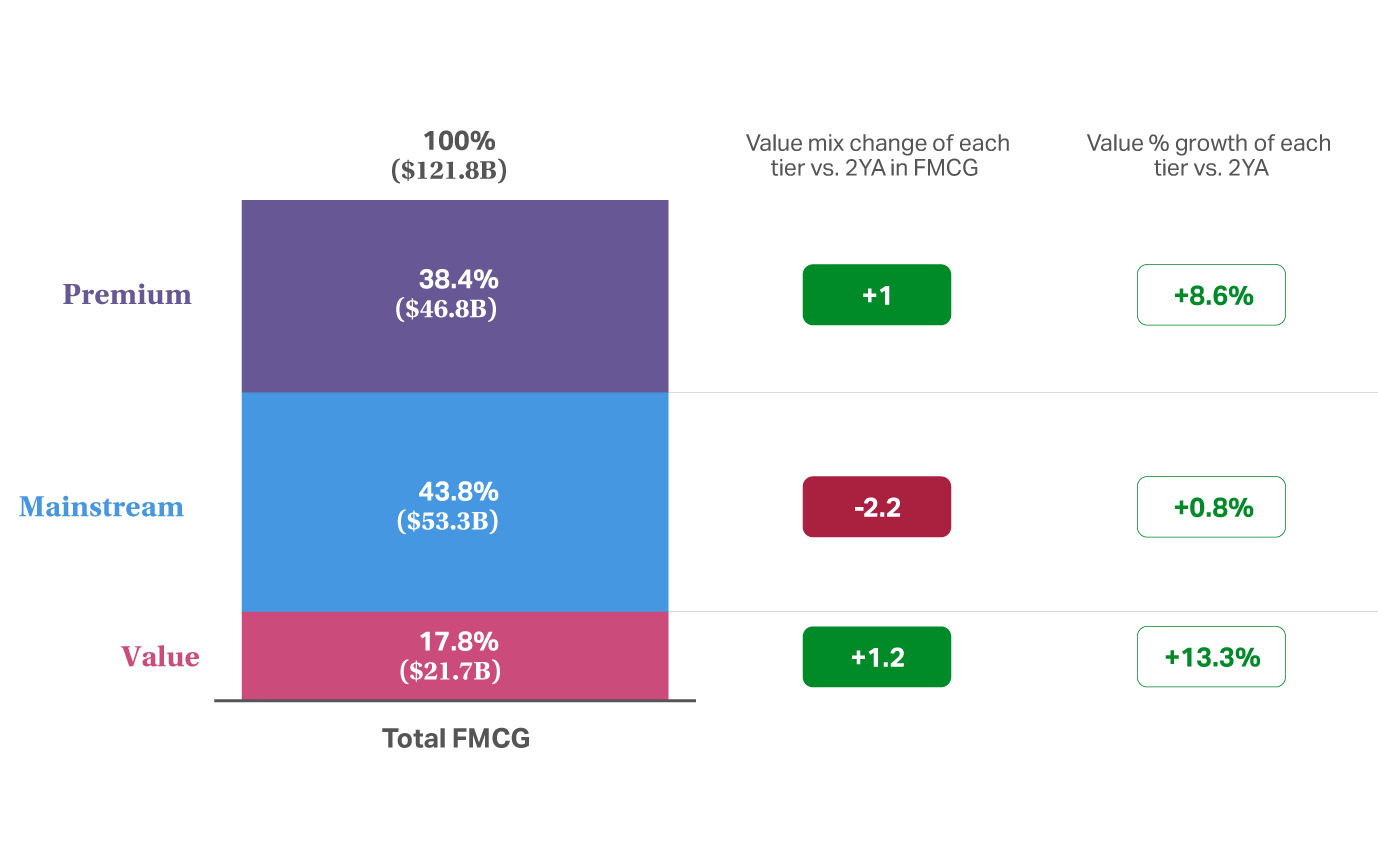
Premiumization and value seeking drive UK FMCG growth, further squeezing mainstream
Premium gained 1 share point and value added 1.2 points over the last two years, while mainstream lost 2.2 points despite modest growth, reflecting consumers’ habit of increasingly trading up or down rather than remaining in the middle.
UK TOTAL FMCG – MAT APRIL 2026 ($121.8B, +5.8% vs. 2YA): Value mix by price tier and change vs. 2YA
Beauty & Personal Care shows one of the clearest premium-led patterns in the UK. Premium represents roughly half of category mix across cohorts, with Gen Z and Millennials helping drive growth primarily through premium products. Older cohorts also maintain a meaningful premium mix, making this category a strong example of premium resilience, but not a simple Gen Z-only story, as it is often portrayed.
Beauty growth is being led by younger shoppers—but their path to value differs
Gen Z is driving growth through premium, while Millennials overindex on value. Older cohorts remain anchored in premium and mainstream.
UK Beauty & Personal Care – MAT APRIL 2026 ($8.2B, +5.5% vs. 2YA): Value mix by cohorts and price tier vs. 2YA
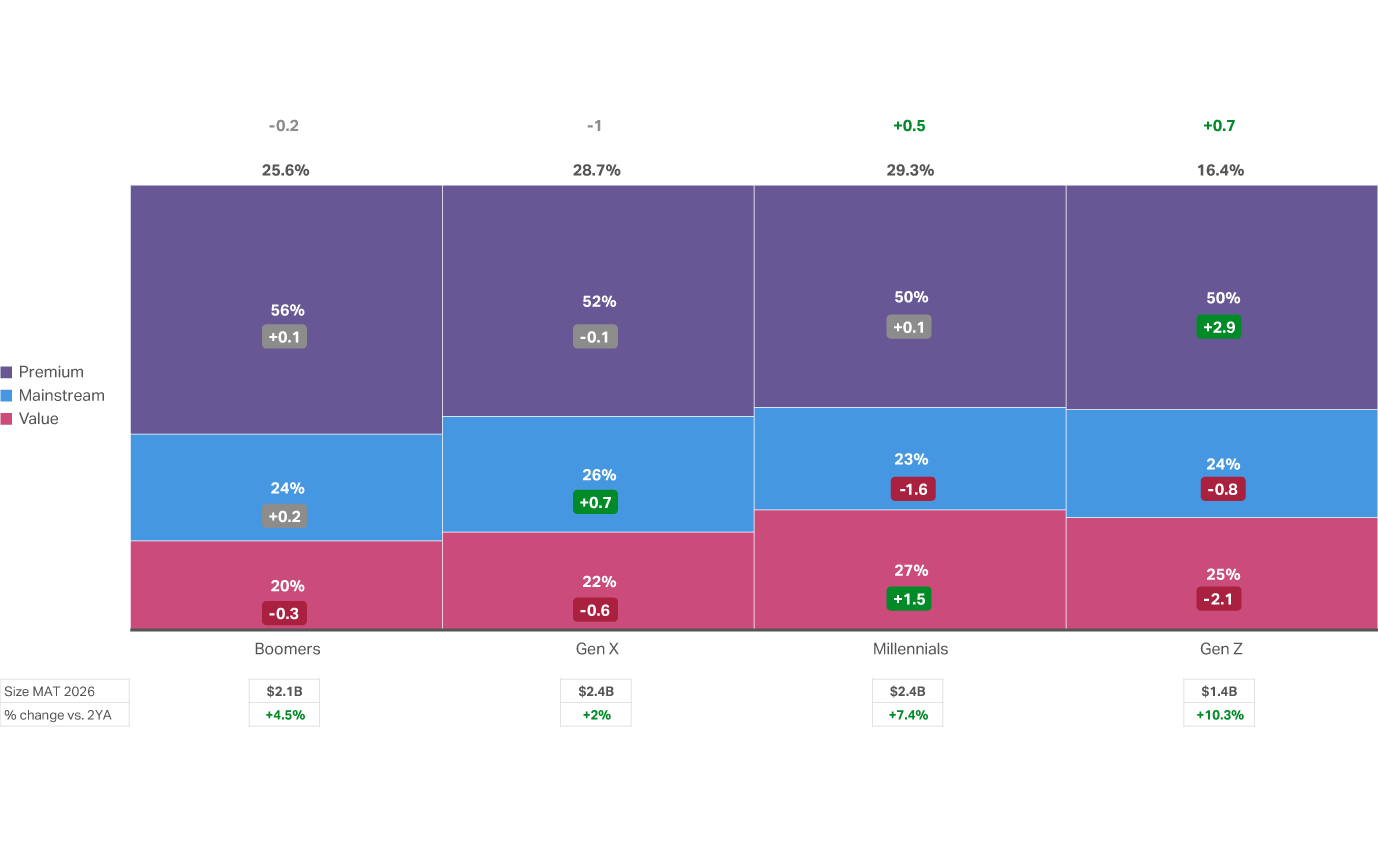
Coffee reveals a sharper split in behavior. Older consumers are concurrently supporting premium and value, while younger cohorts are shifting more toward value even as they continue to purchase premium products. The result is a clearer hollowing out of the middle, with the category showing how premium indulgence and value seeking can coexist in the same basket.
UK Coffee reflects a polarized pricing strategy across generations
Gen Z and Millennials are increasing their value-tier participation, while Boomers and Gen X remain anchored in premium, highlighting different approaches to managing spend.
UK Coffee – MAT APRIL 2026 ($2.3B, +2.6% vs. 2YA): Value mix by cohorts and price tier vs. 2YA
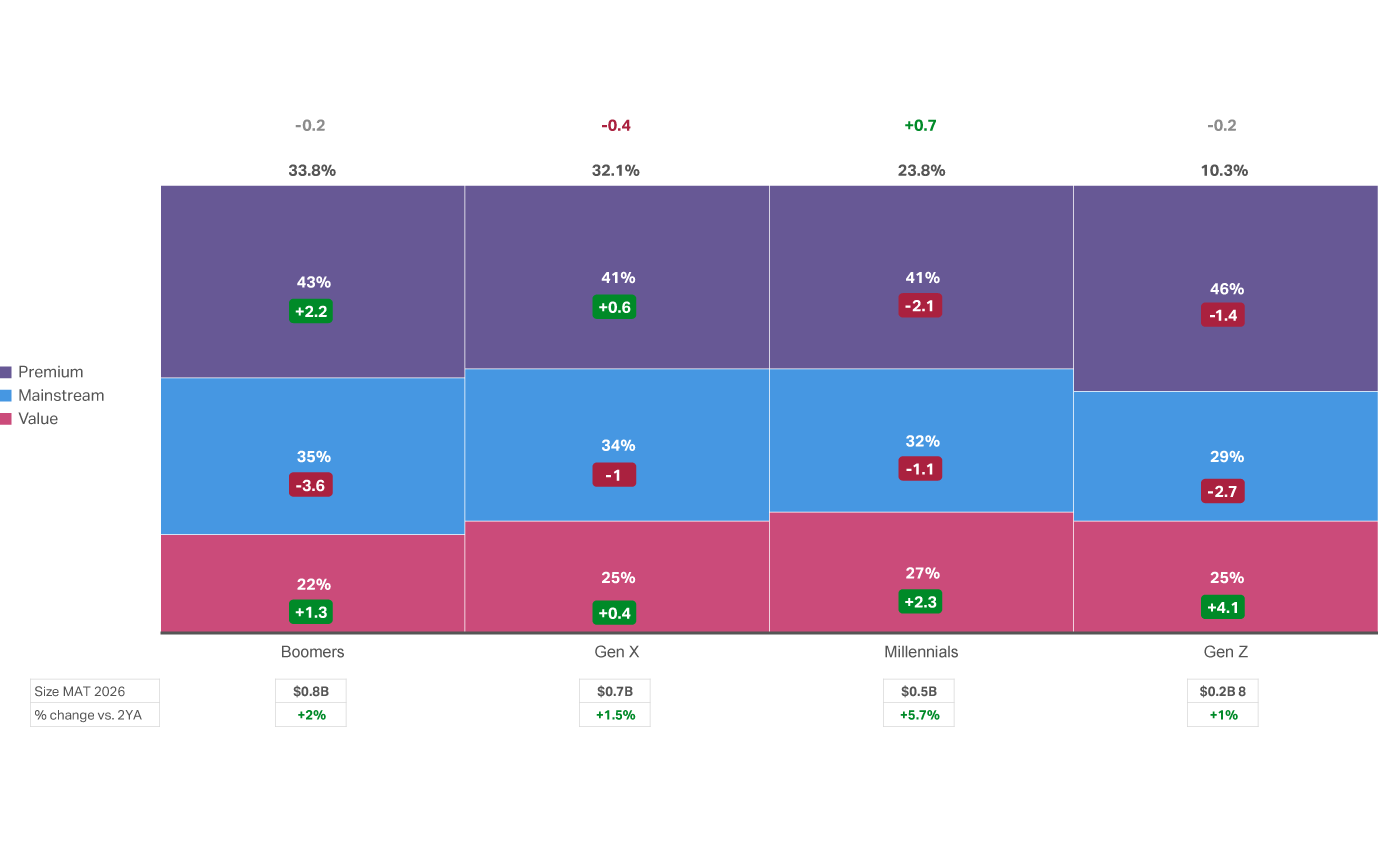
Carbonated Soft Drinks tells another version of the premiumization story. Like in the US, premium is the fastest-growing tier. But in the UK, growth is being driven more by Gen X and Millennials, while Gen Z demand is declining. This suggests premiumization remains alive in Soft Drinks, but the growth model is different from the US.
UK Soft Drinks growth is being driven by Gen X and Millennials through premiumization
Gen X and Millennials contribute 95% of category growth and all premium growth, while Gen Z retains the highest premium mix despite declining overall.
UK Carbonated Soft Drinks – MAT APRIL 2026 ($4.1B, +4.3% vs. 2YA): Value mix by cohorts and price tier vs. 2YA
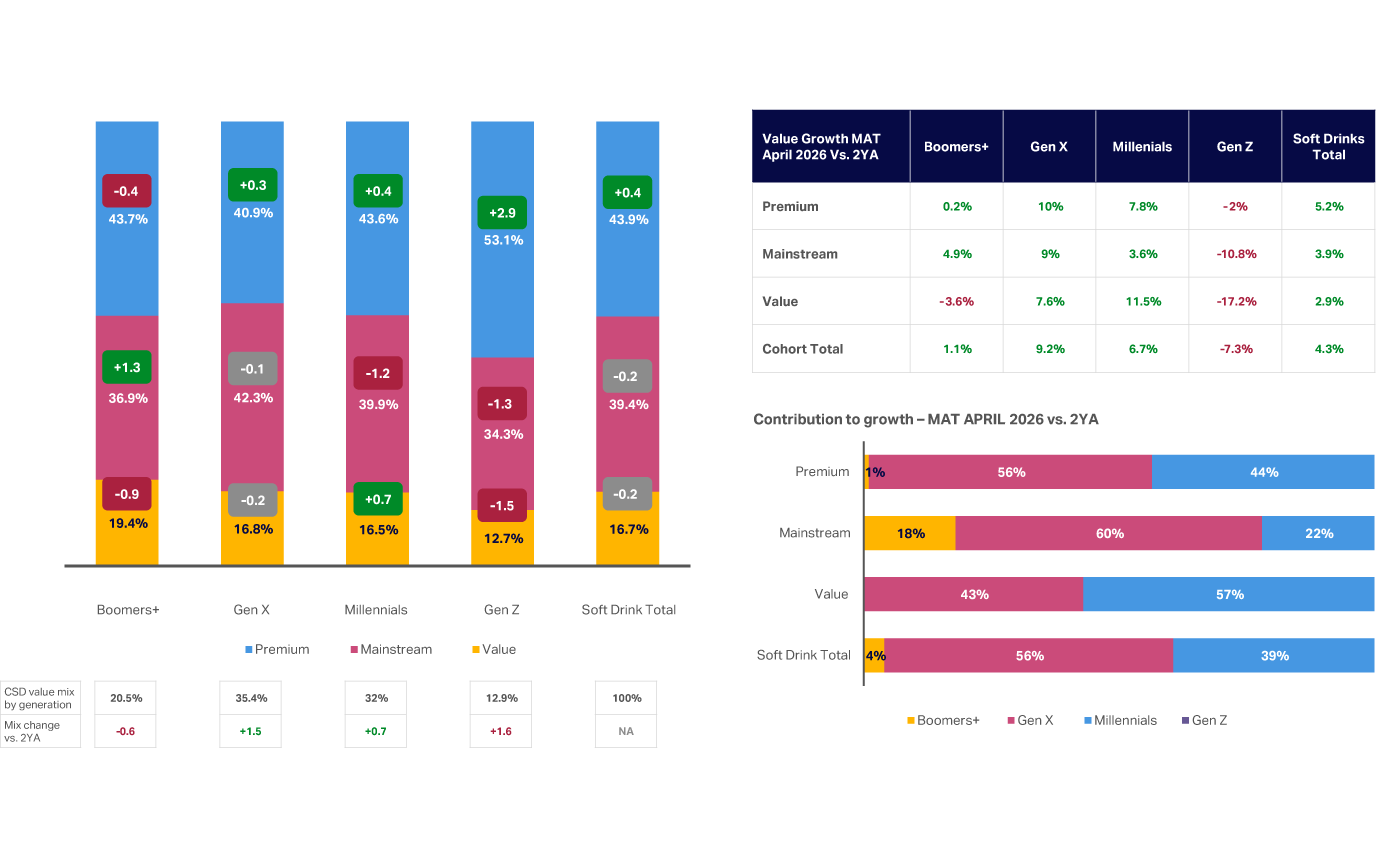
Salty Snacks reveals the most polarized cohort pattern. Boomers skew strongly toward premium, Gen Z remains heavily middle-market, and Millennials show signs of duality across both premium and value. Rather than one clean national pattern, Salty Snacks reveals how category behavior can split sharply by generation—underscoring why the barbell needs to be interpreted at the cohort and category level—across markets.
Boomers trade up while younger shoppers trade smart
Boomers continue to favor premium Salty Snacks, while Millennials and Gen Z shift from mainstream toward value, reflecting different approaches to managing spend.
UK Salty Snacks – MAT APRIL 2026 ($0.3B, +7.9% vs. 2YA): Value mix by cohorts and price tier vs. 2YA
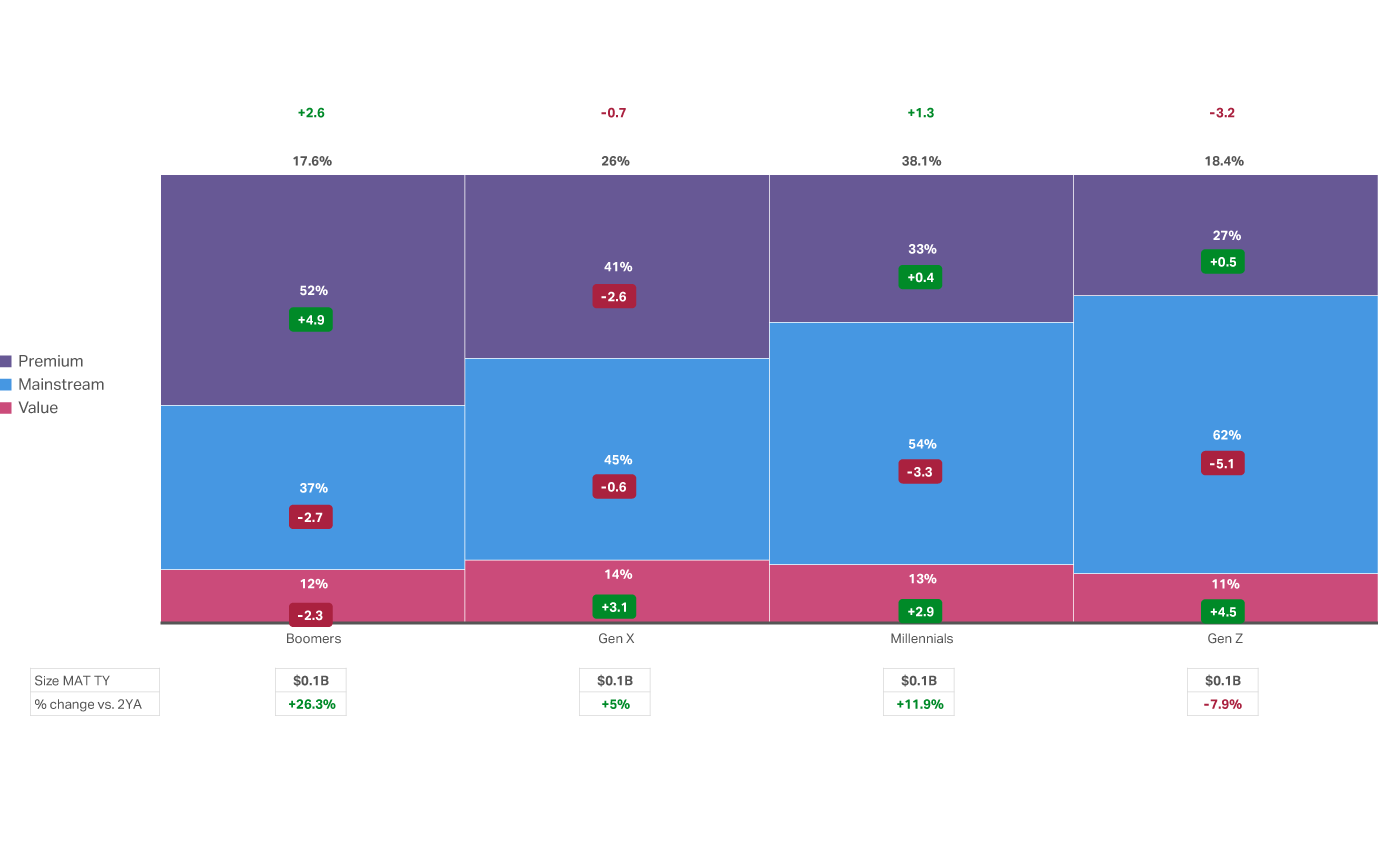
Saudi Arabia
Saudi Arabia presents a sharper visualization of the barbell. Across categories, premium and value products are taking ground from mainstream, with premium gaining across most departments and mainstream declining significantly. This makes Saudi Arabia one of the clearest examples of polarization outside the US and UK.
Saudi Arabia FMCG reaches $10.7B as growth concentrates at both ends of the price spectrum
Premiumization continues to accelerate (+18.2%), while value outpaces all tiers (+22.1%), creating a dual-engine growth dynamic that’s reshaping the FMCG landscape.
Saudi Arabia Total FMCG – MAT APRIL 2026 ($10.7B, + 8.3% vs. 2YA): Value mix by price tier and change vs. 2YA
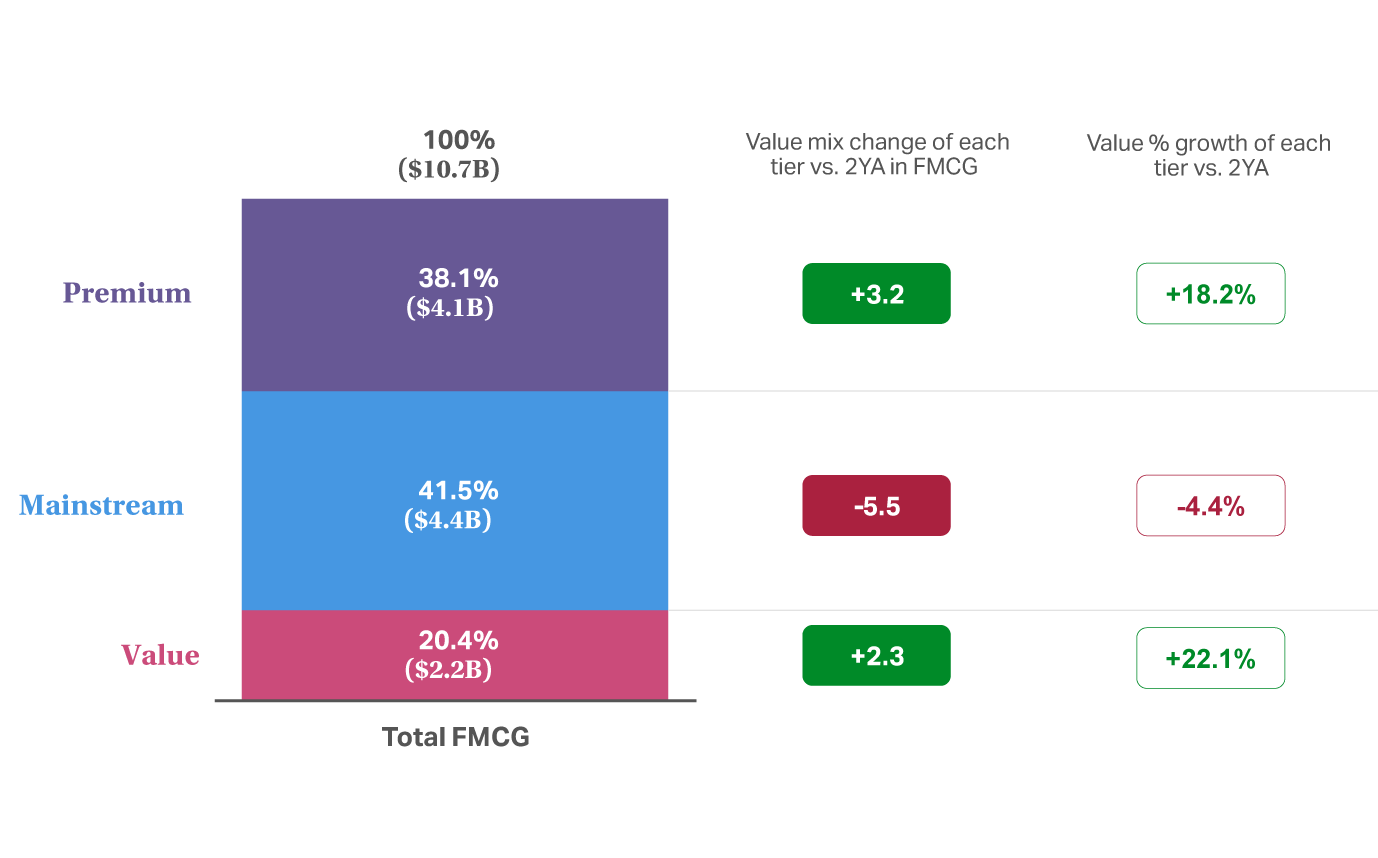
What makes Saudi Arabia especially important is that premium growth isn’t purely organic. Promotions are helping sustain premium purchases across several categories, suggesting that consumers may be willing to upgrade—but still need a stronger value equation to justify the higher price point. This is particularly visible in categories like Home Care and Perishable Foods, where both premium mix and promotional participation have increased.
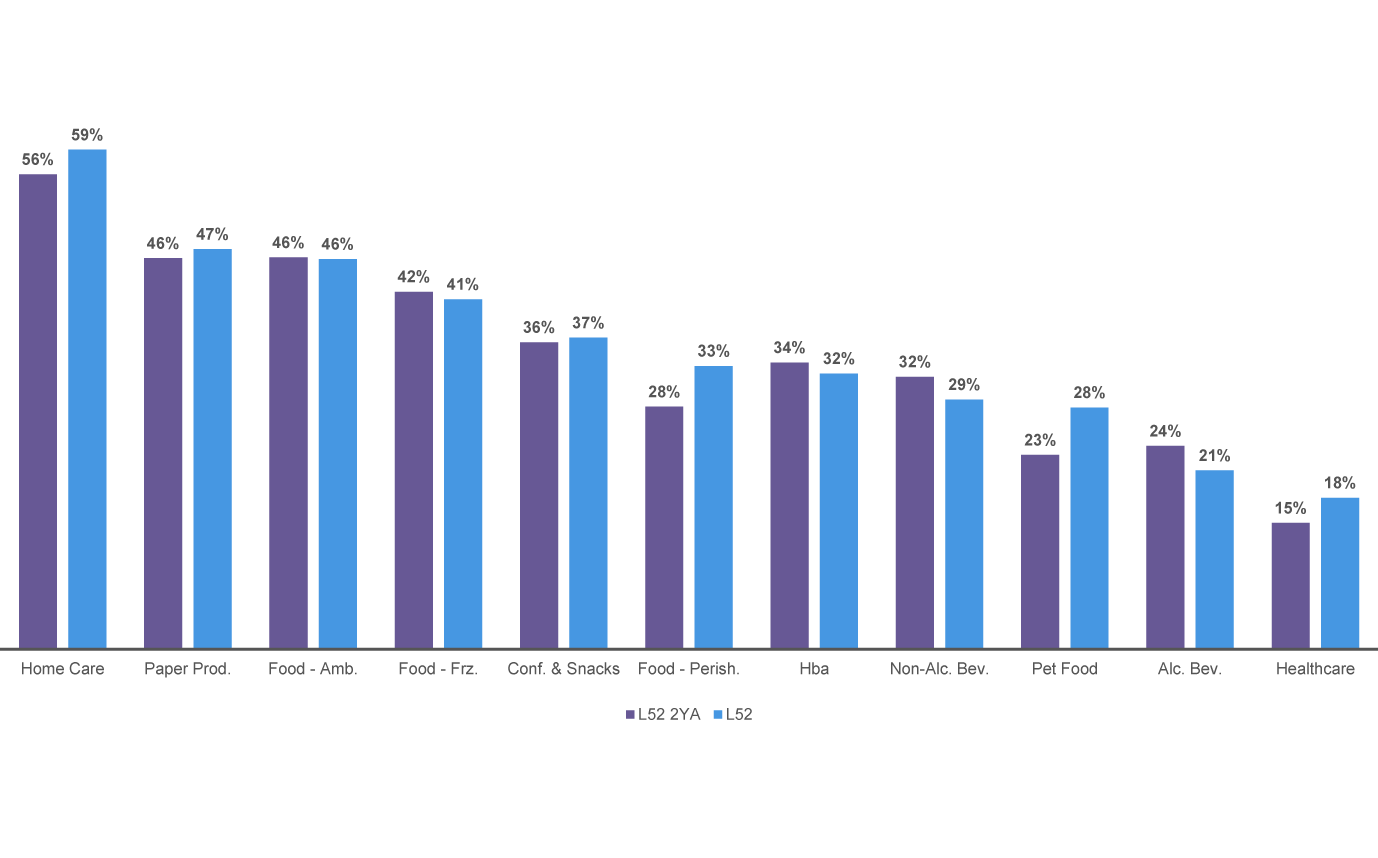
Promotions selectively reinforce Saudi Arabia’s polarized FMCG market
Promotional intensity has increased in key categories such as Home Care, Perishable Foods, and Pet Food, while remaining stable or declining elsewhere, supporting selective premium and value engagement.
Saudi Arabia: Promo value, branded products
Brazil
Brazil shows a less extreme version of the barbell. Premium gains are present, but they’re concentrated in specific categories rather than broadly reshaping the market. At the same time, the middle market remains under pressure across many aisles, while value products are gaining ground in select categories.
Brazil’s polarization leans toward value over premium
Brazil shows limited premiumization compared with the US and UK, with premium gains in select categories (e.g., Confectionery & Snacks, Home Care). Mainstream is under pressure, while value is gaining share across many categories, including stronger downtrading vs. developed markets.
Brazil – MAT APRIL 2026 ($89.5B, +22% vs. 2YA): Value mix by department and price tier in each department vs. 2YA
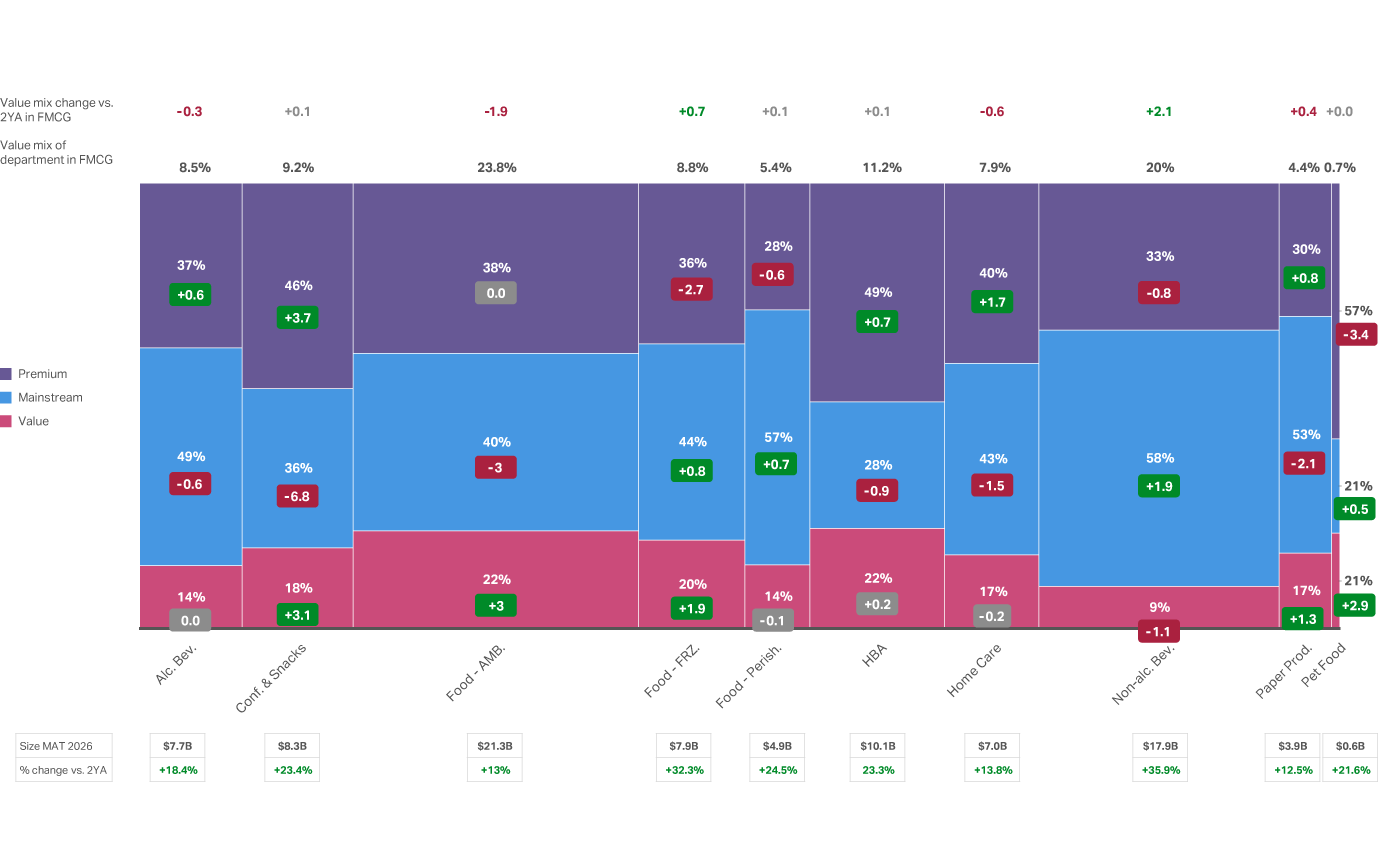
What makes Brazil an interesting case study is the role of promotions. Consumer reliance on promotions across categories suggests that value-seeking behavior may continue to strengthen (fueled by ongoing cost-of-living pressures), even while premium is growing. In this market, the barbell isn’t simply about consumers moving up or down price tiers; it’s about how promotions, affordability, and category-specific premium cues can redefine what feels worth the buy.
In Brazil, promotions are intensifying polarization toward value, with limited premium upside
Promotional intensity has increased consistently across Brazil’s branded categories, reinforcing a value-led consumer landscape where promotions are increasingly driving purchase decisions.
Brazil: Promo value, branded products
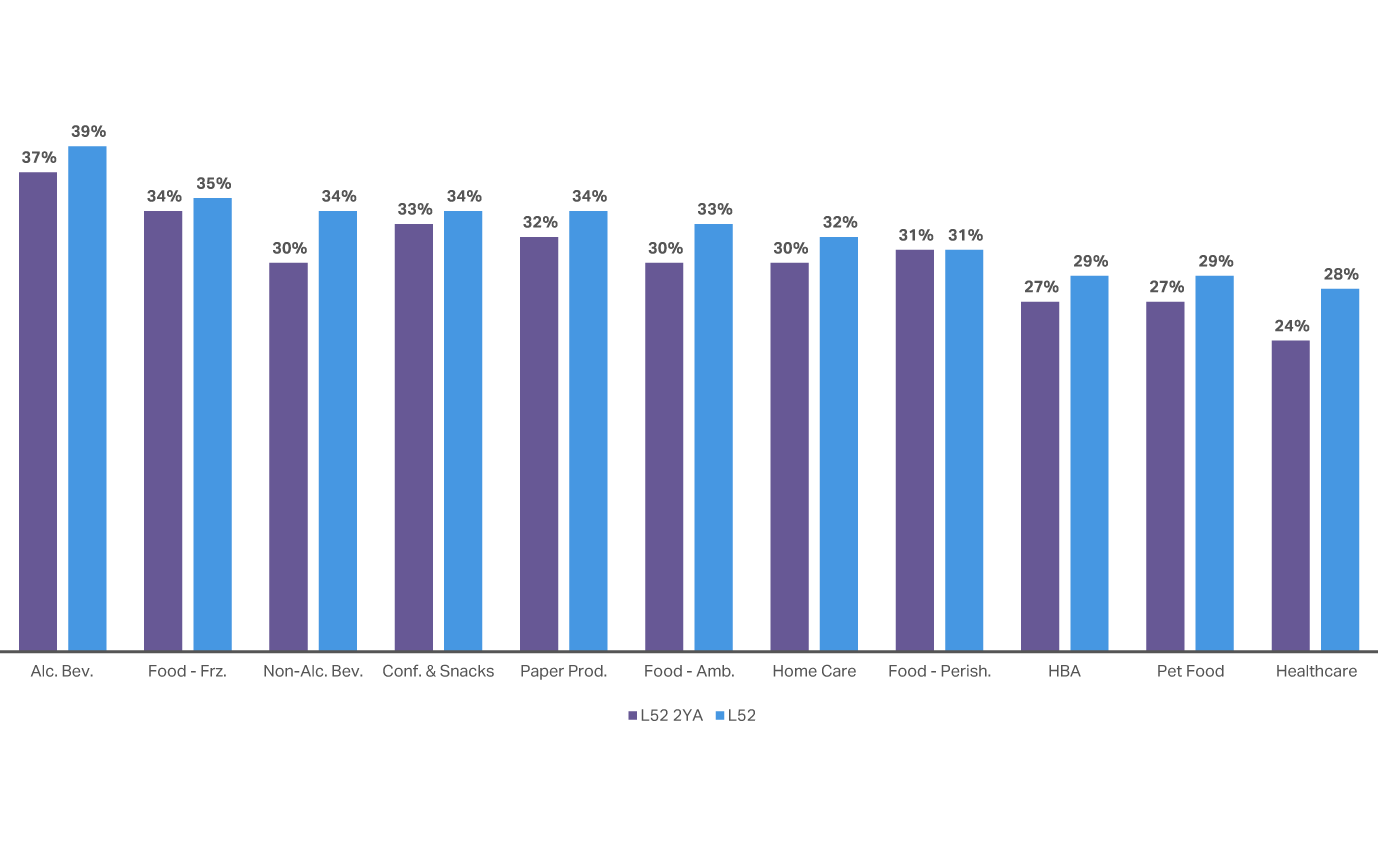
For brands and retailers, Brazil reinforces the need for market-level precision. Premium opportunities exist, but they aren’t evenly distributed. Value growth should also be watched closely, particularly in categories where consumers are using promotions to manage household economics. The brands that win will be those that know when to premiumize, when to protect value and accessibility, and when to use promotions strategically without weakening long-term brand equity.
China
China shows the most extreme version of the category-level pressures we’re seeing across markets. Unlike the US, UK, Saudi Arabia, and Brazil, where polarization is occurring inside categories that have pockets of growth, China’s FMCG market is declining sharply overall. This makes the middle-market challenge even more acute: When the market itself is contracting, products that lack a clear premium or value role have even less room to defend share.
Selective premiumization, but value drives China’s polarization
China shows selective premiumization despite overall category decline, with strong premium gains in Perishable Foods (+7 points), while Beverages see premium softening. Mainstream is sharply declining across most categories, while value is gaining share, indicating clear trading down.
China – MAT APRIL 2026 ($4.3B, -30.2% vs. 2YA): Value mix by department and price tier in each department vs. 2YA
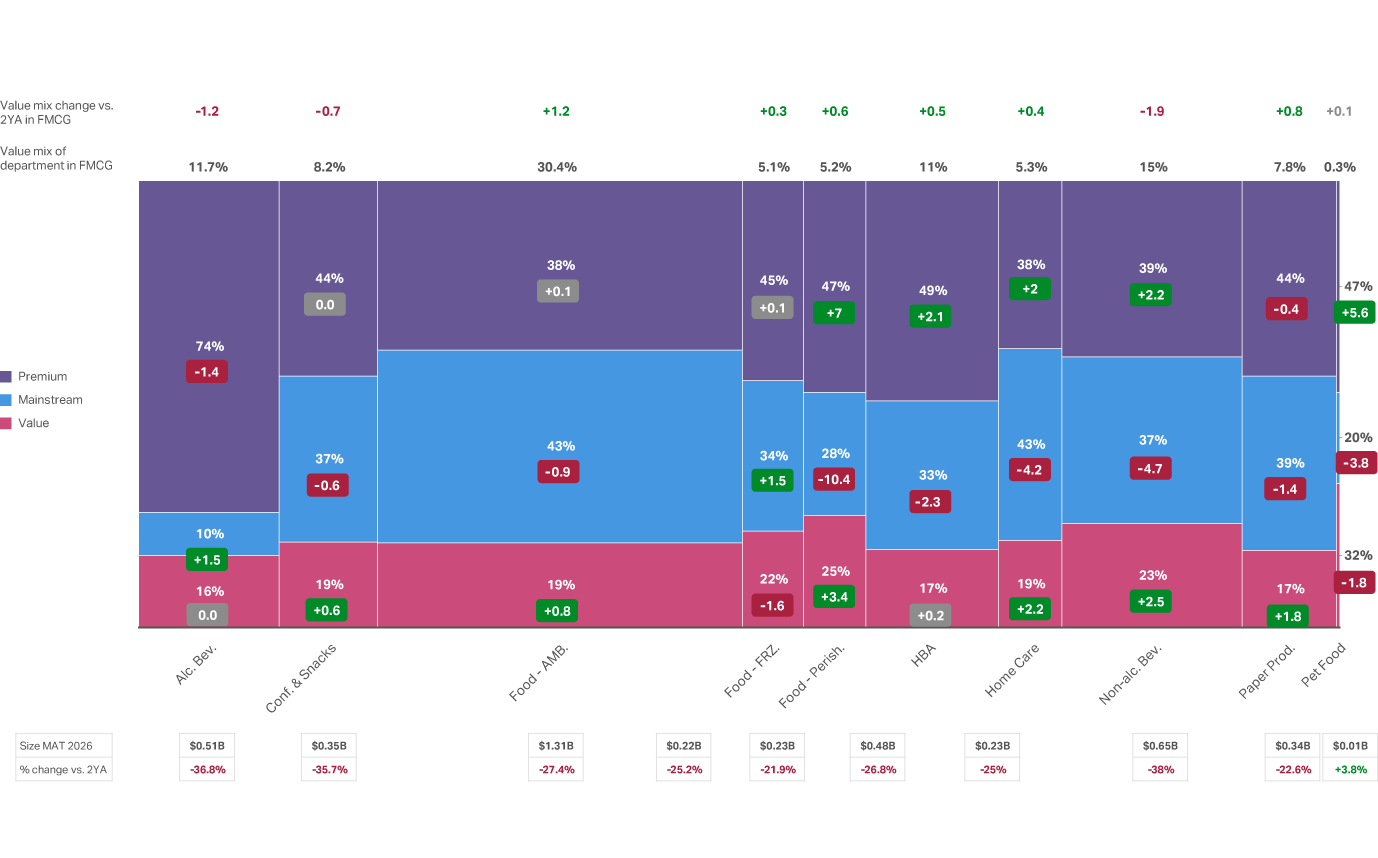
The data show significant losses in the mid-market, with only select mainstream categories growing. Premium remains the strongest growth area in certain categories, including Perishable Foods, while value growth is modest as promotional activity declines. This suggests that China is not simply a trade-down story. Instead, it’s a more selective market where consumers are pulling back overall but still rewarding products that offer a clear, differentiated, and premium-focused reason to buy.
For brands and retailers, China reinforces the risk of relying on broader market growth to protect the middle tier. In a contracting environment, the need for sharper positioning becomes urgent. Products must demonstrate why they deserve a premium, why they deliver stronger value to consumers, or why they remain essential enough to stay in consumers’ baskets.
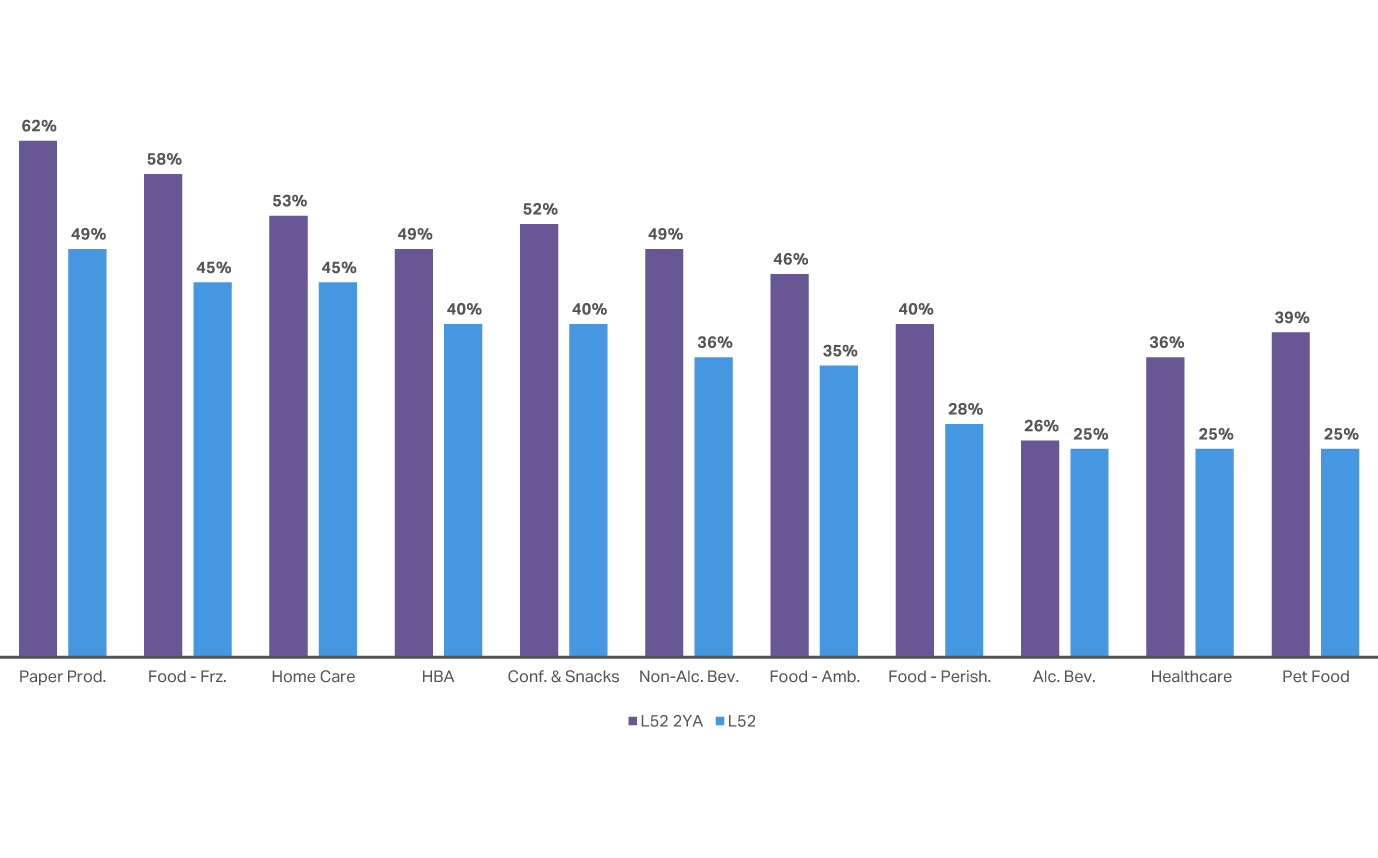
Reduced reliance on promotions is boosting selective premiumization in China
Declining promotional activity is reinforcing a more disciplined pricing environment, where premium products continue to gain share while value products see limited growth.
China: Promo value, branded products
Key takeaways
- The barbell is real, but it doesn’t bend the same way everywhere. Across markets, premium and value growth are pressuring the middle, but the shape of that pressure varies sharply by country, category, and cohort. Brands can’t apply one global premiumization or value strategy and expect it to travel unchanged.
- The middle is exposed—but not automatically dead. The Salty Snacks category in the US shows that mainstream products can still defend growth when they deliver a clear role in the basket. But the margin for error is shrinking. Products that feel average—not differentiated enough to earn the upgrade, and not clearly valuable enough to win the value choice—are the ones most at risk.
- Premiumization is powerful, but the growth engine changes by market and generation. In some categories, younger consumers are driving premium momentum. In others, Gen X, Millennials, or older cohorts are carrying the growth. The premium opportunity is real, but it must be built around the specific consumer, category, and market context.
- Private label is now competing on both sides of the barbell. Premium private label is helping retailers capture upgrade occasions, while value private label continues to serve price-constrained consumers. This puts national brands under pressure from both directions: justify the premium, defend the staple, or risk being replaced.
- The greatest risk emerges when polarization meets market contraction. Markets like China show what happens when middle-market pressure collides with a weakening FMCG environment. When overall growth slows or declines, products stuck in the middle have even less room to hide.
Key insight: The barbell is a macro pattern, but it’s not a one-size-fits-all playbook. To win, brands must understand how premium, value, and middle-market dynamics behave by market and category, then align pricing, innovation, assortment, and media investments to the role each product must play.
The growth playbook for a polarized consumer market—and how we can help
The historical playbook—build distribution, defend core products, and maintain momentum with brand familiarity—is fracturing. Of course, brand equity, legacy, and loyalty all still matter, but they’re no longer enough independently.
The future of growth will belong to manufacturers and retailers that are able to accomplish one of these three things: earn an upgrade, win on value, or defend trusted staples. All other brands and products risk getting stuck in an ever-expanding gutted middle—too expensive to be a value product, too commoditized to be premium, and not trusted enough to demand loyalty.
Winning in this new environment requires a highly disciplined approach to pricing, promotion, innovation, assortment, shelf strategy, and media investments. The goal isn’t just chasing premium or value. It’s better understanding the role each product in your portfolio plays in consumers’ baskets and building your playbook from there.
The same consumers may trade up in one category and trade down in others, depending on the shopping occasion, need states, price points, and perceived value equation.
Where premium and value opportunities emerge is shaped by demographics, income mobility, and market maturity—but capturing them depends on understanding the consumer mindsets at work within each market. Explore World Data Lab’s forecasting methodology and World Data Intelligence platform, alongside NIQ’s consumer intelligence solutions for understanding the behaviors that can unlock growth across portfolios and markets.
Combined, these market and consumer signals provide the foundation for a stronger growth playbook. For brands and retailers, that means translating intelligence into action across four critical pillars: innovation, Say–Do gap measurement, price and pack architecture, and product content and digital shelf execution.

Build a dual-track innovation model
It’s never been more important to innovate around multiple tracks. One track is premium, intentional innovation targeting upgrade consumers. The other is smarter affordability for price-constrained consumers who need to stretch tight budgets. Both are critically important, and both need to be managed deliberately.
For brands, this means continuing to protect (and earn back) volume—without sacrificing margin. It also means avoiding the trap of viewing “premium” and “value” as products targeting two different consumer cohorts. Both categories of products should be targeted at serving the two consumer mindsets that are fluid based on category, shopping occasion, or household economics.
NIQ BASES helps brands identify, test, and optimize the innovations that are most likely to move the needle.
Identify and close say–do gaps
A known challenge for brands and retailers is that consumers often self-report what motivates purchase and then end up purchasing along a different track. This is known as the Say-Do Gap.
NIQ’s Say–Do Gap Measurement Framework helps brands identify where consumers’ stated intent doesn’t map to purchase.
This solution helps pinpoint which attributes, claims, and ingredients will move the needle for both volume and value, making it valuable in both mature Western markets and emerging growth markets. It also presents businesses with a set of scores (at an attribute or claim level) that help brands track their progress as they maintain low gaps and close large gaps.
Rebuild price pack architecture
Pack architecture needs to work harder in a polarized market. Traditional strategies may still be useful, but only if they reflect how consumers are trading up or down across premium, middle-market, and value segments.
NIQ’s pricing, promotion, and revenue growth management solutions help manufacturers and retailers better understand where consumers will pay more, where value messaging needs clarity, and where promotions may be hurting your brand. As we’ve shown, price changes simply won’t move the needle the way they did historically. Brands must understand how pricing strategy, pack sizes, promotions, and channels all work together to move value, volume, and long-term market value.
Data is the key to mastering the art and science of optimizing the right price, pack, and portfolio mix in an ever-changing landscape. The Ultimate Guide to Pricing & Promotion is your roadmap to better outcomes.
Strengthen product content and digital shelf execution
Consumers have become far more willing to evaluate brands and substitute products if alignment isn’t clear. In this environment, content becomes critical to repeat purchase and brand loyalty.
Nowhere is this clearer than the digital shelf. Consumers may evaluate a product through search, retail media placements, LLMs, social, or retailer product pages long before they ever make it to a physical shelf or purchase a product online.
NIQ Product Intelligence helps support consistent, complete, and accurate product content across digital shelves. This includes imagery, descriptions, claims, attributes, pack details, and all other information consumers use when vetting whether a product is premium, value, or simply “good enough.”
In a market where products must justify their role in every basket, incomplete or inconsistent product content could be the difference between growth and stagnation.
Turn mindset intelligence into growth
The next era of consumer growth won’t be won by brands that simply chase premium or value. It will be won by businesses that understand the role each product needs to play—and respond accordingly.
- For manufacturers, that means building a portfolio that can earn the upgrade, defend trusted staples, and offer value without eroding brand equity.
- For retailers, it means building assortment, shelf architecture, private label strategies, and media monetization around how consumers are actually making decisions.
The “average” consumer is no longer a reliable growth target. The middle-market product is no longer a safe default. Growth will belong to the brands and retailers that can identify when consumers are willing to upgrade, when they are seeking value, and what each product must prove to earn its place in the cart.
Disclaimer: All product and company names are trademarks™ or registered® trademarks of their respective holders. Use of them does not imply any affiliation with or endorsement by them.
Forward-looking statement:
This report may contain forward-looking statements regarding anticipated consumer behaviors, market trends, and industry developments. These statements reflect current expectations and projections based on available data, historical patterns, and various assumptions. Words such as ‘anticipate,’ ‘believe,’ ‘expect,’ ‘forecast,’ ‘estimate,’ ‘intend,’ ‘may,’ ‘could,’ ‘should,’ ‘will,’ ‘would,’ ‘project,’ ‘outlook,’ ‘positioned,’ ‘designed to,’ ‘enable(s),’ and similar expressions are intended to identify forward-looking statements. These statements are not guarantees of future outcomes and are subject to inherent uncertainties, including changes in consumer preferences, economic conditions, technological advancements, and competitive dynamics. Actual results may differ materially from those expressed or implied in these statements. While we strive to base our insights on reliable data and sound methodologies, we undertake no obligation to update any forward-looking statements to reflect future events or circumstances, except to the extent required by applicable law.
© 2026 Nielsen Consumer LLC. All rights reserved.
- Source: NIQ Consumer Life, 2025
- Source: NIQ Consumer Life, 2025
- Source: NIQ analysis based on category, market, and consumer behavior data
- Source: The X Factor: How Generation X is quietly driving trillions in consumer spending (NIQ and World Data Lab, 2025)
- Source: Spend Z: Gen Z Changes Everything (NIQ, GfK, and World Data Lab, 2024)
- Source: The New Growth Frontier: How agentic commerce and AI tilt the scales toward challenger brands (NIQ and Kearney, 2026)
- Source: The New Growth Frontier: How agentic commerce and AI tilt the scales toward challenger brands (NIQ and Kearney, 2026)
- Source: Finding Harmony on the Shelf: 2025 Global Outlook on Private Label & Branded Products (NIQ, 2025)
- Source: World Data Lab, NIQ Tale of Two Consumers analysis; affluent consumer headcount by market, 2026–2036
- Source: NielsenIQ Omnishopper

Growth now lives at the edges
Premium and value are winning while mainstream products face mounting pressure. Explore the data behind today’s polarized consumer behaviors and learn where brands can capture value and volume in an evolving global market.
NIQ welcomes the opportunity to partner with your team to ensure your innovation pipeline, marketing, merchandising and assortment strategy, pricing and promotion plans, and more are built to resonate with every generation—and move them to action. Contact us for more information.
World Data Lab also welcomes your feedback or questions. Email insights@worlddatalab.com or visit https://worlddatalab.com/ for more information.